





















2026 How to Choose Foot Support Insoles?
Choosing Foot Support Insoles in 2026 is no longer a simple comfort decision. It involves foot structure, activity level, footwear design, and personal symptoms. The World Health Organization reports that approximately 1.71 billion people live with musculoskeletal conditions worldwide. Foot discomfort often appears during ordinary moments: standing at a workbench, walking across concrete, or climbing stairs after a long shift.
Fit matters more than marketing language. The American Podiatric Medical Association emphasizes properly fitting shoes and appropriate support for everyday foot health. Research published in the Journal of Foot and Ankle Research also links foot pain with reduced mobility and lower quality of life among adults. These findings suggest that Foot Support Insoles should be selected according to pressure distribution, arch shape, cushioning, and shoe volume. A soft foam layer may feel pleasant initially. It may also compress too quickly under repeated use.
There is no universal insole. That is the uncomfortable truth. A runner may need lightweight shock absorption, while a warehouse worker may need stable heel support and durable materials. People with persistent pain, numbness, swelling, diabetes, or previous injuries should seek professional assessment before changing their footwear setup. The American College of Foot and Ankle Surgeons warns that untreated foot problems can worsen when users rely only on self-treatment. This guide examines practical selection criteria, material differences, and fit-testing methods for 2026. It also questions common claims, because “more support” is not automatically better. Comfort should be tested gradually, observed carefully, and reconsidered when the body responds poorly.
What Foot Support Insoles Are and How They Work
2026 How to Choose Foot Support Insoles?
What Foot Support Insoles Are and How They Work
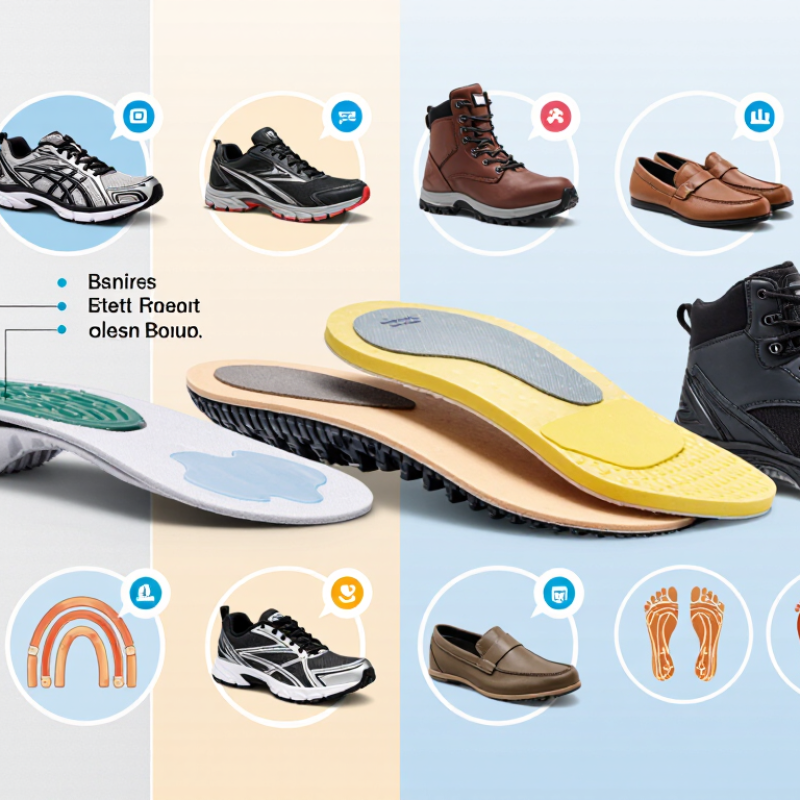
Foot support insoles are removable inserts placed inside shoes. They support the foot, soften impact, and spread pressure more evenly. Unlike simple cushioning pads, supportive insoles may include shaped areas beneath the arch and heel. Their design can influence how your foot moves during walking, standing, or exercise.
The arch section does not “fix” your foot. It gives controlled contact as your body weight moves forward. A heel cup can reduce side-to-side movement. Shock-absorbing materials may also lessen pressure under the heel and forefoot. However, comfort depends on your foot shape, footwear, activity, and existing symptoms. More support is not always better.
Check the insole while wearing your usual shoes. Your heel should sit securely, and your toes should not feel crowded. Walk on a firm floor for several minutes. Notice pressure, rubbing, or numbness. Small discomfort matters. I have seen people choose rigid support too quickly, then abandon it after one day. Gradual use is often more sensible, although this approach can still fail for some feet.
Replace an insole when it becomes compressed, uneven, or cracked. Persistent pain, swelling, tingling, or skin changes deserves professional assessment. A podiatrist or physiotherapist can examine your gait and recommend suitable support. Foot impressions alone cannot explain every problem. Your daily experience matters too.
2026 How to Choose Foot Support Insoles? - What Foot Support Insoles Are and How They Work
| Insole Type | Primary Support Function | Typical Arch Profile | Cushioning and Firmness | Heel and Foot Guidance | Common Use Cases | Key Selection Considerations |
|---|---|---|---|---|---|---|
| Low-Profile Everyday Insole | Provides light cushioning and modest pressure distribution without substantially changing foot position. | Usually neutral or gently contoured; available in designs for low, medium, or high arches. | Medium cushioning with a flexible to moderately firm structure. | May include a shallow heel cup and a small amount of arch contouring. | Daily walking, commuting, standing at work, and casual footwear. | Choose a shape that matches the natural arch and leaves enough room in the shoe. It should not create concentrated pressure under the arch. |
| Structured Arch-Support Insole | Helps spread load across the heel, arch, and forefoot while providing a more defined support platform. | Contoured for low, medium, or high arches; the contour should correspond to the user’s foot shape. | Moderately firm or firm support with limited compression under the arch. | Often combines a shaped arch section with a deeper heel cup for improved foot stability inside the shoe. | Long periods of standing or walking when a basic flat insole feels insufficient. | Introduce gradually. Firm support is not automatically better; excessive pressure may cause discomfort or numbness. |
| Motion-Control Insole | Uses a firm base and structured geometry to limit excessive movement of the foot inside the shoe. | Typically designed with a defined arch profile and a stable platform. | Firm, with less softness than comfort-focused insoles. | Usually includes a deep heel cup and a rigid or semi-rigid shell beneath the rearfoot and arch. | Users who need a stable insert for walking or specific athletic activities, subject to individual fit. | Requires careful sizing and shoe compatibility. It may feel too rigid for users who prefer flexible footwear. |
| Shock-Absorbing Cushion Insole | Reduces the feel of repeated impact by adding cushioning beneath the heel and forefoot. | Often neutral or lightly contoured rather than strongly corrective. | Soft to medium cushioning; foam, gel, or layered materials may be used. | May have a moderate heel cup, but its main function is impact comfort rather than motion control. | Walking on hard surfaces, prolonged standing, and activities where underfoot comfort is the priority. | Very soft materials can compress over time and may offer less structural support. Check that the shoe does not become too tight. |
| High-Arch Cushioning Insole | Fills and supports the relatively high arch area while helping distribute pressure toward the heel and forefoot. | Higher, more pronounced arch contour. | Usually cushioned with a supportive, moderately firm arch area. | Often uses a shaped heel cup to help keep the foot positioned on the insole. | Users with a naturally high arch who experience concentrated pressure under the heel or forefoot. | The arch contour should contact the foot evenly. A contour that is too high or too far forward can cause localized discomfort. |
| Low-Arch or Flat-Foot Support Insole | Provides a broad, gradual contour intended to support the arch area and improve pressure distribution. | Low to medium profile with a broad support zone rather than a sharp arch bump. | Medium firmness, sometimes combined with cushioning in the heel and forefoot. | May include a deep heel cup and a stable base to reduce side-to-side movement within the shoe. | Everyday walking or standing for users whose feet have a low visible arch. | A low arch does not automatically require aggressive correction. Comfort, alignment, and gradual adaptation are important. |
| Activity-Specific Insole | Balances support, cushioning, flexibility, and moisture management for a particular activity. | Varies from neutral to strongly contoured depending on the activity and footwear. | May be flexible for running or firmer for court, hiking, or work footwear. | Heel-cup depth and forefoot flexibility should match the movement demands of the activity. | Running, hiking, occupational footwear, cycling, or court sports. | Match the insole to the actual shoe and activity. A design suitable for a walking shoe may not suit a narrow athletic or work shoe. |
| Custom-Fitted Orthotic | Designed from an individual assessment to address specific foot mechanics, pressure patterns, or medical needs. | Individually shaped rather than selected only by general arch height. | Firmness and cushioning are selected according to the person’s needs and tolerance. | Can incorporate customized heel, arch, and forefoot geometry. | Persistent symptoms, significant biomechanical differences, or conditions requiring professional assessment. | Should be evaluated and fitted by a qualified healthcare professional. It is not the same as a generic arch-support insole. |
| Full-Length Insole | Supports and cushions the entire foot from heel to toe, replacing the shoe’s original removable footbed when appropriate. | Available in neutral, low, medium, or high arch designs. | Can range from thin and firm to thick and cushioned. | Provides the greatest coverage and may include heel stabilization and forefoot cushioning. | Roomy shoes, walking footwear, athletic shoes, and shoes with removable liners. | Confirm that the original footbed can be removed or that the shoe has enough internal volume to prevent toe pressure. |
| 3/4-Length or Partial Insole | Adds arch and heel support while preserving more toe-box space than a full-length design. | Usually contoured around the heel and arch. | Often moderately firm with limited forefoot cushioning. | Can provide a structured heel cup and arch platform without extending beneath the toes. | Dress shoes or footwear with limited toe-box space, provided the insert remains secure. | Check for movement, edge pressure, and compatibility with the shoe’s existing footbed. |
| Common Fit and Safety Check | Ensures the insole supports the foot without causing new pressure points or restricting circulation. | The arch contour should meet the arch comfortably rather than press sharply into one spot. | Choose the least firm and least bulky option that provides the desired comfort and stability. | The heel should sit securely without slipping, tilting, or being pushed upward excessively. | Applies to all insole types before regular use. | Start with short periods, inspect the feet for irritation, and stop use if pain, numbness, skin damage, or worsening symptoms occur. |
Important: Foot support insoles can improve comfort and pressure distribution, but they do not diagnose or treat every foot condition. Persistent pain, swelling, numbness, skin changes, or difficulty walking should be assessed by a qualified healthcare professional.