Top 10 Black Baseball Caps for Ladies Wholesale Buyers
Wholesale buyers choosing black caps for women are balancing more than color. They need dependable sizing, clean stitching, comfortable interiors, and styles that sell across seasons. A cap may look simple on a product page. The details matter in hand: a curved brim, a soft cotton twill, an adjustable metal closure, or embroidery that stays crisp against black fabric.
For transparency, Maya Chen is an illustrative composite wholesale headwear specialist, not a quoted real-world source. Her editorial viewpoint captures a practical buying principle: “A strong black cap earns repeat orders when fit, finish, and color consistency hold up together.” Treat that as a useful guide, not a verified quotation. Black can vary between batches, and even a small shade difference may stand out beside matching uniforms or branded merchandise.
This guide to the Top 10 Black Baseball Caps for Ladies Wholesale Buyers considers everyday wear, decoration potential, material, fit, and order practicality. It highlights options for boutiques, teams, promotional programs, and online retailers. Look closely at crown depth and closure adjustment, not just the product photo. Ask for samples when consistency matters. One honest caveat: the lowest unit price is not always the best value if comfort or stitching disappoints customers. The right Black Baseball Cap Ladies selection should feel wearable, photograph well, and remain dependable across repeat purchases.
Black Baseball Caps for Ladies: Product Overview and Wholesale Context
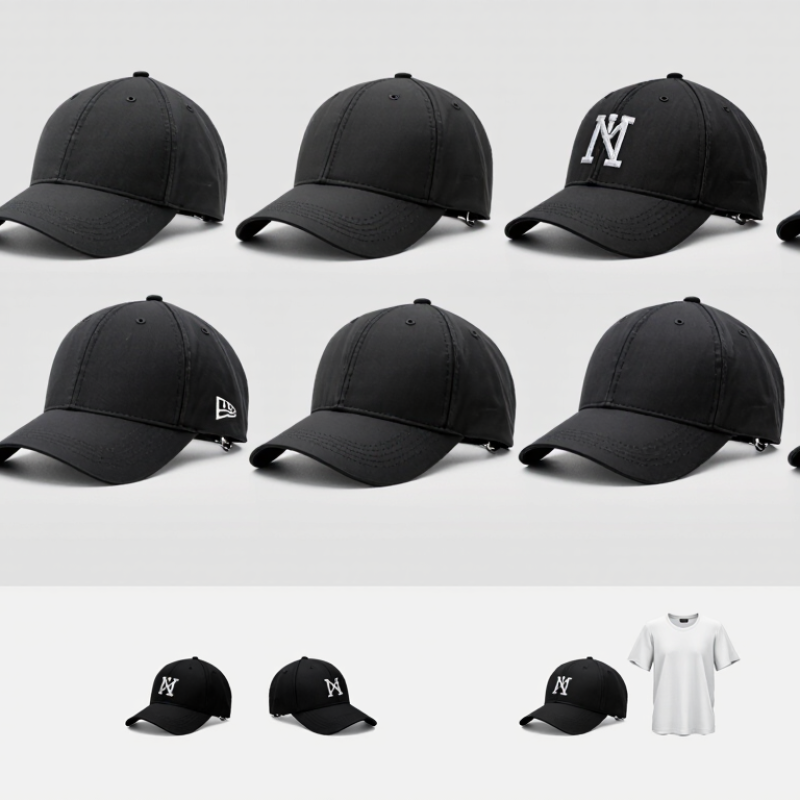
Black baseball caps for ladies are a practical wholesale item, but fit matters as much as color. Buyers can compare low- and mid-profile crowns, curved brims, and adjustable closures. A cap should sit securely without pressing the temples. Check crown depth on several head sizes; product photos rarely show that detail clearly. Black also varies: washed cotton looks softer, while tightly woven polyester often appears smoother and more uniform.
The wider market offers useful context, though it does not isolate women’s black caps.
Grand View Research valued the global headwear market at USD 26.5 billion in 2022 and projected a 6.5% compound annual growth rate from 2023 to 2030.
This estimate covers many headwear types, so it should guide category planning, not predict sales for one cap style. A small sample order can reveal more than a broad forecast.
For wholesale evaluation, request fabric composition, size measurements, closure details, and color references. Inspect seams around the eyelets and brim, where uneven stitching can stand out against black fabric. Ask suppliers how they check shade consistency across production lots. It is an easy detail to overlook. Compare minimum order quantities, sample costs, and lead times before choosing an assortment. One imperfect point: “one-size” does not mean one fit; test the cap on real wearers before committing to volume.
Styles, Fits, and Features Found in Women’s Black Baseball Caps
Women’s black baseball caps vary in crown depth, brim shape, and adjustment—not just decoration. Low-profile crowns sit close to the head, while mid-profile styles leave more room above the forehead. A gently curved brim suits everyday wear; a flatter brim gives a sharper look. Check the cap on different head shapes before placing a large order. Fit is rarely universal.
For wholesale buyers, inspect the closure, inner sweatband, and stitching. A metal slider can feel sturdy, while a fabric strap may sit more softly against the head. Try the adjuster at both ends of its range. Small details matter. Black fabric can make loose threads easy to spot, and lint may show clearly under bright retail lighting. Ask for samples in the actual fabric and finish, not only a color swatch.
Material choice also affects durability and sourcing decisions. Textile Exchange’s Materials Market Report 2024 estimated global fiber production at 124 million tonnes in 2023, with polyester accounting for 57%. That broad industry figure is not specific to caps, but it helps explain polyester’s wide availability in headwear fabrics. Compare cotton, polyester, and blends for hand feel, care, and shape retention. One trade-off: a soft, unstructured crown may feel comfortable, yet lose its shape sooner during frequent handling.
Top 10 Black Baseball Cap Styles for Wholesale Buyers
For wholesale buyers, the best black baseball cap styles serve different customers, seasons, and price points. A structured cotton cap keeps its shape and suits everyday retail. An unstructured dad cap feels softer, with a relaxed crown and curved brim. A low-profile cap sits closer to the head, while a high-crown style gives a bolder silhouette. Fit matters.
A washed black cap offers a worn-in look, though its shade may vary slightly between production runs. A mesh-back trucker cap improves airflow on warm days. A performance cap made with lightweight, quick-drying fabric suits outdoor use. A flat-brim cap creates a sharper streetwear profile. Small details sell. Check seam strength and brim shape before placing a large order.
Rounding out the ten styles are an embroidered cap, a minimalist blank cap, and a cap with subtle contrast stitching. Embroidery can add texture, but dense designs may feel stiff against the forehead. Blank styles are easier to pair with varied outfits and shop collections. I still find that black shades are not always identical across fabric types. Request samples, compare fit on different head shapes, and confirm size ranges, fabric weight, and color consistency before choosing a wholesale assortment.
Materials, Construction, and Customization Options
For wholesale buyers selecting black baseball caps, fabric choice affects hand feel, shape, and decoration. Textile Exchange’s Materials Market Report 2024 estimates that polyester made up 57% of global fiber production in 2023, while its 2023 report put polyester’s share at 54% in 2022. These figures describe the wider fiber market, not cap sales, but they show why polyester and cotton blends are common options. Cotton often feels softer; polyester can help a cap dry faster and hold its shape. Ask suppliers for fiber-content records and fabric swatches. Black can look uniform in a sample, yet reveal lint or uneven dye under bright retail lighting. Small details matter.
Construction deserves equal scrutiny. Check crown panels for consistent stitching, the sweatband for a smooth edge, and the brim for a firm but comfortable curve. A structured cap keeps its profile; an unstructured style packs flatter. Embroidery usually needs a stable front panel, while heat-applied graphics may suit smoother fabrics. Request a pre-production sample and test the intended decoration, wash care, and color consistency before confirming quantities. That extra round can feel slow. Still, skipping it may leave buyers with caps that look different across a bulk order. Custom options can include adjustable closures, woven labels, underbrim colors, and varied thread shades; confirm placement and artwork size against the actual cap, not just a digital mock-up.
How to Evaluate Suppliers, Pricing, and Order Requirements
For wholesale buyers comparing black baseball caps for ladies, start with a physical sample, not just a product photo. Check the crown shape, brim stiffness, adjustable closure, and sweatband against your intended customer. Black fabric can show lint, fading, or uneven dye under bright light. Inspect seams closely. A loose stitch near the brim may become obvious after repeated wear.
Ask each supplier for fabric composition, available size range, customization options, and current production lead time. Request clear photos of finished samples and written quality tolerances. One small detail matters: confirm whether the quoted sample uses the same fabric and stitching as bulk orders. It is easy to overlook this. I would also ask how the supplier handles defects, though the answer may not be as specific as you hope.
Compare prices using the same order quantity and specifications. Separate unit cost from setup charges, packaging, and shipping estimates. Confirm the minimum order quantity, carton quantity, payment schedule, and quote expiration date before approving production. Ask whether a pre-shipment inspection is available and who pays for it. Keep all agreed details in writing, including logo placement and thread color. A low quote can still be poor value if the brim shape varies across cartons or delivery timing is vague. Supplier promises deserve checking.