


How to Choose a Botanical Garden Light Show Supplier?

Choosing a botanical garden light show supplier is not simply a search for brighter fixtures. It is a decision about visitor safety, plant care, storytelling, and operational reliability. The American Public Gardens Association has reported more than 120 million annual visits to U.S. public gardens, underscoring the scale of the audience these institutions serve. A successful show must welcome that audience while respecting the garden as a living collection.

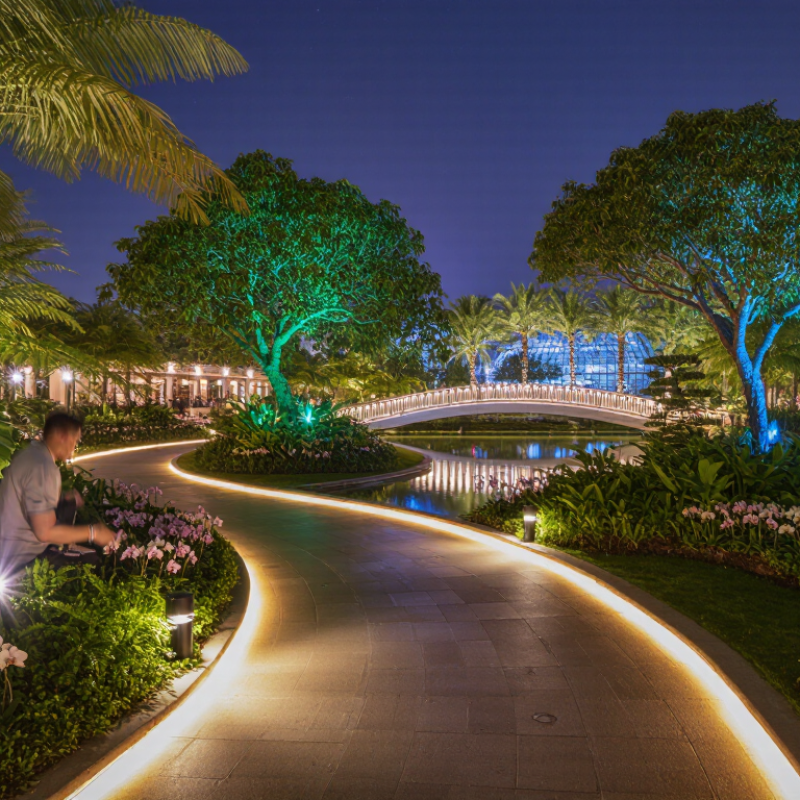
Garden designer Gertrude Jekyll wrote, “A garden is a grand teacher.” That idea offers a useful test for any supplier: does the lighting help visitors notice the landscape, or does it overwhelm it? Look for evidence of botanical knowledge, tested outdoor equipment, clear maintenance plans, and experience managing visitor routes after dark. Ask to see comparable installations, not just polished renderings. A glowing path looks convincing on paper. Wet leaves, uneven ground, and a crowded entrance are less forgiving.

Details matter. Can the supplier shield light from sensitive planting beds? Can crews replace a failed fixture without closing a path? These questions reveal more than a dramatic proposal does. No supplier will anticipate every garden’s quirks. That deserves reflection. The right partner should explain trade-offs plainly and adapt the design to the site. A botanical garden light show should feel magical, but its foundations must be practical, measurable, and rooted in respect for the plants.
How to Choose a Botanical Garden Light Show Supplier?

Define the Garden’s Goals, Audience, and Site Requirements

A strong botanical garden light show begins with a clear purpose. Is the event meant to attract winter visitors, support evening education, or create a calm seasonal walk? Each goal changes the supplier’s design choices. A family route may need broad paths, visible rest areas, and playful scenes at child height. A quiet evening experience may call for lower brightness and longer pauses between installations. Be specific about the audience, including mobility needs and expected group sizes.

Walk the site with a map, then revisit it after dark. Note narrow bridges, uneven ground, mature trees, nearby homes, power access, and sensitive planting beds. Ask suppliers how they will protect roots, manage cables, limit glare, and adapt displays to weather. Request a scaled layout and a sample lighting test before approving the full plan. The first draft may still miss a practical issue; that is a reason to inspect, not to rush.

Tips: Share attendance estimates and operating hours early. Photograph dark corners and busy crossings. Ask who checks equipment each evening, and how faults are reported. Measure after dark. A beautiful concept can feel different on a wet path, so leave room for adjustments.

How to Choose a Botanical Garden Light Show Supplier

Suggested evaluation weights for defining the garden’s goals, audience, and site requirements. Adjust them to reflect your project’s priorities.

Planning note: Start by documenting sensitive planting areas, visitor routes, expected attendance, accessibility needs, operating hours, and power availability. Use these criteria to compare supplier proposals consistently.

Review Supplier Experience and Botanical Garden Projects

A supplier’s experience should be visible in completed botanical garden projects, not just attractive concept images. Ask for case studies showing the garden’s layout, installation scale, and operating period. Look closely at how lighting was fitted around mature trees, narrow paths, water features, and delicate planting beds. These details reveal whether the supplier understands a living landscape. Request references from garden operators, and ask what changed after installation began. Real projects rarely follow the first plan exactly.

Tips: Compare projects with similar terrain and visitor numbers. Ask who handled maintenance, weather-related adjustments, and removal. Request dated site photos, not only polished night shots. Check documented safety procedures and clarify which tasks your garden team must manage.

A long project list is useful, but it does not prove every project went smoothly. Ask about delays, damaged plants, glare complaints, or sections that needed redesign. The answers matter. A reliable supplier can explain setbacks without blaming the site team. Confirm that the named project was delivered by the people who will lead yours. Also review how the supplier coordinated with horticulture and operations staff. A beautiful display can still disrupt watering routes or closing routines. Ask for a realistic schedule, including testing nights and repairs. If references are unavailable, treat that as a point to investigate, not automatic proof of poor work.

How to Choose a Botanical Garden Light Show Supplier? - Review Supplier Experience and Botanical Garden Projects

Use this evidence-based review matrix to compare suppliers. The weights are a practical evaluation framework, not an industry-wide standard. Confirm project references and site requirements directly.

Review Dimension Weight What to Verify Useful Evidence Warning Signs
Relevant botanical garden experience 20% Experience delivering seasonal or nighttime installations in gardens, arboreta, conservatories, or other landscaped public spaces. Completed-project list, dated photographs, client references, and a description of the supplier’s role. Only concept images, unclear project dates, or references that cannot confirm the supplier’s involvement.
Plant and habitat protection 20% How installation, cabling, lighting, and visitor routes will avoid damaging plants, roots, soil, water features, and sensitive habitats. Site-specific installation plan, protection measures, cable-routing approach, and coordination process with garden staff. A generic layout with no site walk-through or no plan for protecting planting beds and restricted areas.
Design and site integration 15% Whether the proposed lighting fits the garden’s paths, sightlines, seasonal character, accessibility needs, and operating hours. Site plan, lighting concept, visitor-flow plan, and sample views showing the proposal in context. A one-size-fits-all design or insufficient consideration of dark areas, path crossings, and visitor flow.
Technical and electrical planning 15% Power requirements, equipment suitability for outdoor conditions, cable management, controls, and the process for inspections required at the site. Load schedule, equipment specifications, weather-protection details, and qualified electrical installation arrangements. Unclear power demand, exposed or unmanaged cabling, or no stated inspection and maintenance procedure.
Safety, accessibility, and operations 15% Plans for installation safety, crowd movement, accessible routes, emergency access, operating checks, and incident response. Risk assessment, operating procedures, staffing plan, route review, and coordination with the garden’s safety team. No clear owner for on-site operations or no plan for emergency access and visitor management.
Project management and delivery 10% The supplier’s ability to coordinate design approvals, delivery, installation, testing, event operation, and removal within the agreed schedule. Project schedule, named roles, decision milestones, contingency plan, and close-out responsibilities. Vague timelines, undefined responsibilities, or no allowance for weather and site-access constraints.
Maintenance and aftercare 5% How faults will be reported and addressed during operation, and how equipment and the site will be checked after removal. Response arrangements, spare-parts approach, inspection checklist, and restoration responsibilities. No support contact during event hours or unclear responsibility for site restoration.
Total 100% Score each supplier against the same criteria and request comparable evidence before making a decision.

Suggested scoring: rate each dimension from 1 (insufficient evidence) to 5 (strong, verified evidence), then apply its weight. Confirm local permits, electrical rules, accessibility requirements, and environmental restrictions with the relevant authorities and garden management.

Assess Lighting Design, Technology, and Installation Capabilities

Ask the supplier to walk the garden with you after dusk, not just review a polished rendering. Look for plans that distinguish tree canopies, paths, water edges, and gathering points. A warm wash on bark can feel gentle; a narrow beam aimed into leaves may create glare or overwhelm nearby planting. Request sample fixtures or a small on-site mock-up, then check colors from several viewing angles. Ask for proof. The design should protect dark resting areas while keeping crossings and steps easy to read.

Review fixture ratings, control options, power loads, cable routes, and backup procedures in writing. Confirm the system can dim by zone and recover cleanly after a power interruption. Modular equipment can simplify seasonal changes, though extra connections create more inspection points. That matters. Ask who handles lifting, cable protection, testing, and repairs during public hours. A capable installation team should explain how it avoids root zones and keeps walkways clear. Request a commissioning schedule and maintenance log template, not only an equipment list. Some details will change on site; roots, rain, and old paths rarely match drawings perfectly.

Check Safety Standards, Sustainability, and Operational Support

How to Choose a Botanical Garden Light Show Supplier?

Check Safety Standards, Sustainability, and Operational Support

A garden installation must handle rain, damp soil, crowded paths, and nightly shutdowns. Ask suppliers for documented testing, electrical protection details, and installation plans—not just attractive renderings. Confirm that equipment meets relevant local requirements and recognized luminaire safety standards, such as IEC 60598. Request clear inspection records and a named on-site safety lead. Small details matter: a cable crossing a path needs secure covering, not hopeful placement. The IEA estimates lighting accounts for about 15% of global electricity use, making efficiency a meaningful procurement choice.

Request measured power loads, repair procedures, and material information. The U.S. Department of Energy’s Energy Saver guidance says LED bulbs can use up to 90% less energy and last up to 25 times longer than incandescent bulbs. Those figures are a useful reference, not a guarantee for outdoor show equipment. Ask for product-specific test data, dimming plans, and expected replacement rates. Also check whether damaged fixtures can be repaired and whether packaging or components can be reused. Sustainability claims without supporting records deserve a closer look.

Tips: Ask for a sample maintenance log and a weather-response plan. Quick checks. Confirm who answers after hours, how faults are isolated, and how quickly replacement parts arrive. A checklist can still miss a muddy access route or a confusing handover; walk the site with the operations crew before opening night.

Compare Proposals, Costs, Timelines, and Contract Terms

Ask every botanical garden light show supplier to price the same scope: number of installations, operating hours, power access, installation crew, maintenance, removal, and storage. Separate fixed fees from allowances and optional upgrades. A low bid may exclude replacement lamps or overnight repairs. Small gaps matter. The U.S. Department of Energy’s Energy Saver guidance says LEDs use at least 75% less energy and last up to 25 times longer than incandescent lighting. Ask suppliers to state fixture type, expected power draw, and how energy estimates were calculated. Compare those assumptions, not just the bottom-line price.

Request a dated schedule covering design approval, sample review, delivery, installation, testing, and strike. Include weather buffers and a named contact for delays. A detailed timeline can still be optimistic; check whether crews and equipment are actually reserved. The Project Management Institute’s 2021 Pulse of the Profession report estimated that organizations waste 11.4% of investment because of poor project performance. Contracts should spell out payment milestones, change-order rates, repair response times, cancellation rules, insurance, and responsibility for damage to paths or planting beds. I would also challenge my own comparison sheet: visitor flow and garden access are hard to price neatly. Ask for a site walk before signing.