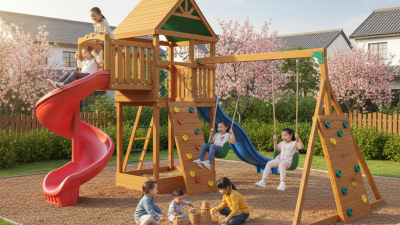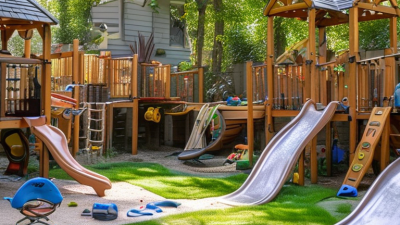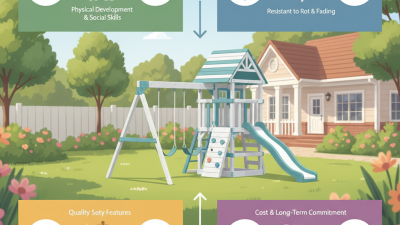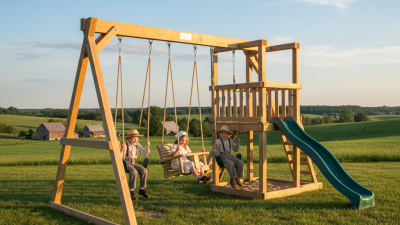

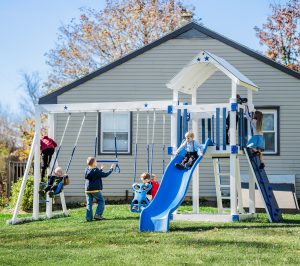
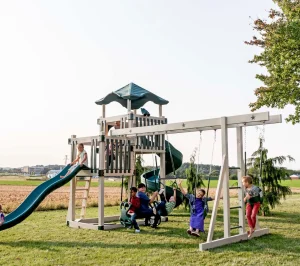



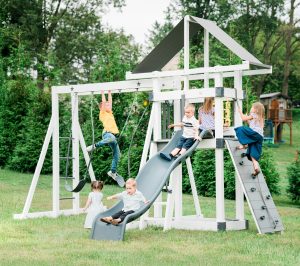
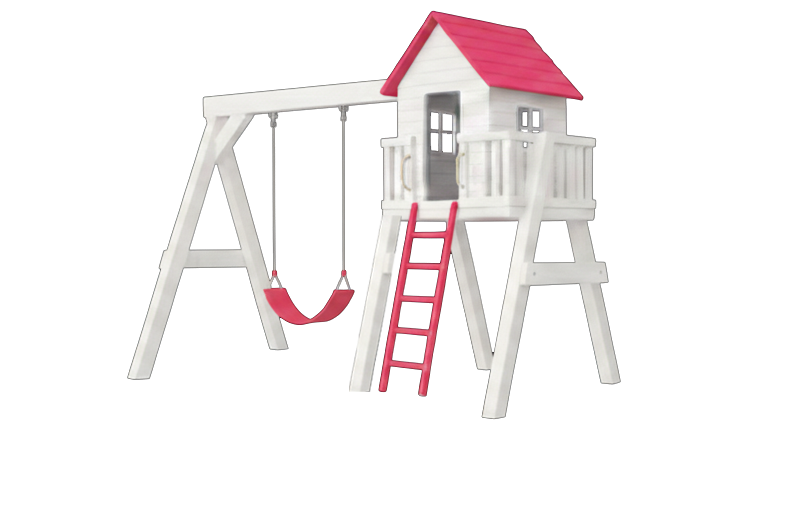
Choosing a wooden swing set with slide is not merely a backyard purchase. It is a decision about safety, durability, play value, and daily family use. A beautiful structure may still disappoint if its timber splits, its slide faces harsh sunlight, or its frame feels unstable after rain. The best choice should fit your children, available space, soil conditions, and maintenance habits.
Dr. Donna Thompson, a respected playground-safety expert and former director of the National Program for Playground Safety, emphasizes, “Active supervision is the best way to prevent playground injuries.” Her reminder matters because equipment alone cannot protect every child. Careful adults, strong construction, and sensible installation must work together.
This guide presents seven practical tips for evaluating a wooden swing set with slide. It considers timber quality, weight limits, platform height, slide design, anchoring, protective surfacing, and long-term upkeep. Look closely at the small details. Are the bolts recessed? Do the handrails feel firm? Does water collect around the posts? These questions reveal more than a glossy product photograph.
Some recommendations may seem obvious. They are still easy to overlook. I have learned that shoppers often focus on the slide first, then discover that maintenance takes more time than expected. That is an honest weakness in many buying decisions. A dependable set should invite energetic play without creating constant worry. It should also leave room for imperfect weather, growing children, and occasional repairs.
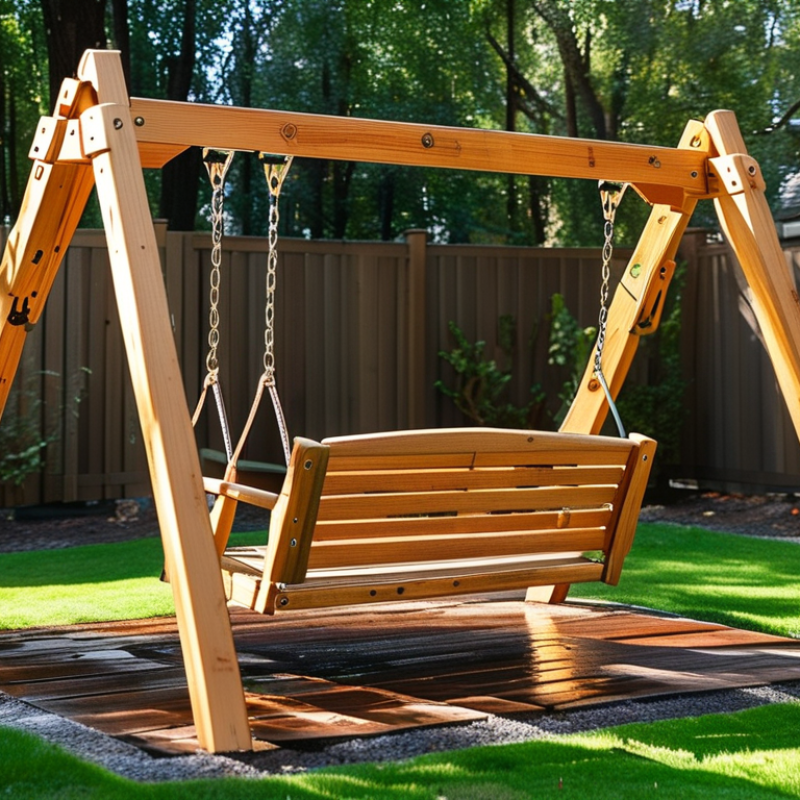
Before choosing a wooden swing set with a slide, measure your usable yard space carefully. Measure twice. Record the distance between fences, trees, sheds, and house walls. Include the swing set’s full footprint, not just its wooden frame. Swings need extra clearance at the front and back. A slide also needs open space at its exit. Many installation guides recommend a generous safety zone around play equipment. Check the current instructions before buying.
Look at the yard’s shape and surface, too. A narrow rectangle may suit a compact set with one swing bay. A wider lawn could handle a climbing wall, two swings, and a longer slide. Keep the set away from low branches and sprinkler heads. Avoid placing it on steep, uneven ground. Level soil makes anchoring more reliable and reduces wobbling. Soft, impact-absorbing surfacing can also improve fall protection.
I once measured only the play structure and overlooked the swing arc. That mistake left the seats too close to a garden border. Leave room for children to move around safely. Keep gates and walkways accessible for supervision and maintenance. Check whether the wood needs regular sealing in your climate. A smaller set may be the wiser choice if the yard feels crowded. Bigger is not automatically better. A professional installer can verify clearances, anchoring, and ground preparation before assembly.
7 Tips for Choosing a Wooden Swing Set with Slide
Wood quality determines how safely a swing set ages. Choose straight, dense boards with few knots, splits, and soft spots. The USDA Forest Products Laboratory’s Wood Handbook reports typical tangential shrinkage of 6–12% in many woods. That movement can loosen joints over time. Check the moisture content before purchase, if possible. Wood should feel dry, not cold and sponge-like. Avoid end grain with dark streaks or a sour smell. Those details may signal hidden decay.
Construction deserves equal attention. Look for rounded edges, sanded surfaces, capped bolts, and reinforced slide connections. Hardware should resist corrosion, especially near coastal air or frequent rain. The U.S. Consumer Product Safety Commission reports about 200,000 playground injuries receive emergency treatment annually. Its Public Playground Safety Handbook emphasizes protective surfacing, entrapment prevention, and fall-zone planning. Residential equipment still needs those principles. Measure the slide exit and swing clearance yourself. Do not trust a cheerful product photo.
Weather resistance is practical, not decorative. Select wood treated and rated for the intended outdoor exposure, including ground contact when posts enter soil. Seal exposed end grain, inspect annually, and keep water from pooling beneath the platform. A small crack can become a large repair after one wet winter. I would recheck every bolt after the first month; wood settles, and my earlier confidence might be misplaced. Shade helps, but it does not replace drainage, ventilation, and regular inspection.
| Tip | Evaluation Dimension | What to Check | Potential Concern | |
|---|---|---|---|---|
| 1 | Wood Species and Grade |
Look for naturally durable outdoor softwoods or appropriately treated structural lumber.
Outdoor-rated material |
Confirm the wood is intended for exterior use, with consistent grain and no extensive decay, open splits, large dead knots, or soft areas. Structural members should be straight and free from major warping. | Untreated indoor lumber and boards with severe cracks can absorb moisture quickly and lose strength. |
| 2 | Moisture and Wood Treatment |
Moisture content should be suitable for outdoor construction; many exterior wood products are commonly supplied at approximately 12%–20%, depending on climate and manufacturing method.
Verify treatment details |
Ask whether the lumber is pressure-treated or factory-sealed, and check that cut ends, drilled holes, and exposed edges receive compatible end-grain protection. | A coating on the surface does not necessarily mean the entire board is protected against insects, fungal decay, or ground contact. |
| 3 | Frame and Joint Construction |
Main posts and crossbeams should form a rigid frame with reinforced joints, secure hardware, and no visible movement after assembly.
Rigid connections |
Check for through-bolts, properly seated washers, capped or protected fasteners, diagonal bracing where needed, and joints that remain flush without large gaps. | Loose screws, unsupported beam ends, sharp hardware, or joints that rely only on thin wood can create safety and durability problems. |
| 4 | Stability and Anchoring |
The set should include an anchoring method appropriate for the installation surface and local soil conditions.
Anchor every support point |
Verify the recommended anchor locations, foundation requirements, and installation depth or fixing method. Test the assembled frame for rocking before use. | A heavy structure can still tip if it is placed on loose soil, uneven ground, or a hard surface without suitable anchors. |
| 5 | Slide and Swing Hardware |
The slide should have smooth, continuous surfaces; swings should use corrosion-resistant connectors and secure seat attachments.
Smooth and enclosed edges |
Look for rounded or protected edges, no exposed bolt ends, secure swing hangers, durable ropes or chains, and a slide transition without abrupt gaps or raised fasteners. | Metal hardware that rusts, frayed suspension components, and rough plastic or wood edges may cause cuts, pinching, or falls. |
| 6 | Weather and Corrosion Resistance |
Exterior finishes should resist rain and ultraviolet exposure, while fasteners should be corrosion-resistant for the intended climate.
Sealant plus drainage |
Check for a water-shedding finish, sealed end grain, drainage around joints, and galvanized or stainless fasteners where moisture or coastal air is common. Re-coating instructions should be clear. | Standing water, unsealed end grain, and incompatible metal fasteners can accelerate swelling, cracking, staining, or rust. |
| 7 | Capacity, Age Fit, and Maintenance |
Follow the manufacturer’s stated age range, maximum user weight, number of users, and required clearance. Inspect the set at least seasonally.
Follow the rating |
Confirm that the platform height, swing spacing, slide entry, and protective surfacing suit the intended children. Tighten hardware, inspect wood and anchors, and refresh the finish as recommended. | Do not estimate capacity from appearance alone. Cracked wood, loose fasteners, degraded coatings, or inadequate impact-absorbing surfacing require correction before use. |
Choosing a wooden swing set with a slide starts with age, not appearance. The U.S. Consumer Product Safety Commission recorded about 155,400 playground-related injuries among children under 14 in 2021. Falls remain a major concern. Match every feature to a child’s current abilities.
For toddlers, choose a fully enclosed bucket swing with a secure harness and a short, gentle slide. The child should sit upright and climb only with close adult supervision. Preschoolers may use a belt swing when they can grip the chains confidently. A low platform, wide steps, and sturdy handrails matter more than decorative height. Avoid large openings where small heads could become trapped. ASTM F1148 provides safety guidance for residential playground equipment.
For school-age children, consider a higher slide, flexible belt swings, and climbing elements with easy-to-reach grips. Check the manufacturer’s age and weight limits carefully. Leave a clear fall zone around the structure, and place it on impact-absorbing material. A level, shaded surface also reduces fatigue and hot-surface injuries. Inspect bolts, wood splinters, ropes, and slide edges every week. One honest mistake is choosing the tallest model too early. Excitement fades quickly when a child feels unsafe. Recheck the fit each year, because confidence and body size change faster than most wooden playsets.
Check safety standards before admiring the color or slide design. Look for current playground safety certifications and clear testing information. The instructions should explain age limits, weight limits, fall zones, and suitable surfaces. A reliable seller should provide these details without vague promises. If the paperwork feels incomplete, pause. Children may notice the fun first, but adults must verify the risks.
Test stability with practical thinking. The wooden frame should stand level on firm ground, with strong joints and secure anchors. Shake the structure gently before installation is finished. It should not rock or twist. Check for thick support posts, tight bolts, and smooth timber surfaces. I used to think extra wood always meant extra strength. It does not. Poor assembly can weaken an otherwise solid swing set.
Study the protective design closely. Choose swings with secure seats, dependable connectors, and comfortable hand grips. The slide should have smooth edges, stable steps, and a safe exit area. Guardrails matter, especially on raised platforms. Look underneath too. Hidden splinters, exposed bolts, or trapped gaps can create problems during ordinary play. Inspect the set regularly, particularly after rain or strong winds. A quick check may miss something. Take a flashlight and kneel down to view the lower joints.
Compare installation needs before comparing colors.
Tip one: measure the fall zone, not only the frame. The CPSC Public Playground Safety Handbook notes that falls cause about 79% of playground injuries.
Tip two: choose deep, stable anchors and level ground.
Tip three: check whether assembly requires two adults, concrete, or special tools. ASTM F1148 provides safety guidance for residential playground equipment, including structural strength and entrapment risks. A cheaper set can become expensive when installation needs professional labor.
Tip four: inspect the timber for cracks, sharp edges, and exposed fasteners.
Tip five: ask whether the wood has suitable preservative treatment. The USDA Forest Products Laboratory’s Wood Handbook explains that fungal decay becomes more likely when wood moisture stays above 20%. Keep water away.
Tip six: plan seasonal maintenance, including tightening bolts, checking swing hangers, cleaning the slide, and renewing protective coatings.
Tip seven: compare replacement costs for seats, ropes, hardware, and slides.
Maintenance is not optional. I often underestimate it. Dark stains, soft spots, or a loose anchor should stop use immediately.
Long-term value depends on safe years of play, not the lowest purchase price. A shaded, well-drained location may preserve the structure better, although it can reduce visibility from inside the house. That trade-off deserves honest thought.