How to Choose the Best Outdoor Play Sets for Kids?
Choosing the right outdoor play sets is more than picking the brightest slide in a catalog. A good set should fit your child’s age, your yard, and the way your family actually plays. I have learned that attractive equipment can still feel awkward when climbing steps are too steep or platforms are too high. Small details matter. Shade, soft landing areas, sturdy handrails, and clear sightlines can shape daily use. The best choice balances movement, imagination, durability, and reasonable supervision.
Before comparing materials or prices, measure the available space carefully. Leave generous clearance around swings, slides, and climbing walls. Check the ground for drainage, roots, stones, and hard surfaces. Wood can offer a warm, natural appearance, while metal and plastic may simplify cleaning or resist certain weather conditions. Each material has weaknesses. Wood may need sealing. Plastic can fade. Metal can become hot. Product instructions and current local safety guidance should guide installation, anchoring, and maintenance decisions.
Age recommendations deserve close attention, but they are not a complete safety plan. A confident toddler and a cautious eight-year-old may use the same structure differently. Watch how your children climb, balance, wait, and recover from small mistakes. Ask whether the set can grow with them. It is easy to focus on maximum features and overlook everyday comfort. That happened in my own comparison. More accessories did not always mean more play. A thoughtful review considers real behavior, seasonal weather, budget, and the work required to keep the equipment secure. This guide will help families compare those factors with clearer expectations and fewer costly surprises.
Define Your Children’s Outdoor Play Needs and Available Space
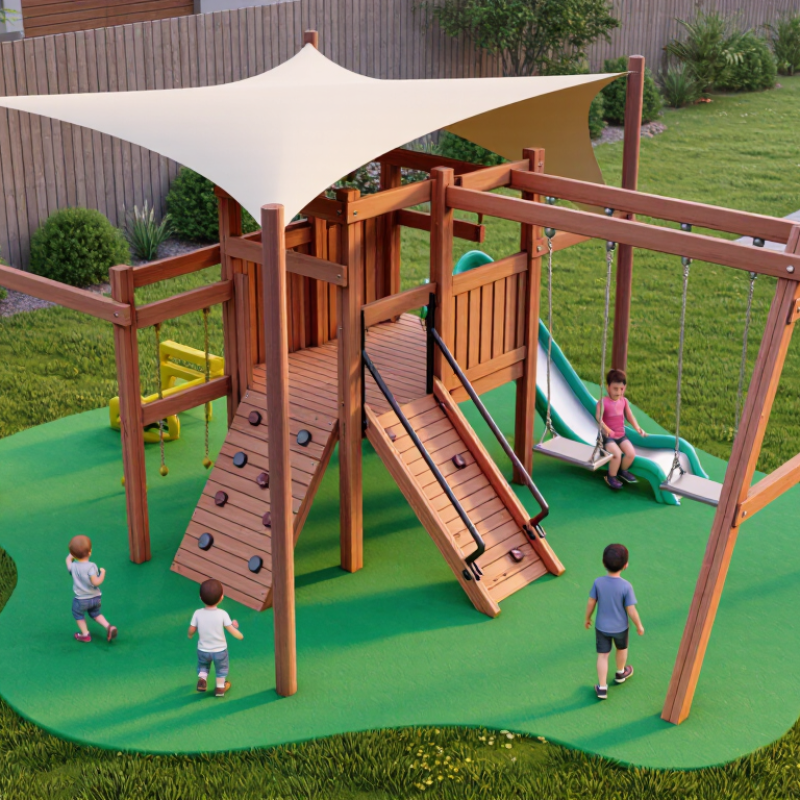
Choosing an outdoor play set starts with your children, not the equipment catalog. Watch how they play outside. Do they climb, swing, imagine, or build games together? A toddler needs low steps, firm handholds, and short slides. An older child may need challenging climbing routes and space for active play. I once measured a play area by eye and underestimated the running space. That mistake made the set feel crowded. Children need room to land, turn, and move away safely.
Measure the entire usable area, including gates, trees, walls, and garden edges. Then check the required safety zone, because the frame is only part of the footprint. A swing usually needs open space in front and behind it. Slides need a clear landing area. Keep fall zones level and covered with suitable impact-absorbing material. Avoid placing equipment over concrete, roots, or sharp landscaping borders. Local safety guidance and installation instructions deserve careful attention. They are more dependable than guesswork.
Think about supervision too. Can an adult see the play set from the kitchen or patio? If visibility is poor, daily use may drop, even when the set looks exciting. Consider weather, shade, drainage, and how muddy the ground becomes after rain. Your children’s needs will also change. A set perfect this year may feel small next summer. Leave flexible space for future activities rather than filling every corner. Still, I would not choose the largest structure automatically. More equipment can mean more maintenance, less supervision, and fewer creative games.
Compare Play Set Types, Features, and Age Suitability
Choosing an outdoor play set starts with age, movement needs, and available space. A toddler-friendly climber should have low platforms, short slides, wide steps, and enclosed sides. Preschoolers often benefit from small swings, crawl tunnels, and simple climbing walls. Older children may need taller structures, challenging ladders, monkey bars, and balance beams. These features support different skills, not just excitement. The World Health Organization recommends at least 60 minutes of moderate-to-vigorous activity daily for children aged 5–17 (WHO, 2020). A play set can make that target feel less like exercise.
Compare the safety features carefully. Look for impact-absorbing surfacing, rounded edges, secure handrails, and stable anchoring. The U.S. Consumer Product Safety Commission reports about 200,000 emergency-department-treated playground injuries each year, with falls causing roughly 79% of cases (CPSC, Public Playground Safety Handbook). A swing set needs enough clearance behind and in front. A slide needs a gentle exit area, not a hard landing. Measure the yard before buying. More equipment is not always better. I have seen families choose tall structures that quickly became difficult to supervise.
Tips: Match the set to the youngest regular user. Check bolts and ropes monthly. Keep a visible fall zone. Read the age label twice. If a feature looks impressive but feels difficult to monitor, reconsider it. ASTM F1148 guidance can support safer home playground decisions, but supervision still matters. Children grow quickly, so age suitability should be reviewed every year.
Evaluate Materials, Construction Quality, and Weather Resistance
Choosing an outdoor play set starts with its materials, not its color or extra features. Pressure-treated or naturally durable wood can feel warm and sturdy, but it needs regular checks for splinters, cracks, and moisture damage. Plastic components should be thick, UV-resistant, and free from sharp edges. Powder-coated metal can resist rust, yet chipped coating may expose vulnerable areas. I once underestimated how quickly standing water damaged a lower platform. That mistake changed how I inspect drainage.
Construction quality matters every day. Look for rounded edges, tight joints, secure bolts, and reinforced swing connections. Posts should sit firmly on stable ground, with anchoring suited to the soil. Test the structure gently before children use it. It should not wobble, twist, or produce unusual sounds. Weather resistance also depends on design. Sloped surfaces shed rain better than flat ones, while sealed wood reduces water absorption. However, no material is maintenance-free. Even good equipment can age faster under strong sun, heavy rain, or freezing temperatures.
Tips:
Check the play set after storms. Feel wooden surfaces for raised fibers. Inspect bolts for looseness and rust. Confirm that drainage openings remain clear. Keep a simple maintenance log, because memory is unreliable. Follow the maker’s stated weight limits and installation guidance. If the ground shifts, reassess the anchors rather than assuming the frame remains safe. Small defects are easy to ignore, but they rarely improve on their own.
Check Safety Standards, Installation Needs, and Ongoing Maintenance
Choosing an outdoor play set starts with safety, not appearance. CPSC’s Public Playground Safety Handbook cites over 200,000 emergency-treated playground injuries among children each year. Falls account for most reported cases. Look for equipment designed around ASTM F1148 or comparable national safety standards. Check guardrails, enclosed platforms, rounded edges, and pinch-point protection. A certificate alone cannot replace a careful inspection.
Installation affects safety every day. Follow the manufacturer’s instructions closely, including anchoring depth and protective surfacing requirements. Measure the fall zone before delivery. CPSC guidance commonly recommends impact-absorbing surfacing around elevated equipment, with greater depth for taller structures.
Concrete, packed soil, and thin grass are poor choices. A level frame matters too. Small tilts become obvious after rain.
Tips:
Photograph the finished assembly. Keep the manual nearby. Inspect bolts, ropes, swings, and anchors monthly, then recheck after storms. The U.S. Consumer Product Safety Commission recommends routine maintenance and immediate repair of damaged parts. Replace cracked plastic, split timber, and stretched hardware instead of improvising. I have found that “almost tight” bolts often become loose sooner than expected. That assumption deserves questioning. Record inspection dates, surface depth, and repairs in a simple notebook. Professional installers can help when the ground is uneven, but homeowners should still verify every connection.
Balance Budget, Long-Term Value, and Family Use Preferences
How to Choose the Best Outdoor Play Sets for Kids?
Budget is only the starting point when choosing an outdoor play set. Compare the purchase price with installation, safety surfacing, and future repairs. A cheaper frame may need replacement hardware after one wet winter. I once underestimated delivery costs and spent more than planned. Measure the yard carefully. Leave clear space around swings, slides, and climbing areas.
Long-term value depends on materials, construction, and maintenance demands. Powder-coated metal can resist weather, while treated wood may offer a warmer appearance. Check joints, bolts, weight limits, and the quality of protective edges. Look for clear safety instructions and recognized testing information. Do not rely on attractive photographs alone. A stable structure should feel solid when several children play together.
Family preferences matter just as much as price. Younger children may need low steps, enclosed platforms, and gentle slides. Older children often prefer climbing walls, ladders, or challenging balance features. If siblings play together, choose activities that reduce waiting and arguments. Shade is valuable during hot afternoons. Accessibility may also matter for children with different physical abilities. Reserve money for annual inspections, tightening bolts, and replacing worn parts. A large set can seem impressive, but it may become unused if it does not match your children’s interests. Reconsider the purchase after watching how they actually play.
How to Choose the Best Outdoor Play Sets for Kids?
Balance budget, long-term value, and family use preferences by checking the required protective surfacing first.
This chart shows the maximum fall height protected by common loose-fill playground surfacing at a 9-inch installed depth. Materials with higher protection may support better long-term value, but families should also compare installation cost, replenishment needs, drainage, accessibility, and the play set’s actual fall height.
Source: U.S. Consumer Product Safety Commission, Public Playground Safety Handbook, Publication 325, Table 2.