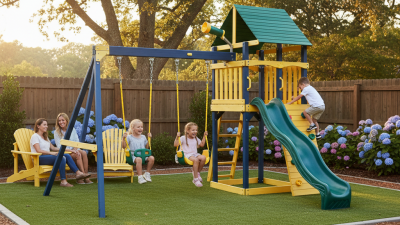

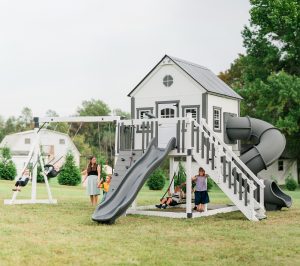
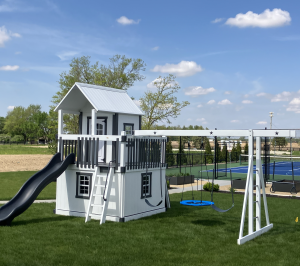
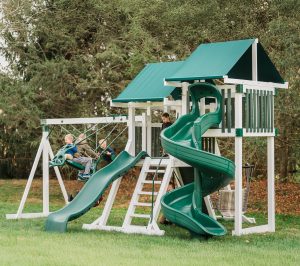

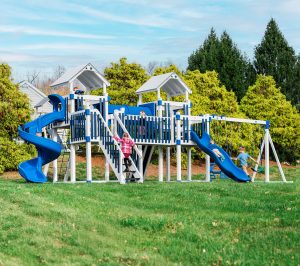

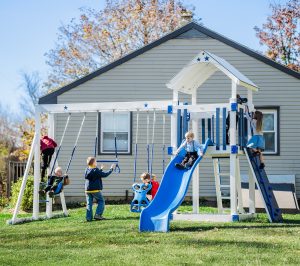




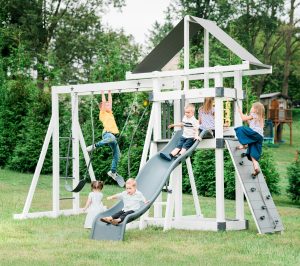
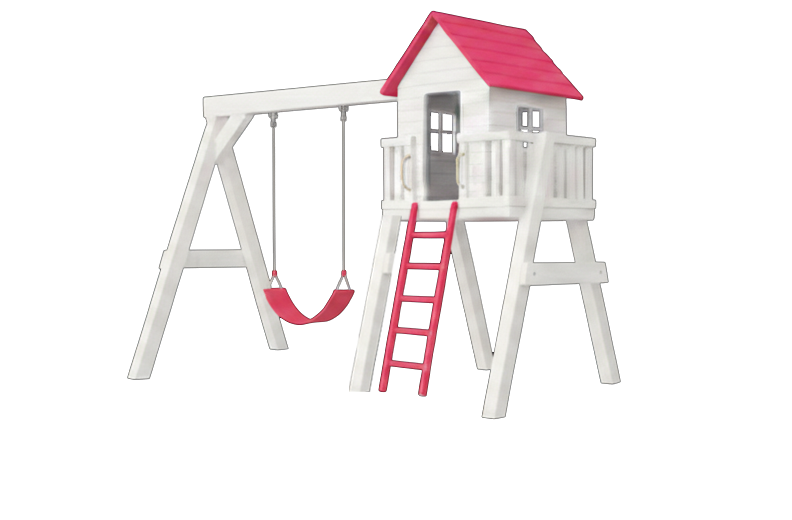
Choosing a swing set is not only about color or price. The right vinyl swing set should fit your yard, your children’s ages, and the amount of care you can realistically provide. Picture the space first: a level area, room for swinging, and clear ground around the frame. Then compare the details that matter after delivery, when the boxes are open and the instructions are in hand.
Playground safety researcher Dr. Joe Frost’s work offers a useful principle: play spaces should balance challenge with protection. This is an editorial paraphrase, not a verified verbatim quotation. Use it as a reminder to check swing spacing, anchoring, age guidance, and supervision—not as a substitute for the manufacturer’s instructions. Small details count. A sturdy-looking frame still needs proper installation.
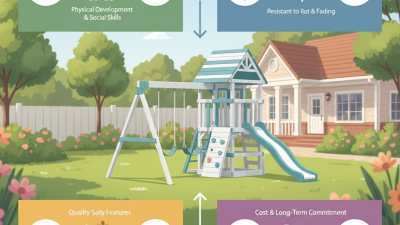
This guide covers seven practical considerations: material quality, frame stability, safety features, size and layout, assembly, maintenance, and warranty support. It also looks at what vinyl can and cannot promise. It resists some common weathering and does not need painting, but no outdoor structure is maintenance-free. That part is easy to overlook. Inspect connections, surfaces, and moving parts regularly, and follow the maker’s care guidance. A little skepticism helps, too: compare written specifications instead of relying on polished product photos or broad durability claims. With those checks, you can choose vinyl swing sets that suit your space and support everyday play.
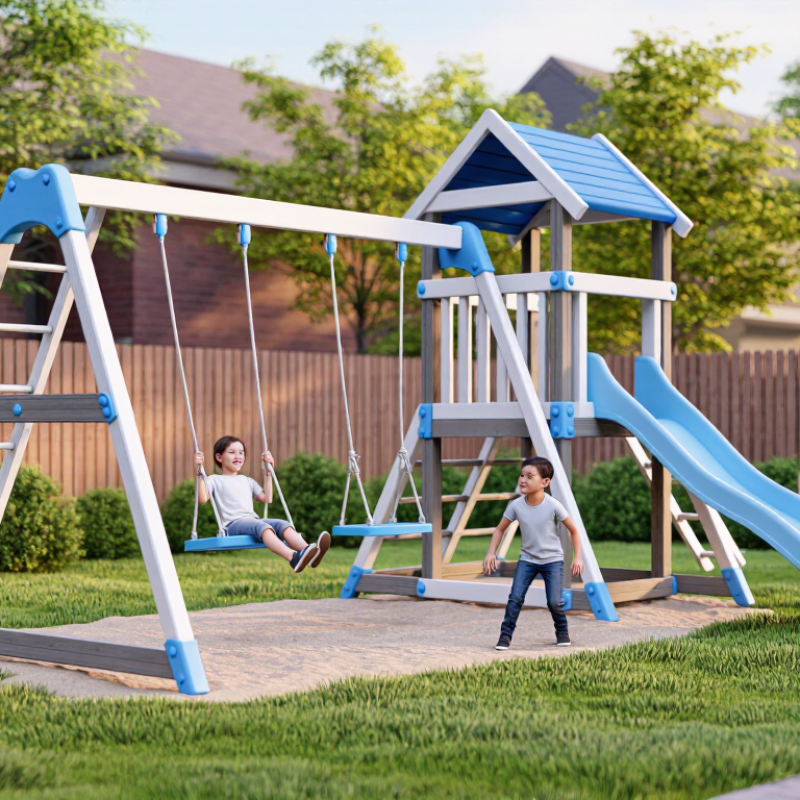
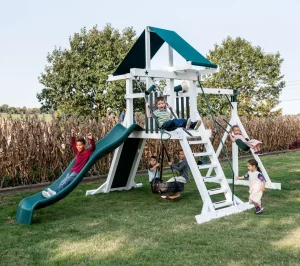
Vinyl swing sets usually pair a load-bearing frame with smooth vinyl sleeves around structural posts. The vinyl provides a finished surface, but it may not carry the swing’s weight. Ask what sits beneath the sleeves, how the posts connect, and whether the frame is rated for the intended users. Small detail, big difference. A polished exterior cannot compensate for weak joints or poor anchoring.
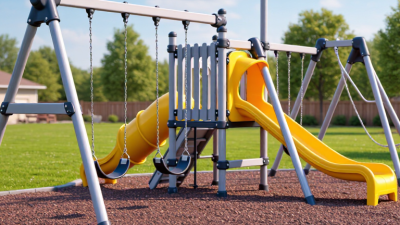
Look closely at the swing hardware. Chains or ropes should attach to purpose-built hangers, with no sharp edges or exposed pinch points near the seats. Check the listed age and weight limits, then leave clear space around the full swing arc. A level patch of ground helps, while suitable impact-absorbing surfacing can reduce injury risk. Measure the yard rather than guessing.
Vinyl often needs less repainting than exposed wood, yet it is not maintenance-free. Sunlight, grit, and freezing weather can dull surfaces or loosen fittings over time. Rinse away dirt and inspect bolts, hangers, anchors, and cracked sleeves regularly. I would not judge durability by shine alone; seams and hidden connections deserve a closer look, even if checking them feels fussy.
Tip 1: Measure the full swing area, not just the frame. Note fences, walls, tree limbs, and doors that could enter the swing path. The U.S. Consumer Product Safety Commission’s Public Playground Safety Handbook recommends a front-and-back use zone twice the pivot height, with at least 6 feet at the sides. For a 7-foot pivot, that means about 14 feet in front and behind. This is public-playground guidance, not a substitute for the set’s installation instructions. Measure twice.
Tip 2: Match the set to its users. Count children who may swing at once, and check the maker’s age, weight, and occupancy limits. Younger children may need seats with more support; older children may need a wider swing area. Consider mobility and supervision, too. A yard can look spacious until several kids are moving.
Tip 3: Decide how the set will be used. Is it for quiet swinging, group play, or daily active use? Check that the ground is level, drains well, and has suitable impact-absorbing surfacing. Leave room for adults to reach each seat and inspect connectors. A quick sketch helps, but it can miss sloping ground; recheck measurements on site before choosing a size.
Plan the swing area before choosing a set. For a belt swing, CPSC guidance recommends a clear use zone extending at least twice the pivot height in front of and behind the swing.
Illustrative planning examples: a 6-, 7-, or 8-foot pivot height calls for 12, 14, or 16 feet of clearance in each direction. Also allow at least 6 feet to the sides, and check the swing-set instructions and local requirements before installation.
Vinyl swing sets often combine a structural core with a protective vinyl covering. Check what sits beneath the surface. A smooth white sleeve may resist splinters and simplify cleaning, but it does not reveal the core’s strength. Ask whether the frame uses treated wood, steel, or another material, and look for clear specifications. Small details matter. At joints, inspect how posts connect to beams and whether hardware is corrosion-resistant. Loose-fitting covers or exposed fasteners can become maintenance concerns.
Construction affects how a set handles repeated movement. Look for reinforced connection points, evenly supported crossbeams, and posts designed to stay stable in the intended ground conditions. Read the installation instructions before buying; some frames require concrete footings, while others use different anchoring methods. Check the swing’s stated user limits and follow them. A wide stance can help, but it cannot compensate for weak joints or poor assembly. I would not judge durability by appearance alone.
Sunlight, moisture, and temperature changes all test a frame over time. Vinyl can reduce routine upkeep, though seams and edges still deserve inspection for cracking or separation. Wood cores may need closer attention if moisture gets underneath the covering. Steel components should be checked for rust, especially around cut ends and hardware. No material is maintenance-free. Compare warranty terms with the actual frame construction, and note what conditions are excluded. That part is easy to overlook. A little uncertainty remains, since installation and local weather can change how long any set lasts.
A vinyl swing set should have clear safety documentation, not just a sturdy-looking frame. Check which safety standards apply where you live, and ask for written confirmation that the set meets them. In the United States, residential playground equipment may be evaluated against ASTM F1148; requirements can differ elsewhere. Read the inspection and maintenance guidance, too. Vinyl sleeves can look solid while hiding wear or loose connections underneath.
Capacity needs a closer look. Check both the maximum weight per seat and the total load the structure can support. Add the likely weight of children using it together, rather than assuming one child will swing at a time. Leave room for growth. A seat that fits a toddler today may feel cramped next year. Small detail, big difference. Look for sturdy hangers, smooth edges, and enough spacing to reduce collisions between swings.
Installation can make or break the setup. Choose a level area with clear space around and beneath the swings, then follow the specified anchoring method. Check for buried utilities before digging. If the ground slopes or the instructions seem vague, pause and contact a qualified installer. It is tempting to improvise a shortcut; I would not trust one here. Recheck bolts and anchors after installation, and inspect them regularly, especially after heavy rain or frequent use.
| Tip | What to Check | How to Verify |
|---|---|---|
| 1. Check applicable safety standards | Look for documentation identifying the safety standard used for the residential play equipment. ASTM F1148 covers home playground equipment. | Ask for the product’s compliance information and confirm which model it applies to. Do not assume that a general safety claim means the product is certified. |
| 2. Match capacity to your household | Compare the stated weight limit for each seat and the whole structure with the intended users. These limits can differ by component. | Read the manual and product specifications, including any limits on the number of children using the set at once. Follow the lowest applicable limit. |
| 3. Understand the vinyl construction | “Vinyl” may describe an exterior coating rather than the load-bearing frame. Check what the frame, joints, hardware, and swing hangers are made from. | Review the materials list and care instructions. Check whether the manufacturer specifies how to inspect the coating for cracks, peeling, or exposed structural material. |
| 4. Measure the yard and use zone | Allow for the full footprint, swing movement, access, and the clearance distances specified in the installation manual. Keep the area away from obstacles such as fences, trees, and walls. | Mark the proposed footprint and swing paths before purchase. Use the manual’s dimensions and clearance requirements rather than estimating from the frame size alone. |
| 5. Plan for suitable surfacing | Hard ground such as concrete or compacted soil can increase injury risk in a fall. The play area needs appropriate impact-attenuating surfacing and adequate coverage. | Follow the equipment instructions and recognized playground-surfacing guidance. Check the required material, coverage area, and maintenance needs for your installation. |
| 6. Confirm installation and anchoring needs | Assembly may require multiple people, specific tools, level ground, and anchors or footings. Anchoring requirements depend on the design and installation conditions. | Check the full manual before ordering. Confirm whether installation is DIY or professional, what the package includes, and whether local ground conditions affect anchoring. |
| 7. Review maintenance and inspection instructions | Outdoor equipment needs regular checks for loose fasteners, wear, corrosion, damaged seats or ropes, and deterioration of the frame or coating. | Choose a set with clear inspection and replacement guidance. Follow the recommended inspection schedule and stop use if a structural part or safety component is damaged. |
When comparing vinyl swing-set prices, look beyond the checkout figure. Ask whether delivery, assembly, anchoring, and surfacing are included. A sloped yard may need grading, adding expense before the first swing. Request an itemized quote and compare the same components across sellers. Warranty length matters, but coverage matters more. Check whether it covers vinyl cracking, fading, connectors, and labor—or only selected parts. Read exclusions for storm damage, ground movement, and routine wear. Small print matters. ASTM International’s F1148 specification covers residential playground equipment, but meeting a safety standard does not guarantee that every warranty claim will be accepted.
Long-term upkeep affects the real cost. Inspect fasteners, chains, and vinyl surfaces regularly; look for sharp edges, loose joints, and cracks after harsh weather. The U.S. Consumer Product Safety Commission’s Public Playground Safety Handbook reports roughly 200,000 emergency-room-treated injuries associated with public playground equipment each year. That figure concerns public sites, not private swing sets, so it cannot predict a home set’s risk. Still, it underscores why maintenance and safe installation deserve a place in your budget. Vinyl may resist rot, but it is not maintenance-free. Keep a simple inspection log, and photograph changes over time. I would also leave room in the budget for replacement hardware; it is easy to overlook.