








Choosing Outdoor Litter Bins is a practical decision, not a decorative one. The right bin affects cleanliness, collection time, customer confidence, and daily operating costs.
Sustainable design expert William McDonough often says, “Waste equals food.” His idea encourages businesses to view discarded materials as part of a managed system, not an invisible problem. For a café, shopping centre, hotel, or office park, that system begins beside the entrance. A bin should match the site’s foot traffic, waste volume, weather exposure, and cleaning routine.
Imagine a busy courtyard at noon. An 80-litre bin may fill quickly, while a smaller unit could overflow before afternoon service ends. A covered opening helps protect waste from rain. A weighted base reduces movement during windy weather. Smooth, corrosion-resistant surfaces make wiping easier after spills. These details matter more than a fashionable colour.
Placement also deserves careful attention. Bins should stand near natural walking routes without blocking doors, ramps, or service paths. Clear openings can reduce hesitation, especially when several waste streams are offered. However, too many compartments may confuse visitors. More separation is not always better.
Experienced facility teams usually test one location before ordering in bulk. That small trial can reveal problems with odour, capacity, collection frequency, or vandal-resistant construction. I would not ignore appearance, either. A neglected bin can damage trust quickly.
There is no perfect choice. The best Outdoor Litter Bins balance capacity, accessibility, durability, appearance, and maintenance. Business owners should review real usage data after installation and adjust their assumptions when the site tells a different story.
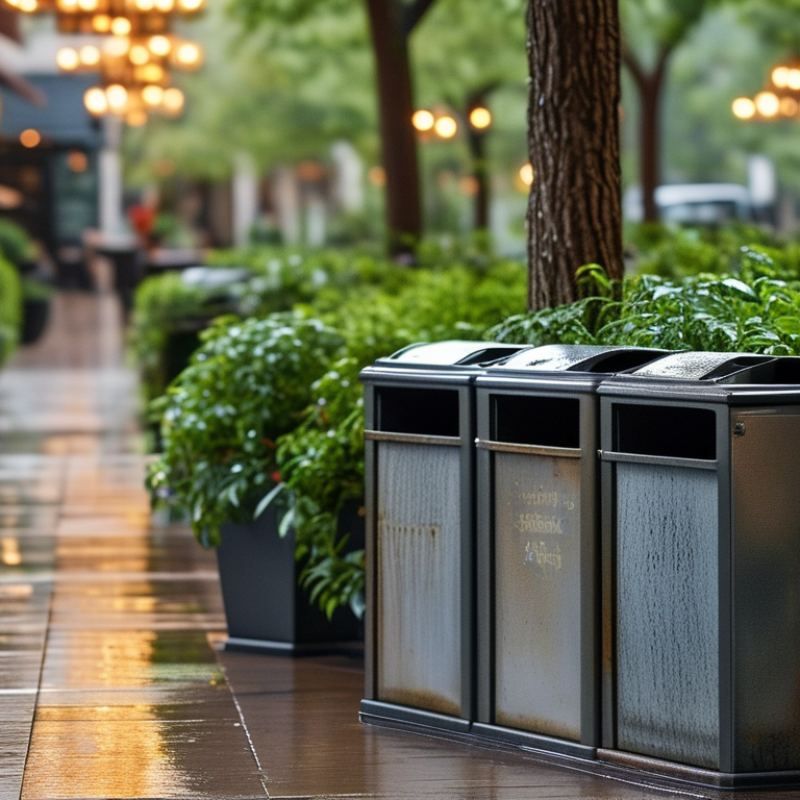
Choosing an outdoor litter bin starts with observing your property, not browsing product photos. Walk the site during busy and quiet periods. Note entrances, smoking areas, parking spaces, dining zones, and delivery routes. A bin beside a crowded doorway may overflow quickly, while one near a quiet wall may stay unused.
Record the waste produced each day for one week. Separate food packaging, drink cups, paper, and general rubbish. Check whether wind, rain, or direct sunlight affects the area. Wet waste needs secure liners and covered openings.
High-traffic locations may require larger capacity or more frequent collection. Keep access clear for customers and collection staff. Small details matter.
Tips: Place bins where people naturally pause. Use clear labels and matching openings. Check them at opening, lunch, and closing times. Empty them before they look full.
In my site assessments, businesses often underestimate weekend demand. A bin that works on Tuesday may fail during a Saturday event. I once recommended too few units for a busy entrance, and the collection schedule became difficult. That mistake showed me that capacity alone is not enough. Consider distance, visibility, cleaning time, and seasonal changes. Review the setup after two weeks. Adjust it when real behavior differs from your plan.
Choosing outdoor litter bins starts with observing the site, not selecting the largest container. During site checks, I count foot traffic, seating areas, and nearby food points. A bin beside a busy entrance fills faster than one near a quiet wall. Record waste levels at opening, lunch, and closing for several days. This simple habit reveals actual demand. Guesswork is expensive.
Capacity should match collection schedules and safety needs. A small 30-liter bin may suit a low-traffic office entrance. A 90-liter unit can serve a food court, provided staff empty it regularly. Leave room below the opening; overfilled waste looks neglected and attracts pests. Check liner dimensions before purchase, because awkward bags slow daily work. In windy areas, choose a weighted base or anchoring system. Still, heavier is not always better. Staff must move it safely.
Style should support behavior and maintenance. A wide opening encourages quick disposal, while a narrow slot can reduce rain entry. Covered designs work well near exposed walkways. Ash receptacles should be separate where permitted, clearly marked, and emptied carefully. Use corrosion-resistant materials near coastlines or salted paths. Smooth surfaces make washing easier. Dark finishes hide marks, but they can show dust in bright sunlight. I once preferred appearance over access; users walked past the bin. That mistake changed my criteria. Measure the approach path, viewing angle, and cleaning space before approving the final layout.
| Outdoor Location | Recommended Bin Style | Typical Capacity | Suggested Dimensions | Recommended Opening | Suitable Materials | Estimated Use Level | Practical Selection Notes |
|---|---|---|---|---|---|---|---|
| Small office entrance | Compact post-mounted or freestanding bin | 30–45 L | Height: 700–850 mm Width: 300–400 mm Depth: 300–400 mm | Round or rectangular opening, approximately 120–180 mm wide | Galvanized steel, powder-coated steel, or UV-stabilized recycled plastic | Low to moderate pedestrian traffic | Choose a compact footprint that does not obstruct entrances, pathways, or accessible routes. |
| Retail storefront or shopping frontage | Freestanding litter bin with hooded opening | 60–90 L | Height: 850–1,050 mm Width: 400–550 mm Depth: 400–550 mm | Covered opening to help reduce rain entry and discourage bulky waste | Powder-coated steel or stainless steel with corrosion-resistant fixings | Moderate to high pedestrian traffic | A visible, attractive design near the exit or smoking area can improve correct disposal and reduce litter. |
| Restaurant, café, or takeaway area | Large-capacity bin with removable liner | 80–120 L | Height: 900–1,100 mm Width: 450–600 mm Depth: 450–600 mm | Wide opening for cups and food packaging; optional separate recycling apertures | Stainless steel, galvanized steel, or commercial-grade recycled plastic | High waste volume during meal periods | Select smooth, easy-clean surfaces and a removable liner to support frequent servicing and hygiene control. |
| Office, hotel, or apartment car park | Heavy-duty weather-resistant freestanding bin | 90–120 L | Height: 900–1,100 mm Width: 450–600 mm Depth: 450–600 mm | Rain-protected opening, preferably angled or hooded | Hot-dip galvanized steel, powder-coated steel, or UV-resistant plastic | Moderate traffic with exposure to wind and rain | Use a weighted or securely anchored base to reduce tipping, movement, and unauthorized relocation. |
| Public sidewalk or transport waiting area | Robust street litter bin with anchoring points | 90–180 L | Height: 950–1,200 mm Width: 500–700 mm Depth: 500–700 mm | Restricted or hooded opening to limit rain, animal access, and oversized waste | Galvanized steel, stainless steel, or impact-resistant recycled plastic | High and continuous pedestrian traffic | Prioritize vandal resistance, secure access for servicing, and placement that preserves pedestrian clearance. |
| Shopping centre, stadium, or event venue | Modular multi-stream recycling and waste station | 120–240 L total capacity | Height: 900–1,200 mm Width: 700–1,400 mm Depth: 450–700 mm | Clearly labelled openings sized for general waste, bottles, cans, or paper | Powder-coated steel, stainless steel, or durable recycled plastic panels | Very high, concentrated pedestrian traffic | Use consistent opening shapes, large visual labels, and separate internal liners to support waste separation. |
| Park, garden, or outdoor leisure area | Animal-resistant bin with covered opening | 80–140 L | Height: 900–1,150 mm Width: 450–650 mm Depth: 450–650 mm | Small hooded opening that limits access by birds and animals | Galvanized steel, recycled plastic, or weather-resistant composite material | Moderate to high seasonal traffic | Consider UV exposure, wind, rain drainage, and anchoring. A domed or sloped top helps prevent litter accumulation. |
| Smoking area outside a commercial building | Combined litter and cigarette receptacle | 20–60 L litter capacity 1–4 L ash capacity | Height: 750–1,050 mm Width: 300–500 mm Depth: 300–500 mm | Separate cigarette extinguishing surface and enclosed litter opening | Metal body with a heat-resistant, non-combustible ash insert | Moderate to high use in designated smoking zones | Keep the ash receptacle separate from combustible waste and empty it only after contents have cooled. |
| Construction, industrial, or service yard entrance | Impact-resistant heavy-duty bin | 120–240 L | Height: 950–1,200 mm Width: 500–700 mm Depth: 500–700 mm | Large but controlled opening suitable for packaging and general litter | Heavy-gauge galvanized steel or high-impact recycled plastic | High use with demanding outdoor conditions | Choose a reinforced body, lockable access, and a stable base. Confirm that the bin is not intended for hazardous or industrial waste. |
Choosing Outdoor Litter Bins for Your Business
Compare Materials for Durability and Weather Resistance
Choosing outdoor litter bins begins with the site, not the catalogue. A busy café terrace needs impact resistance and simple cleaning. Rain, sunlight, salt air, and winter grit can damage unsuitable materials quickly. Observe where water collects, and check how much direct sunlight reaches the bin. That small inspection often reveals more than a product photograph.
Galvanized steel offers strong impact resistance for busy commercial areas. Its zinc layer helps resist rust, but scratches and cut edges need attention. Powder coating adds color and another protective barrier. It can still chip after hard impacts. Stainless steel handles moisture well and cleans easily, although its higher cost may not suit every budget. Aluminum is lighter and naturally corrosion resistant, making relocation simpler. However, thin panels may dent more easily. Recycled HDPE resists rain, salt, and many cleaning chemicals. It will not rust, but prolonged sunlight can fade some finishes. Check UV protection before choosing it. Wood looks welcoming, yet it demands regular sealing and inspection around joints.
Practical details decide durability. Look for covered openings that limit rain entry and removable liners that prevent trapped moisture. Check hinges, locks, and base fixings before installation. Coastal sites may need stainless fixings, even with another body material. In freezing climates, avoid designs that hold water in seams. Ask how replacement parts are supplied. A bin that lasts longer is not always the best value if repairs are difficult. I once underestimated cleaning access; the attractive unit became frustrating within weeks. Appearance matters, but maintenance usually decides performance.
Comparative ratings for common outdoor litter-bin materials. Higher scores indicate better overall performance in demanding outdoor environments.
Ratings use a five-point comparative scale based on typical material properties. Actual service life depends on thickness, coatings, drainage, installation, climate, cleaning practices, and exposure to salt or chemicals.
Choosing outdoor litter bins is less about appearance and more about controlled daily use. In site audits, overflowing liners often cause the first hygiene failure. Select smooth, non-porous interiors that staff can wash without trapped residue. The CDC reports that proper hand hygiene can reduce diarrhoeal illness by 31% and respiratory infections by 16–21%. Place bins near entrances, seating areas, and food-service exits. Keep walking routes clear.
Accessibility needs practical testing. Users should reach the opening without stretching, bending sharply, or crossing a busy path. A visible opening, stable base, and clear waste labels help people dispose of items correctly. The 2010 ADA Standards for Accessible Design recommend accessible routes and operable features, but real spaces can still expose problems. A bin may meet a measurement and remain awkward for wheelchair users. Test it with different users.
Security and pest control deserve equal attention. Choose lockable liners or concealed frames where tampering is likely. Rounded lids, self-closing openings, and weighted bases can reduce scattered waste. Keep food waste containers away from walls and drainage points. The World Health Organization identifies solid waste accumulation as a factor that can support pest breeding and disease transmission. Clean spills quickly. Inspect hinges weekly. Small gaps matter. A perfect specification cannot replace inconsistent servicing, which is where many waste plans quietly fail.
Plan bin placement before purchasing outdoor litter bins. Place them near entrances, seating areas, exits, and busy walking routes. Keep them visible, but never block doors, ramps, or emergency access. A bin beside a windy corner may scatter waste across the pavement. Shade can also reduce odors during hot weather. Check drainage, lighting, and pedestrian movement at different times of day.
Installation should match the site surface and expected use. Secure bins to concrete or another stable base where possible. Choose fixings that resist rain, vibration, and repeated handling. Leave enough space for staff to open, empty, and clean each unit safely.
This detail is often missed. I have seen well-positioned bins become difficult to service because parked vehicles blocked access. The plan looked right on paper.
Emptying schedules should reflect actual waste levels, not guesswork. A busy café may need daily collection, while a quiet office site may need less frequent service. Record overflow, odor, and seasonal changes for several weeks. After concerts, markets, or storms, inspect bins sooner. Use durable liners and avoid overfilling them. Staff should check lids, hinges, anchors, and surrounding litter during each visit. Clean internal surfaces with suitable products and allow them to dry. Replace damaged parts promptly. Small defects become expensive problems. Review the arrangement regularly, because customer flow rarely stays unchanged.
