What Type of Plastic Are Cups and Bottles Made Of?
A Plastic Cup & Bottle may look simple, yet its material often depends on purpose, cost, and production method. Clear beverage bottles are commonly made from polyethylene terephthalate, known as PET or PETE. This plastic feels light, rigid, and slightly glossy. Many milk containers and household bottles use high-density polyethylene, or HDPE, because it resists impacts and moisture. The recycling code underneath can offer a useful clue, but it is not a complete guarantee.
Cups require a closer look. Reusable plastic cups are often made from polypropylene, polycarbonate, or durable acrylic. Disposable cold-drink cups may contain PET or polystyrene, while hot-drink cups frequently use polypropylene or another heat-resistant plastic. Some paper cups also carry a thin plastic coating. They may look like paper, but their lining can affect recycling options. The appearance can mislead us.
I once assumed every transparent cup was made from the same plastic. That assumption was wrong. Manufacturing details, additives, colors, and local recycling systems can change the answer. Even recycling symbols deserve careful interpretation. They identify a resin category, not automatic recyclability. This guide examines the most common plastics used in cups and bottles, their practical properties, and the clues that help identify them. It also considers safety, heat exposure, reuse, and disposal without treating one material as perfect. The evidence is useful, but not flawless.
Common Plastics Used in Cups and Bottles
What Type of Plastic Are Cups and Bottles Made Of?
Common Plastics Used in Cups and Bottles
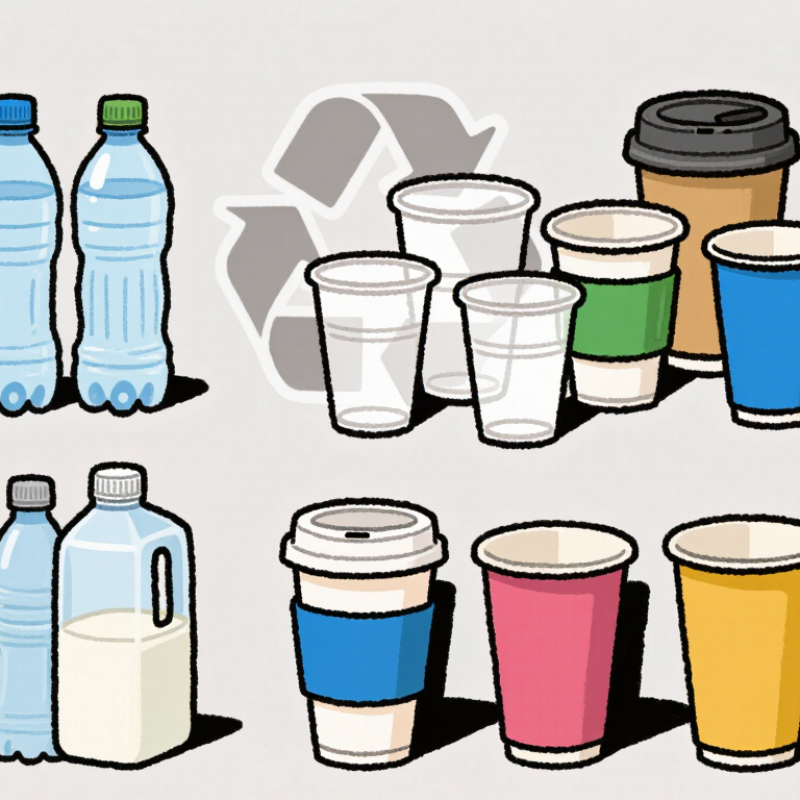
Plastic cups and bottles often use different materials for specific performance needs. Polyethylene terephthalate, or PET, is common in clear beverage bottles. It is lightweight, strong, and provides good visibility. PET usually carries the recycling code 1. Thin walls can still collapse easily under pressure.
High-density polyethylene, known as HDPE, is thicker and less transparent. It often appears in milk containers, household bottles, and durable drinkware. Its recycling code is 2. HDPE resists many chemicals and tolerates rough handling. However, color and additives can affect recycling quality.
Polypropylene, or PP, is another widely used plastic. It handles heat better than PET and often forms reusable cups, lids, and food containers. Its recycling code is 5. Polypropylene feels slightly flexible but does not crack easily. Polystyrene, marked 6, is used in some lightweight cups and foam containers. It can become brittle and is difficult to recover in many local systems.
Some clear cups use polycarbonate or other engineered plastics. These materials may offer strength, but identification requires checking the container markings. A recycling symbol does not guarantee local acceptance. Compostable plastics, such as PLA, also need suitable industrial facilities. They may not break down in a backyard compost pile. Reuse sounds simple. In practice, heat, scratches, odors, and cleaning habits can change a cup’s useful life. The material name is only part of the answer.
How Plastic Types Are Identified and Classified
Plastic cups and bottles are classified by resin type, not by appearance alone. The familiar triangle and number form a Resin Identification Code under ASTM D7611. Code 1 usually indicates PET, common in clear drink bottles. Code 2 identifies HDPE, often used for opaque containers. Code 5 means polypropylene, found in many reusable cups and hot-drink lids.
Other codes matter too. Code 3 is PVC, while Code 4 is LDPE. Code 6 identifies polystyrene, including some lightweight cups. Code 7 covers other or mixed plastics. The code helps sorting facilities recognize material families. It does not guarantee local recyclability. That distinction is often missed.
Material testing can examine density, melt behavior, infrared response, and additives. A cup may look like PET but contain polypropylene. Color, labels, coatings, and food residue can also affect sorting accuracy. According to the OECD’s Global Plastics Outlook, global plastic waste reached 353 million tonnes in 2019, while only 9% was recycled. The scale is sobering. PlasticsEurope’s Plastics—The Fast Facts 2024 reported 413.8 million tonnes of global plastic production in 2023. These figures show why correct identification matters. Still, classification is not perfect. Local equipment, collection rules, and product design can change the final outcome. Consumers should check the number first, then verify local guidance.
Why PET Is Commonly Used for Bottles
Polyethylene terephthalate, commonly called PET, is the plastic most often associated with clear beverage bottles. It belongs to the polyester family and usually carries recycling code 1. Manufacturers heat PET into a soft form, then stretch it inside a mold. This process creates a thin, strong container with a smooth surface and consistent shape.
PET is popular because it balances several practical needs. It is lightweight, transparent, and resistant to breaking during transport. Its structure also limits the movement of oxygen, moisture, and carbon dioxide through the container. That protection helps preserve taste and carbonation. PET uses less material than many older bottle designs, which can reduce transport weight. However, a lighter bottle is not automatically environmentally better. Collection systems, recycled content, and local processing capacity also matter.
The material is not used for every cup or bottle. Cups may contain polypropylene, polystyrene, paper-based layers, or other plastics. Caps often use a different plastic than the bottle. I once overlooked that small detail while sorting household packaging. It changed how I viewed recycling labels. PET containers should be emptied and rinsed when local guidance recommends it. Standard single-use PET bottles can become scratched or unhygienic after repeated use. They are not designed for every situation. Food-contact safety also depends on approved manufacturing, storage conditions, and temperature. Clear does not mean harmless, and recyclable does not mean recycled.
When PP, PS, and HDPE Are Used for Cups
Plastic cups and bottles are not made from one universal resin. The choice depends on temperature, stiffness, clarity, weight, and filling conditions. PP, PS, and HDPE each solve different packaging problems.
PP, or polypropylene, is common in reusable cups and hot-drink containers. It handles moderate heat better than many everyday plastics. Its surface feels slightly flexible, yet it resists cracking during repeated handling. Some PP products suit microwave use, but the container’s instructions still matter. “Heat resistant” is not the same as “heatproof.” PP may also appear in caps, lids, and thin hinged parts.
PS, or polystyrene, creates rigid, lightweight cups with a smooth surface. Clear PS works for cold drinks and desserts. Expanded PS provides insulation through its foamy structure. However, standard PS can become brittle, especially after chilling or rough transport. It is a poor choice for very hot liquids unless the design specifically supports that use. I have seen users judge quality by stiffness alone, which can be misleading.
HDPE, or high-density polyethylene, is widely used for bottles holding milk, juice, water, and household liquids. It is tough, moisture-resistant, and usually opaque or lightly translucent. HDPE can also form sturdy cups, although it is less naturally clear than PS. Its chemical resistance helps protect contents during storage. Still, recycling acceptance varies by location and collection system. A resin code identifies the plastic type, not a guaranteed recycling outcome.
How Plastic Choice Affects Safety and Recycling
What Type of Plastic Are Cups and Bottles Made Of?
How Plastic Choice Affects Safety and Recycling
A clear drink bottle is often made from PET, while opaque containers commonly use HDPE. Many reusable cups use PP, a tougher plastic for repeated washing. The resin code identifies the material, not its complete safety profile. It does not confirm that a container suits hot drinks, freezing, or long-term reuse. I check the base marking and use instructions before filling a cup. Small cracks matter.
Plastic choice affects how substances may migrate into food or drinks. Heat, sunlight, scratches, and long storage can increase concern. PET suits many cold beverages, but it is not automatically suitable for hot liquids. HDPE handles many household containers well. PP often tolerates warmer contents, yet it is not always microwave-safe. Food-contact testing and proper manufacturing provide stronger evidence than appearance alone. I once assumed a thick cup was safer, but thickness proved little by itself.
Recycling depends on local equipment, collection rules, and contamination levels. A recyclable symbol does not guarantee that every facility accepts the item. Emptying and rinsing containers helps, while trapped food can lower recovery quality. Caps and labels may follow different instructions. I have placed a technically recyclable item in the wrong bin before. That mistake showed me how confusing the system can be. Checking local guidance remains necessary, especially for layered cups, dark plastics, and mixed-material packaging.
What Type of Plastic Are Cups and Bottles Made Of?
Common beverage containers use different plastics because each resin offers a different balance of strength, clarity, heat resistance, and recyclability. The chart compares typical material density, which is a physical property—not a safety or recycling-rate score.
PET (#1) is widely used for clear single-use bottles. HDPE (#2) is commonly used for opaque bottles and is valued for strength. PP (#5) is often used for reusable cups and hot-food containers because it tolerates more heat than many other common packaging plastics. PS (#6) can be used for lightweight cups, although acceptance in recycling programs varies considerably.
Food-contact safety depends on the specific product, additives, manufacturing standards, and intended use. Recycling availability also depends on local collection and sorting systems; a resin identification code does not guarantee that an item will be recycled.