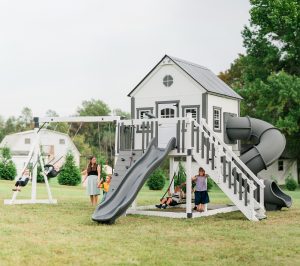
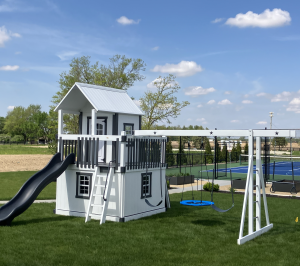
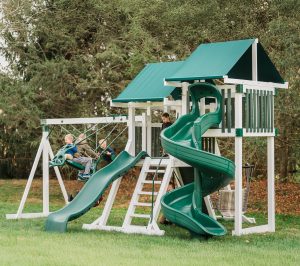

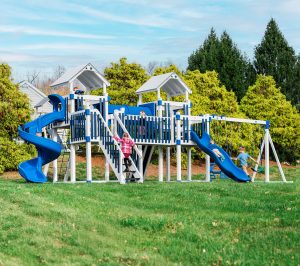





What Is the Best Swing Set With Slide in 2026?

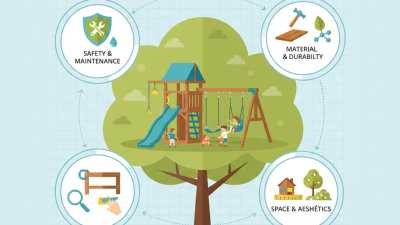
A swing set with slide can turn an ordinary backyard into a place for climbing, swinging, and imaginative play. But the best model for 2026 is not automatically the biggest or most expensive. It should fit the children who will use it, the space available, and the time a family can spend on setup and maintenance. Play researcher Dr. Stuart Brown has said, “The opposite of play is not work—it’s depression.” His point is a useful reminder: play matters, but choosing equipment still calls for clear-eyed judgment.

This guide compares swing sets with slides by construction, age suitability, footprint, assembly, and practical safety details. Look closely at the frame material, hardware, slide surface, weight limits, and anchoring instructions. Measure the yard before buying. A set that looks compact online may feel imposing beside a fence or patio. Check the required clearance around swings, too; moving chains need room, and a slide needs a suitable landing area. Small details matter.

There is no single winner for every household. A toddler may need different features than an older child, while a narrow yard can rule out popular designs. Price alone tells little. Reviews can help, but they may overlook long-term upkeep or tricky assembly. Weigh the manufacturer’s guidance against your actual space and needs. A little doubt is healthy here. The right swing set with slide should invite daily play without creating avoidable headaches.
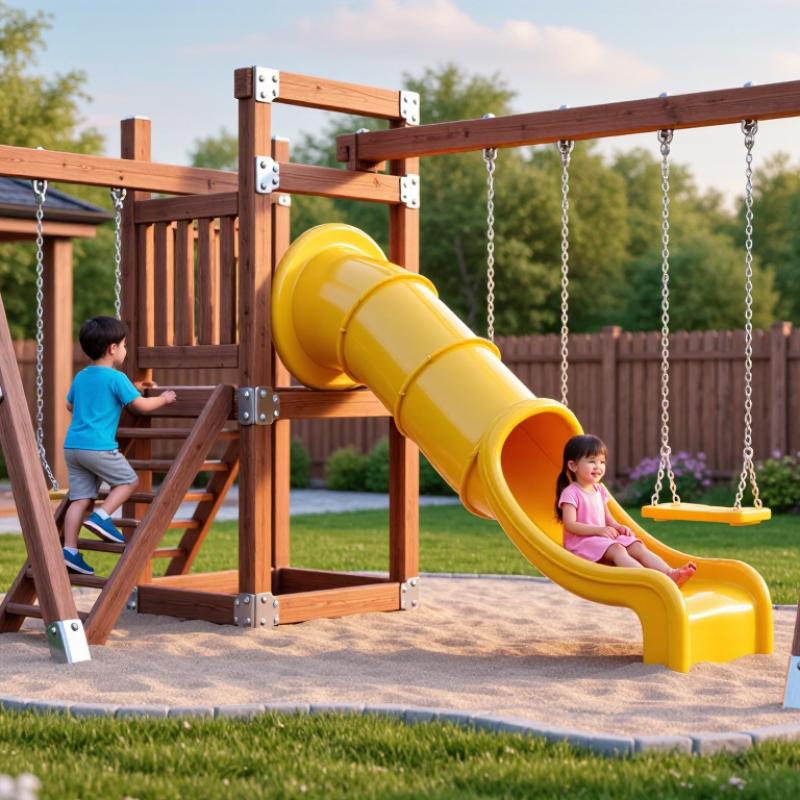
What Is the Best Swing Set With Slide in 2026?

What Defines a Home Swing Set With Slide Under ASTM F1148?

A home swing set with slide should be more than a cheerful frame in the yard. ASTM F1148 is a safety standard for residential playground equipment, including requirements and test methods relevant to play structures. A set designed to meet it should address hazards such as unstable construction, dangerous openings, and sharp or protruding parts. A smooth slide is not enough.

Look for clear documentation of the model’s standard compliance, age guidance, and installation requirements. Check that the frame can be anchored as directed and that swings and the slide have the specified clear space around them. The ground matters, too: grass may look soft, but it can become hard-packed. Use an appropriate protective surface and follow the manufacturer’s depth and coverage instructions. Small details count.

Even a well-designed set can become unsafe if assembled poorly or neglected. Tighten hardware as instructed, inspect ropes and chains for wear, and check the slide and frame after severe weather. I would not judge safety from a product photo alone; openings and clearances are hard to assess that way. Standards reduce predictable risks, but they cannot replace careful installation, regular checks, and adult supervision.

How CPSC’s 2× Pivot-Height Rule Determines Swing Clearance

When choosing a swing set with a slide, clearance matters as much as the play features. CPSC playground guidance uses a simple measure for swing use zones: allow space in front of and behind the swing equal to twice the height of its pivot point above the protective surface. Measure to the pivot axis, not the top of the frame.

For example, a pivot point 7 feet above the surfacing calls for about 14 feet of clear space in each direction. Keep that area free of fences, tree trunks, walls, and the slide’s exit path. The slide can look neatly tucked beside the swings, but its landing area should not overlap the swing’s travel zone. Check the equipment instructions too; they may specify greater distances or additional side clearance.

A tape measure helps. So does checking the layout again after installation, when the frame is level and the surface is in place. Loose-fill surfacing can shift, and a small slope can change the measured height. I would not rely on a quick visual estimate; it is easy to misjudge. The 2× measure is a planning guide, not proof that every installation is safe. Inspect the finished area for hard edges, standing water, and objects that could enter the swing path.

How 6-Foot Use Zones Shape Backyard Layout and Fall-Surface Planning

A swing set with a slide may look compact in a product photo, but its safe footprint is usually larger than its frame. A six-foot use zone can help you sketch the yard before buying. Treat it as a planning baseline, not a universal rule: equipment instructions may require different clearances, especially around moving swings. Measure from the swing’s pivot point and the slide’s exit, then mark the space with string or chalk.

Keep that zone clear of fences, tree trunks, paving stones, and garden edging. A child stepping off the slide may not stop exactly where you expect. Nor will a swing always travel in a neat line. Leave room for uneven landings. It matters. If the available yard cannot fit the frame and its required clearances, a smaller set may be safer than squeezing this one beside a patio.

Plan the fall surface across the full use zone, not just beneath the equipment. Grass can thin out quickly under repeated landings, and hard soil may become exposed. Use a suitable impact-absorbing material at the depth recommended for the equipment and surface type. Check it regularly; rain, play, and foot traffic can shift or compress it. I would remeasure after installation, too. My first yard sketch would not account for every slope or obstacle, and that is worth admitting.

What Is the Best Swing Set With Slide in 2026?

How 6-Foot Use Zones Shape Backyard Layout and Fall-Surface Planning

A 6-foot use zone is a common planning baseline around stationary playground equipment. For swings, CPSC guidance calls for front-and-back clearance of at least twice the pivot height: the 12-, 14-, and 16-foot examples shown are calculated for 6-, 7-, and 8-foot pivot heights. These are clearance distances, not total yard dimensions. Confirm the specific equipment instructions and applicable local requirements, and use suitable impact-attenuating surfacing throughout the required use zone.

Guidance reference: U.S. Consumer Product Safety Commission, Public Playground Safety Handbook. Pivot heights are illustrative; clearance values are calculated using 2 × pivot height.

How Age, Weight Limits, Materials, and Slide Design Affect Suitability

A good swing set with a slide should fit the children who will use it now, not just look roomy in a product photo. Toddlers need low seats, secure handholds, and a gentle slide with a clear landing area. Older children may need more height and room to swing without crossing paths. Check the maker’s age guidance and weight limits for each seat and the full structure. Those numbers are not interchangeable. Leave space around the frame, too, so a child stepping off does not meet a swing in motion.

Materials affect upkeep and comfort. Treated wood can feel sturdy, but it needs regular checks for splinters, loose bolts, and weather wear. Metal frames are often easier to wipe clean, though exposed parts can become hot in direct sun.

Plastic slides tend to have smooth surfaces, but their height, width, and slope still matter. A steep slide may be thrilling for one child and too fast for another. Small details matter.

Look for stable anchoring, rounded edges, and hardware that stays covered during play. Make sure the slide exits onto level ground rather than gravel or a hard walkway. Measure the yard before choosing; a set that technically fits may leave little room to move safely. It is easy to focus on the biggest weight rating and miss how children actually share the space. Check connections and surfaces regularly, because even a suitable set can loosen or weather over time.

How to Compare 2026 Swing Sets Against Safety and Space Requirements

A good swing set with a slide must fit the yard without squeezing children into fences, trees, or walkways. Measure the full play area, not just the frame. Include the slide’s landing zone and the clearance required around moving swings. Check the installation manual for exact spacing; layouts vary. A tape measure and a few garden markers can reveal problems before delivery. Small detail. Also look overhead for branches and power lines, and check whether the ground slopes or stays wet after rain.

Safety deserves more weight than extra features. Compare frame stability, anchoring instructions, age and weight limits, and the recommended protective surface. Grass may look soft, but it can hide hard soil or roots. Follow the maker’s guidance for surfacing and installation, and inspect bolts, chains, seats, and slide connections regularly. It is easy to overvalue a taller slide when browsing photos. In practice, children need room to climb, swing, and exit without crossing each other’s paths. I would sketch those routes before choosing a model. That step can feel fussy, and measurements are not perfect, but it is better than discovering the slide ends beside a patio.

What Is the Best Swing Set With Slide in 2026? — How to Compare 2026 Swing Sets Against Safety and Space Requirements
Configuration Typical Play Features Approximate Frame Footprint Space and Clearance Planning Safety and Surface Checks Best Fit
Compact, 2-seat set with slide Usually two swings and a small raised platform with a slide. About 8–12 ft wide × 8–12 ft deep. These are planning ranges, not standardized product dimensions. Measure the full swing-use zone, not just the frame. CPSC guidance calls for a use zone extending in front of and behind a swing by at least twice the height of its pivot point. Keep at least 6 ft of protective surfacing around other play equipment. Check the slide platform height, swing-seat spacing, anchoring instructions, and the surfacing manufacturer’s fall-height rating. Smaller yards where the required swing zone can still be kept clear of fences, trees, walls, and paths.
Standard, 2–3-seat set with slide Often combines a slide, two swings, and an additional activity such as a climbing ladder or glider. About 10–16 ft wide × 10–14 ft deep; feature layout can change these dimensions substantially. Allow for the swing-use zone in the direction of travel and a clear landing area at the slide exit. Check the exact assembled dimensions and clearance diagram before choosing a location. Use impact-attenuating surfacing appropriate to the equipment’s fall height. Keep the landing area free of hard objects and inspect connectors, ropes, and anchors regularly. Families seeking a balance of multiple play activities and a moderate yard footprint.
Large, multi-activity set with slide May include several swings, a larger platform, a longer slide, and climbing or play accessories. About 14–20 ft wide × 12–18 ft deep; verify the plan for the specific structure. Requires the most careful site planning. Map the manufacturer’s full use zones, including swing travel, slide exit, and access routes, before installation. Confirm that the surface is suitable for the listed fall height and that the structure can be securely anchored on the intended ground. Follow the age, use, and maintenance instructions supplied with the equipment. Larger yards with enough unobstructed space for separate play and circulation areas.

Comparison notes: Footprint ranges above are approximate planning estimates for general configurations, not specifications for a particular swing set. The U.S. Consumer Product Safety Commission (CPSC) recommends protective surfacing in play areas and describes swing-use-zone guidance; check current CPSC guidance and the equipment manufacturer’s installation instructions. The required surfacing material and depth depend on the material and the equipment’s fall height.