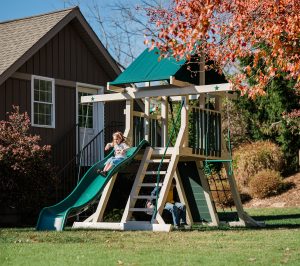
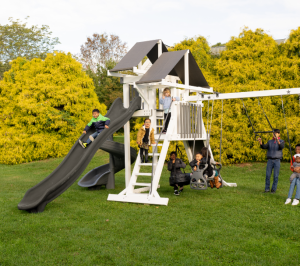
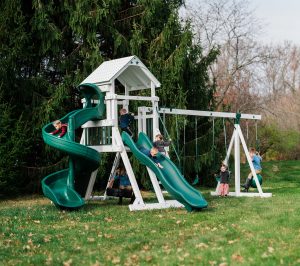
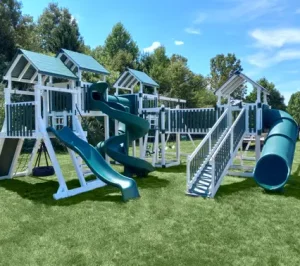



China Best Outdoor Play Sets for Global Buyers?
Choosing outdoor play sets from China is not simply a matter of comparing prices. Global buyers must examine design quality, material safety, factory experience, and after-sales support. A bright swing set may look impressive online, yet hidden details matter more. Check welds, platform edges, anchor points, ladder spacing, and surface coatings. Small defects can become serious concerns after months of outdoor use.
Play expert Tim Gill has written, “Risk is a vital component of play.” This principle helps buyers distinguish healthy challenge from preventable danger. A good playset can encourage climbing, balancing, swinging, and imaginative games. It should not expose children to sharp edges, unstable structures, toxic finishes, or poorly designed fall zones. The balance is difficult.
Climate changes the buying decision. Powder-coated steel may suit some regions, while treated timber may perform better elsewhere. Coastal air, heavy rain, intense sunlight, and freezing temperatures can shorten product life. Ask suppliers for material specifications, testing documents, installation drawings, and maintenance guidance. Independent inspections can add confidence, especially for large commercial orders.
Experience also matters. An established manufacturer should explain load ratings, recommended ages, replacement parts, and packaging protection. Certifications are useful, but buyers must verify their scope and validity. Not every certificate covers the complete product.
This guide explores China’s best outdoor play sets for schools, resorts, parks, housing developments, and private gardens. Some choices will be imperfect. Budget, safety, durability, appearance, and shipping efficiency rarely align perfectly. Careful buyers compare the trade-offs before placing an order.
China Best Outdoor Play Sets for Global Buyers?
Market Definition: China’s Outdoor Play Set Export Landscape and Buyer Segments
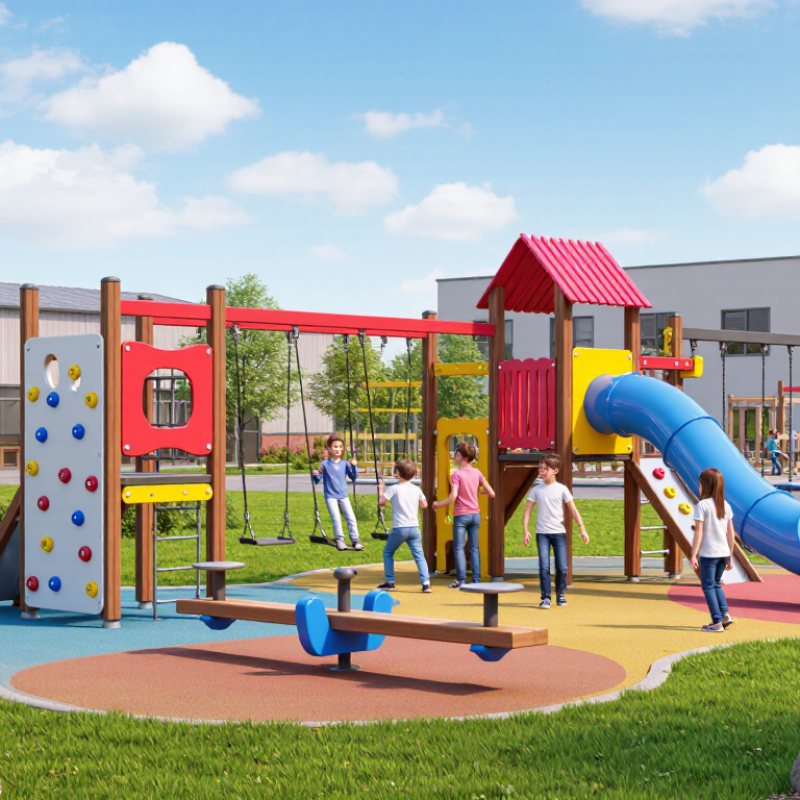
China’s outdoor play set export market covers swings, slides, climbing frames, and modular playground systems. Production is concentrated in coastal manufacturing areas, where suppliers combine metal fabrication, plastic molding, and wood processing. Many factories support OEM and ODM orders, allowing buyers to adjust colors, dimensions, packaging, and installation guides. Export shipments commonly serve distributors, schools, property developers, hotels, and municipal recreation projects. Each segment expects different specifications, delivery schedules, and documentation.
Distributors often prioritize stable pricing, mixed-container loading, and replacement parts. Schools usually focus on age suitability, fall zones, surface safety, and clear maintenance instructions. Hotels and residential developers may request compact layouts, weather-resistant coatings, and visual customization. Public projects typically require stronger tender documents, inspection records, and installation planning. Requirements differ by destination. Buyers should verify current standards, such as EN 1176 or ASTM F1487, with qualified local professionals.
A practical sourcing process begins with drawings, material details, test reports, and production samples. Check welds, plastic edges, anchoring points, drainage holes, and carton protection. A factory video is useful, but it is not proof. Independent inspections remain valuable before shipment. I have seen attractive samples hide weak packaging or unclear assembly steps. That risk deserves attention. Buyers should also calculate freight volume, import duties, spare parts, and after-sales response time. The cheapest quotation may become expensive after installation.
China Best Outdoor Play Sets for Global Buyers?
Safety Standards: ASTM F1487 and EN 1176 Requirements for Global Markets
For global buyers, safety begins before an outdoor play set leaves the factory. ASTM F1487 guides public-use playground equipment in the United States. EN 1176 establishes safety requirements for equipment used across European markets. These standards address falls, entrapment, protruding parts, guardrails, platforms, and structural strength. Neither standard automatically replaces local installation or accessibility rules. Small details matter.
During factory reviews, experienced buyers should inspect drawings, material records, welds, and assembly instructions. Inspectors measure openings where a child’s head or neck could become trapped. They also check sharp edges, handrails, moving parts, and minimum fall zones. Impact-absorbing surfacing must match the equipment’s fall height and site conditions. A beautiful surface is not always a safe one. I have seen projects pass a paperwork review but fail after poor drainage softened the ground unevenly. That gap deserves honest attention.
Reliable purchasing requires more than a compliance statement. Ask for current test reports from qualified laboratories, product specifications, installation records, and inspection schedules. Compare the documents with the actual units packed for shipment. Wood, coatings, metal thickness, and fasteners should match the approved design. Local climate also matters; intense sunlight, humidity, frost, and coastal air can shorten service life. Requirements evolve. A careful buyer checks them again before installation.
When global buyers compare outdoor play sets, fall protection should come before colors, slides, or shipping terms. CPSC guidance commonly uses a 9-inch depth of loose-fill surfacing for equipment with falls up to 7 feet. This benchmark applies to materials such as engineered wood fiber, sand, and pea gravel. It is not a decorative measurement. It is the working depth beneath the highest accessible platform.
Loose-fill surfacing moves. It scatters under swings and compresses near slide exits. Installers should check depth with a marked probe, especially below belt swings and around busy entry points. Keep the surface level, remove exposed soil, and restore displaced material promptly. A practical installation may require extra depth because regular use reduces protection. The CPSC handbook also advises considering material displacement. Small details matter.
For international purchasing teams, request the tested fall height, surfacing type, installed depth, and maintenance instructions. Ask for dated inspection records, not only attractive photographs. Local regulations may require more than the CPSC benchmark, so verify destination rules with a qualified safety professional. Do not treat nine inches as a permanent promise. Weather, drainage, frost, and heavy traffic can change performance. I have seen careful layouts weakened by one neglected landing zone. That is an uncomfortable lesson. Safety depends on routine checks, honest documentation, and site-specific judgment.
CPSC guidance recommends a minimum compacted depth of 9 inches for loose-fill protective surfacing under playground equipment with a fall height up to 7 feet. A 12-inch initial fill is commonly specified to allow for compaction and displacement and to support fall heights up to 10 feet.
Reference: U.S. Consumer Product Safety Commission, Public Playground Safety Handbook. Actual surfacing performance depends on material type, installation, drainage, wear, and ongoing maintenance.
The World Health Organization recommends at least 60 minutes of moderate-to-vigorous activity daily for children aged 5–17. This target is an average across the week, not a strict stopwatch test. Climbing, swinging, balancing, and running can support strength, coordination, and confidence. A well-designed outdoor play set can turn these movements into natural play. From practical observation, children often repeat activities when equipment feels challenging but achievable. That repetition matters for physical development.
Global buyers should examine platform height, fall zones, handrails, surface grip, and material durability. Rounded edges and stable anchors reduce avoidable risks. Buyers should also check local safety standards, installation requirements, and climate resistance before ordering. Product claims need evidence, not attractive wording. A play set that works well in a dry climate may require different maintenance near salt air or heavy rain. I have seen planning focus too much on appearance. Children usually care more about movement, access, and imaginative space.
Tips: Place the equipment near open space for running games. Mix climbing tasks with free movement. Inspect bolts, ropes, and surfaces regularly. Keep active play varied, because sixty minutes on one structure may become boring. Adult supervision remains sensible, especially for younger children. WHO guidance supports activity, but it does not replace careful design or responsible use.
Global buyers should evaluate outdoor play sets beyond catalog price. The U.S. Consumer Product Safety Commission estimates over 200,000 playground-related injuries receive emergency treatment annually. That figure makes verified safety testing a purchasing requirement, not a marketing detail.
Request test reports covering structural strength, entrapment, impact attenuation, sharp edges, and corrosion resistance. Ask whether testing follows ASTM F1487, EN 1176, or another destination-market standard. Check the laboratory’s accreditation and report date. A supplier offering only internal inspection is a weak signal. In my purchasing experience, samples often reveal loose fasteners, uneven coatings, or unclear assembly instructions. Small defects become expensive after shipment.
MOQ should match your sales forecast, container capacity, and cash flow. Compare quoted lead time with production capacity during peak seasons. A 45-day promise means little without confirmed raw-material availability and inspection milestones. Warranty terms should identify coverage periods, excluded damage, spare-part response time, and labor responsibility. Calculate total cost using product price, tooling, packaging, freight, duties, installation, inspections, replacement parts, and expected returns. A lower unit price may hide costly wooden-crate damage or missing hardware. Industry logistics reports continue to show freight volatility, so request at least two landed-cost scenarios. This is not perfect forecasting. It is better than trusting one attractive quotation.
| Evaluation Dimension | Entry-Level Residential Play Set | Mid-Range Residential Play Set | Commercial Playground Module | Buyer Evaluation Criteria |
|---|---|---|---|---|
| Typical construction | Powder-coated steel frame, HDPE or molded plastic components | Galvanized or powder-coated steel, UV-stabilized HDPE, molded parts | Hot-dip galvanized or heavy-duty powder-coated steel, commercial-grade plastic panels | Check material thickness, corrosion protection, UV resistance, weld quality, edge finishing, and replacement-part availability. |
| Typical order quantity | 20–100 sets per model | 10–50 sets per model | 1–10 project packages, subject to engineering scope | Confirm whether MOQ applies per model, color, container, or total order value. Ask for mixed-model loading options. |
| Indicative production lead time | 25–40 calendar days after deposit and artwork approval | 30–50 calendar days after deposit and final approval | 45–75 calendar days, including engineering and approval drawings | Obtain a written schedule covering drawing approval, production, inspection, packing, and dispatch. Add time for peak-season capacity. |
| Sample and prototype timing | 7–15 days for standard samples | 10–20 days for modified samples | 15–30 days for engineered or project-specific samples | Require a pre-production sample or approved reference unit before mass production; document all deviations. |
| Warranty benchmark | 12–24 months for manufacturing defects | 24–36 months for structure; shorter periods may apply to consumable parts | 36–60 months for structural components; 12–24 months for moving or wear parts | Define coverage, exclusions, claim evidence, response time, spare-part responsibility, labor, and freight treatment. |
| Safety testing and documentation | Material declarations, basic product inspection, applicable toy or playground documentation | Third-party testing against the destination-market requirements; coating and material documentation | Design review, installation instructions, structural assessment, impact and entrapment checks where applicable | For the United States, assess applicable CPSC requirements and ASTM F1487. For Europe, assess EN 1176 and EN 1177 where applicable. Testing must match the final configuration. |
| Factory quality controls | Incoming-material check, welding inspection, assembly check, visual final inspection | Above controls plus coating thickness, dimensional checks, hardware verification, and functional inspection | Documented quality plan, traceability, drawing control, torque checks, installation review, and final inspection | Use a pre-shipment inspection with agreed acceptance criteria, photos, carton counts, dimensions, and defect classification. |
| Indicative unit price, EXW China | US$120–350 per set | US$300–900 per set | US$1,000–5,000 per module or project component | Treat these as planning ranges only. Compare identical specifications, accessories, packaging, testing, and payment terms. |
| Packaging and container efficiency | Usually carton-packed; high volume-to-value ratio | Carton and protective foam or corner protection; nesting may reduce volume | Palletized or customized export packing; project packaging may require more floor space | Request packed dimensions, gross weight, cubic meters, pallet details, and estimated sets per 20-foot or 40-foot container. |
| Estimated freight and import-cost exposure | Freight can represent a significant share of product value because of bulky cartons | Moderate exposure; better nesting and container utilization can reduce cost per set | Project-specific; oversized components, port handling, and delivery equipment may materially increase cost | Calculate freight, insurance, customs duty, import VAT or sales tax, brokerage, port fees, inland delivery, and installation separately. |
| Spare parts and after-sales support | Basic hardware and plastic replacement parts should be available | Recommended spare-parts list and assembly support should be provided | Parts identification, installation documentation, and service response are essential | Ask for part numbers, prices, minimum quantities, expected availability period, and replacement lead time. |
| Installation requirement | Usually customer assembly; household tools may be sufficient | Customer or contractor assembly; anchoring and surface preparation may be required | Professional installation, anchoring, site preparation, and safety-surface planning are commonly required | Confirm whether installation, engineering, foundations, fall-zone surfacing, and local permits are included in the quotation. |
| Total cost of ownership formula | Product price + tooling or sample charges + export packing + inland freight + ocean or air freight + insurance + duty and taxes + customs clearance + local delivery + installation + testing or inspection + expected spare parts and warranty handling | Do not select on EXW or FOB price alone. Compare landed cost per usable set over the expected service period. | ||
| Recommended supplier score weighting | Compliance and safety documentation: 25%; product quality: 20%; total landed cost: 20%; lead time and capacity: 15%; warranty and after-sales service: 10%; MOQ and payment flexibility: 10% | Adjust the weighting for destination-market regulations, project risk, sales volume, and required delivery date. | ||
Note: Price, MOQ, lead-time, warranty, and freight figures are indicative procurement benchmarks rather than quotations. Final requirements depend on product design, order quantity, destination country, shipping terms, testing scope, and installation conditions. Applicable laws and standards should be verified for the final product and market.