


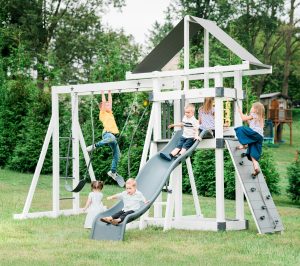
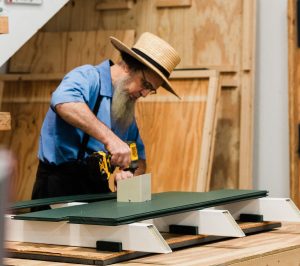
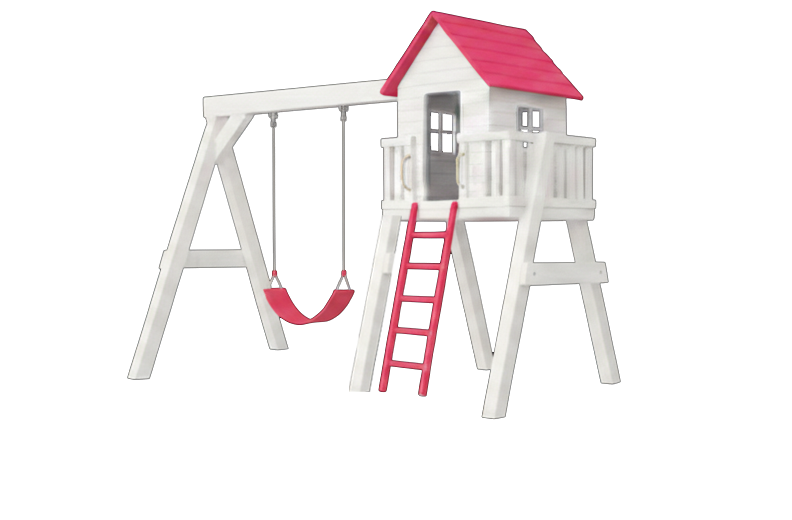
Choosing a backyard playground should feel exciting, not like guessing between colorful boxes.
Families face wide price differences, from compact plastic climbers to wooden towers with slides, swings, and climbing walls. This guide examines ten backyard playground sets across practical budget levels. It considers purchase price, installation, maintenance, available space, and long-term usability.
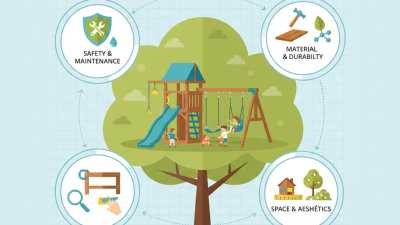
Safety must lead the comparison. The U.S. Consumer Product Safety Commission reports more than 200,000 children receive emergency treatment annually for playground equipment-related injuries. Its Public Playground Safety Handbook emphasizes fall protection, entrapment prevention, safe surfacing, and regular inspections. Home equipment deserves the same careful thinking, even when it sits behind a private fence.
ASTM International’s F1148 standard provides a useful benchmark for residential playground equipment. It addresses design features that can reduce foreseeable risks. The Centers for Disease Control and Prevention also identifies falls as a major source of childhood injury, reinforcing the importance of proper installation and impact-absorbing ground cover.
Small details matter.
A two-inch installation error can affect stability. Hard soil beneath a swing can turn an ordinary fall into a serious event. We will look for sturdy hardware, clear assembly instructions, weather-resistant materials, and realistic age recommendations. We will also consider whether each set leaves enough clearance around slides and swing paths.
Price alone can mislead. A cheaper set may need earlier replacement, while an expensive model may waste space or exceed a family’s needs. Some judgments remain subjective, especially when design, appearance, and assembly time enter the decision. This ranking is therefore practical rather than absolute, helping families choose a backyard playground that fits their budget, children, and available outdoor space.
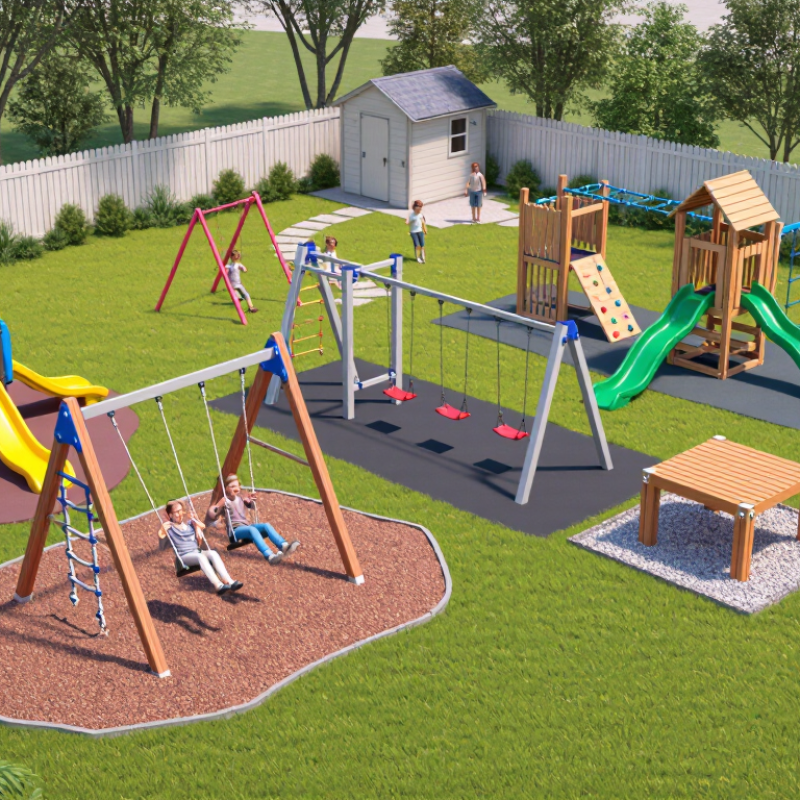
Choosing a backyard playground set starts with the yard, not the price tag. Measure the usable area, then leave a generous buffer around swings, slides, and climbing zones. The U.S. Consumer Product Safety Commission reports about 200,000 playground-related emergency department injuries among children each year. Falls account for most cases. That makes protective surfacing essential, even for a modest set.
Check the frame, hardware, ladder spacing, and weight limits against ASTM F1148, the standard for home playground equipment. Wood can feel sturdy, but it needs regular checks for splinters, rot, and loose fasteners. Metal may last longer, yet it can become dangerously hot under direct sun. Plastic parts fade and crack. Every material has weaknesses.
Surface depth matters. CPSC guidance recommends at least nine inches of loose-fill surfacing for equipment with a fall height up to seven feet, although maintenance can reduce that depth. Inspect the area monthly, especially after heavy rain. I would also avoid placing equipment beside fences, walls, or low branches. A cheaper set is not always economical if installation, surfacing, and repairs are ignored. My own planning mistake would be focusing too much on entertainment features. Children need safe movement, clear visibility, and room to grow. A small set may be wiser than a crowded one.
Top 10 Backyard Playground Sets for Every Budget?
Types of Playground Sets for Different Ages and Spaces
Choosing a playground set starts with the child’s age, not the price tag. Toddlers need low platforms, wide steps, and short slides with gentle slopes. Preschoolers usually enjoy climbing walls, swings, and small bridges. Older children need taller structures, challenging ladders, and stronger upper-body activities. A five-year-old may love a rope climber, while a two-year-old could find it frightening. Age labels are useful, but children develop differently. I have seen confident climbers struggle with narrow footholds.
Measure the yard before shopping. Leave at least six feet of open space around most equipment, unless local guidance requires more. Small yards suit compact towers with one slide and a single swing. Larger spaces can support separate activity zones, such as swings on one side and climbing equipment on another. Check the ground carefully. Grass may look soft, but it can become hard after dry weather. Engineered wood fiber, rubber surfacing, or thick mulch can reduce injury risks when installed correctly. Follow local safety rules and the equipment’s instructions.
Tips: Place the set where adults can see it from the house. Inspect bolts, ropes, and swing seats every month. Watch for splinters, rust, loose anchors, and trapped fingers. Do not overload platforms with several children. Shade matters too, because hot metal and plastic can burn skin. A weather cover helps, but it does not replace regular inspections.
| Rank | Playground Set Type | Typical Price Range (USD) | Recommended Age | Typical Footprint | Best Space | Main Play Features | Typical Capacity | Key Considerations |
|---|---|---|---|---|---|---|---|---|
| 1 | Compact Toddler Climber | $150–$450 | 18 months–4 years | 5 × 6 ft | Small yards, patios, and play areas | Low platform, short slide, crawl-through area, and basic climbing steps | 2–3 children | Choose wide steps, handrails, rounded edges, and a low platform height. Adult supervision is required. |
| 2 | Toddler Swing and Slide Set | $250–$650 | 2–5 years | 7 × 8 ft | Small to medium backyards | One bucket swing, small slide, step ladder, and compact play deck | 2–4 children | Bucket swings provide extra support for younger children. Allow additional clearance around the swing path. |
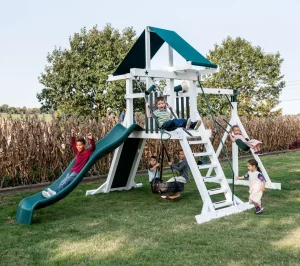
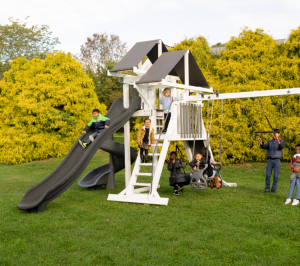
| 3 | Basic Swing Set | $300–$800 | 3–8 years | 8 × 10 ft | Medium yards with open clearance | Two belt swings, trapeze bar, small slide, and A-frame support | 3–5 children | Requires a level surface and a clear safety zone extending around the swings and slide exit. |
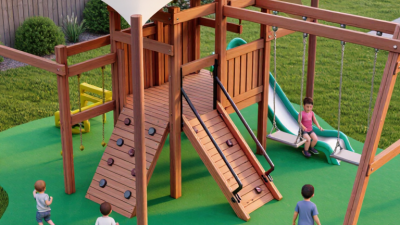
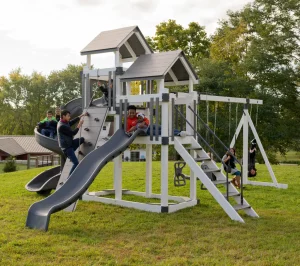
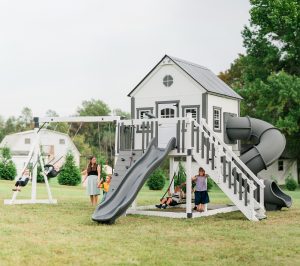
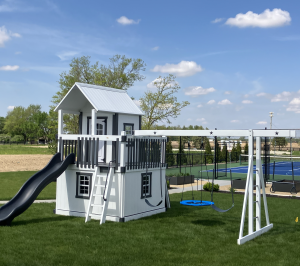
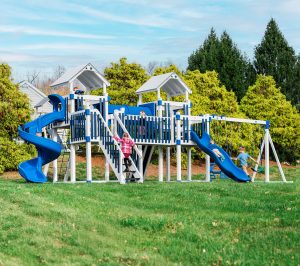
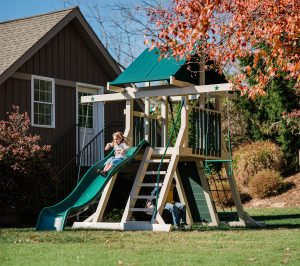
| 4 | Fort with Slide | $500–$1,200 | 3–10 years | 10 × 12 ft | Medium to large backyards | Raised deck, roof or canopy, climbing ladder, slide, and enclosed play area | 4–6 children | Check the platform height, guardrails, ladder grip, and whether the structure requires anchoring. |
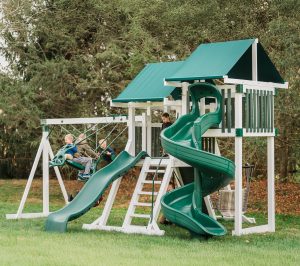
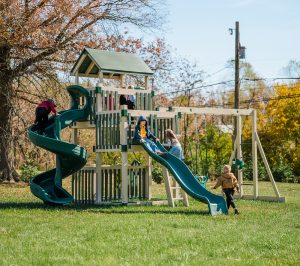
| 5 | Wooden Adventure Set | $900–$2,000 | 3–12 years | 12 × 14 ft | Large yards with a dedicated play zone | Fort, climbing wall, slide, swings, sandbox area, and imaginative-play features | 5–8 children | Wood needs periodic inspection and maintenance. Sealants should be suitable for outdoor children’s equipment. |
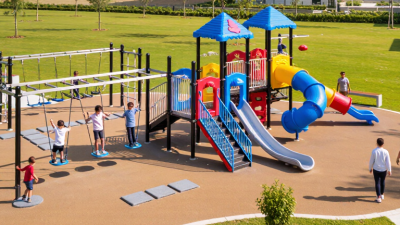
| 6 | Metal Multi-Activity Set | $700–$1,800 | 3–10 years | 10 × 13 ft | Medium to large lawns | Swings, slide, climbing ladder, overhead bars, and a central play tower | 5–7 children | Inspect metal joints for rust, confirm secure anchoring, and consider hot-surface exposure in sunny climates. |
| 7 | Climbing and Ninja-Style Set | $1,000–$2,500 | 5–12 years | 12 × 16 ft | Large yards with room for fall protection | Climbing wall, monkey bars, rope elements, cargo net, and balance obstacles | 4–8 children | Best for confident climbers. Use impact-attenuating surfacing and inspect ropes, connectors, and climbing grips regularly. |
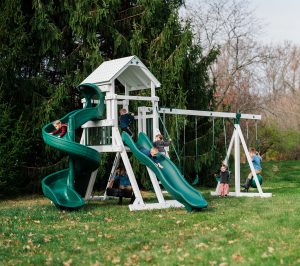
| 8 | Large Clubhouse Playset | $1,500–$3,500 | 3–12 years | 14 × 18 ft | Large suburban or rural yards | Clubhouse, two slides, swings, climbing wall, play kitchen, and shaded deck | 6–10 children | Measure the total footprint, including slide exits and swing clearance. Installation may require several adults. |
| 9 | Inclusive Ground-Level Set | $1,200–$3,000 | 2–12 years | 12 × 16 ft | Accessible yards and shared family spaces | Ground-level activities, transfer platform, sensory panels, ramps, and low climbing elements | 5–8 children | Look for wide access routes, stable transfer surfaces, suitable surfacing, and activities at multiple heights. |
| 10 | Custom Modular Playground | $2,500–$6,000+ | 3–12 years | 15 × 20 ft or larger | Large properties with flexible layouts | Custom combination of towers, slides, swings, climbing features, bridges, and play panels | 8–12 children | Confirm local setback rules, drainage, anchoring, installation requirements, and the complete safety-zone dimensions. |
Affordable playground sets can still offer active play, shade, and daily outdoor fun. Before shopping, measure the yard and mark a safe fall zone around the equipment. A compact set with one swing, a short slide, and a small climbing wall often costs less than a large combination unit. It also leaves more room for running games.
Keep it simple. Prices commonly range from about $150 to $500, depending on materials and features. Plastic sets are usually lighter and easier to move, while wooden frames may feel sturdier but need regular sealing. I prefer designs with rounded edges, strong handholds, and adjustable foot anchors.
Installation quality matters as much as the purchase price. Set the structure on level ground, follow the manual closely, and check every bolt after the first week. Loose hardware can appear after repeated swinging. Use impact-absorbing ground cover, such as engineered wood fiber or suitable rubber tiles, where children may land. Local safety guidance can help you choose the right depth and clearance.
I once underestimated how uneven a backyard was, and the slide sat slightly crooked. Fixing it took another afternoon. That mistake taught me to prepare the ground before opening the boxes. For a tight budget, buying fewer features may be wiser than choosing a crowded set with weak access, poor spacing, or difficult maintenance.
Top 10 Backyard Playground Sets for Every Budget?
Mid-range playground sets often offer the best balance between price, durability, and useful extras. They usually include swings, a climbing wall, a slide, and a shaded platform. Some add steering wheels, telescope-style accessories, or small picnic tables. These features encourage imaginative play without making the structure unnecessarily complicated.
When evaluating a set, I check the lumber or metal finish, hardware quality, and weight limits. A sturdy frame should remain stable when children climb, swing, and move suddenly. Look closely at the anchors. They matter more than decorative details. The slide should feel smooth, with no sharp edges or exposed fasteners. I also measure the fall zone before choosing a location. Soft, impact-absorbing ground is essential.
Extra features can be valuable, but they need regular attention. A sandbox may collect rainwater, while a shaded roof can trap leaves and moisture. I once underestimated how quickly small bolts could loosen after repeated use. That was a useful reminder. Inspect the connections every few weeks, especially after storms. Check for splinters, rust, cracks, and fading surfaces. Age recommendations should guide your choice, but supervision remains necessary. A playground that looks impressive may still be unsuitable for a younger child. Pay attention to repair access, replacement parts, and clear assembly instructions before buying.
When comparing the top ten backyard playground sets, long-term family use should guide the decision. A premium set should support changing abilities, not just young children. Adjustable swings, climbing routes, and shaded areas can keep the structure useful for several years. In my experience, sturdy construction matters more than extra accessories. Small details matter.
Look for weather-resistant timber, corrosion-resistant hardware, and reinforced connection points. Every platform should feel firm under movement, with smooth edges and secure railings. The fall zone also needs adequate clearance and impact-absorbing ground material. Current local safety guidance should be checked before installation. A professional inspection can reveal loose bolts, shifting anchors, or hidden wood damage.
I once underestimated how quickly outdoor equipment needs maintenance. Sunlight faded plastic parts, while autumn moisture affected an unprotected wooden step. That experience changed my buying priorities. Choose a set with replaceable components and accessible hardware. This can reduce waste and repair costs over time. Families should also consider the yard’s drainage, available space, and daily supervision needs. Premium pricing is reasonable when it reflects safer design, durable materials, and adaptable features. Still, expensive does not always mean better. A thoughtful comparison often finds stronger value in a simpler, well-engineered structure. Schedule seasonal checks, especially after storms, freezing weather, or heavy use.