


Top 10 Metal Swing Sets for Global Buyers

Choosing the right metal swing sets requires more than comparing prices and colorful product photos. Global buyers must assess frame strength, safety features, weather resistance, installation requirements, and supplier reliability. A swing set may look sturdy online but arrive with thin tubing, unclear instructions, or missing hardware. That matters.

This guide examines ten metal swing sets for different family spaces, climates, budgets, and purchasing needs. Each option is considered through practical details, including steel construction, protective coatings, weight capacity, swing-seat design, anchoring methods, packaging, and replacement-part support. Buyers should also confirm product dimensions before ordering. A spacious backyard may still have limited clearance near fences, trees, or concrete paths.

Real-world use can reveal weaknesses that product descriptions overlook. Rust may appear first around bolt holes. Plastic seats can become uncomfortable under strong sunlight. Some frames feel stable during light play but shift on uneven ground. These details deserve attention.

The selection process is not flawless. Supplier information can change, and regional safety expectations may differ. Therefore, readers should verify current specifications, testing documentation, warranty terms, and installation guidance directly with the manufacturer. Independent reviews and close-up product images can provide useful evidence, but neither replaces careful inspection.

The following comparison aims to support informed decisions, not encourage rushed purchases. Whether you need a compact set for a small garden or a larger structure for active children, the best choice balances safety, durability, usability, and long-term value. Good equipment should earn trust.
Top 10 Metal Swing Sets for Global Buyers

Market Scope: Metal Swing Set Types, Capacity, Materials, and Buyer Criteria

Top 10 Metal Swing Sets for Global Buyers

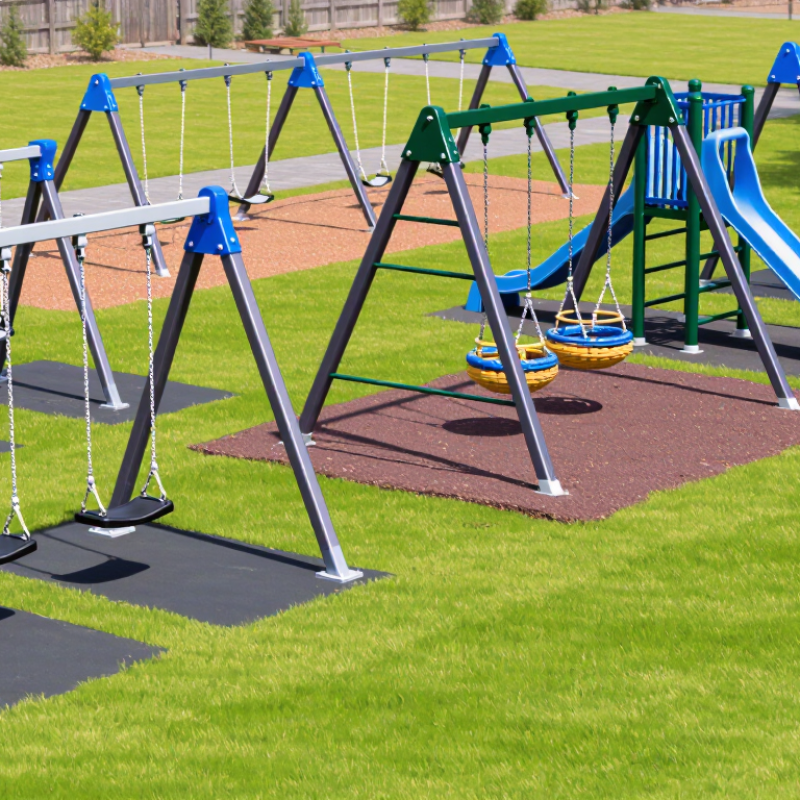
Metal swing sets differ sharply in type, capacity, materials, and maintenance needs. A-frame models suit compact gardens, while multi-bay systems serve schools, resorts, and community spaces. Buyers should compare two-seat, four-seat, and six-seat configurations. Capacity affects frame width, anchoring, user flow, and long-term stability.

Hot-dip galvanized steel resists rust better than untreated steel, especially in humid or coastal climates. Powder-coated steel adds color and surface protection, but chipped coating needs quick repair. Stainless-steel fasteners perform well in wet regions. However, no material remains maintenance-free. That expectation deserves correction.

The U.S. Consumer Product Safety Commission estimates that playground equipment causes over 200,000 emergency-department-treated injuries among children annually. This makes safety evidence more important than appearance. The ASTM F1487 standard and EN 1176 framework provide useful reference points, although local requirements still vary. Global buyers should inspect fall zones, swing clearance, seat flexibility, chain guards, anchor depth, and load testing. Independent test certificates matter. So does traceable material documentation.

Market research from Grand View Research places outdoor playground equipment within a steadily expanding global sector, driven by public recreation investment and urban development. Yet market growth does not guarantee product quality. A low price may hide thinner tubing, weaker welds, or limited spare-part access. Buyers should request corrosion testing, installation drawings, user-age guidance, and a realistic maintenance schedule before ranking any set.

Safety Benchmarks: ASTM F1487, EN 1176, Fall Heights, and Impact Zones

Top 10 Metal Swing Sets for Global Buyers: Safety Benchmarks

For global buyers, safety begins with the applicable standard, not the swing’s appearance. ASTM F1487 covers public-use playground equipment in the United States. EN 1176 provides a comparable European framework for design, testing, installation, and maintenance. They are not interchangeable certificates. A compliant frame can still become unsafe after poor assembly, corrosion, or unsuitable surfacing. Check the current edition and local requirements before purchasing.

Fall height means the vertical distance from the highest designated play surface to the protective surface below. This measurement affects the required impact-attenuating material and its tested performance. The impact zone must remain clear around the swing, including the forward and backward travel areas. Hard edges, benches, posts, and drainage covers should not enter this space. I would not rely on a supplier’s diagram alone. Site dimensions often expose small, costly errors.

Tips: Request test reports, installation instructions, and surfacing data before payment. Confirm whether the report covers the complete swing configuration, not only the seat or frame. Measure the final site yourself. Loose-fill depth can reduce through use, rain, and displacement, so inspections must continue after installation. A checklist helps, but it can miss real behavior. Children do not use equipment perfectly. That is the point worth remembering.

Top 10 Metal Swing Sets Ranked by Load Capacity, Durability, and Value

Top 10 Metal Swing Sets for Global Buyers

This ranking weighs load capacity, frame durability, corrosion resistance, and long-term value. CPSC’s 2021 estimate recorded about 196,900 emergency-department injuries linked to playground equipment in the United States. That figure makes structural testing essential, not optional. ASTM F1148 and EN 1176 provide useful benchmarks, although buyers must check the exact certification scope.

Ranked tenth is the compact two-seat set, offering low cost but limited growth. Ninth is the entry frame with a 150-kilogram total load. Eighth adds thicker steel tubing and better ground anchors. Seventh combines three seats with moderate capacity. Sixth uses powder-coated steel and replaceable swing hardware. The mid-range models are more practical.

Fifth is a four-seat frame rated near 300 kilograms, provided the foundation is properly installed. Fourth uses galvanized steel, resisting rust in humid climates. Third adds reinforced joints and adjustable chains, improving service life. Second offers approximately 400 kilograms of shared capacity, with strong value for schools and large families. First is the heavy-duty commercial-style set, combining the highest tested load, deep anchoring, and corrosion-resistant treatment.

Load numbers can mislead. They may describe static capacity, not active swinging forces. I would inspect welds, bolt access, chain links, and anchor depth before comparing prices. CPSC guidance also stresses impact-absorbing surfacing beneath fall zones. That detail is often overlooked. A slightly cheaper set may become expensive after repairs, resurfacing, or premature replacement. Manufacturers should provide test reports, coating specifications, spare-part availability, and clear user limits. Some online ratings remain difficult to verify. Recheck them.

Global Comparison: Steel Grades, Coatings, Weather Resistance, and Warranty Terms

Global buyers should compare steel chemistry before comparing swing-set shapes. ASTM A500 Grade B tubing has a minimum yield strength of 46 ksi, while Grade C reaches 50 ksi. Ask for mill certificates, not vague “heavy-duty steel” claims. Weld quality matters too. Poor welds can become rust pockets.

Coating performance depends on climate and preparation. ISO 12944 classifies exposure from low-corrosivity C1 to very high-corrosivity C5. Coastal air, road salt, and constant humidity require stronger protection than dry inland conditions. Zinc-rich primers, hot-dip galvanizing, and properly cured powder coatings can reduce corrosion risk. However, salt-spray hours do not equal outdoor service years. That comparison is imperfect. The NACE IMPACT study estimated global corrosion costs at about $2.5 trillion annually, or 3.4% of global GDP. Small coating failures deserve attention.

Warranty terms need the same scrutiny as steel grades. Separate structural coverage from coating coverage. Check whether warranties cover rust-through, fading, weld failure, and replacement labor. Some terms exclude coastal locations or poor drainage. Those exclusions can change the real value quickly. ISO 12944 durability ranges describe expected time to major maintenance, not guaranteed product life. Buyers should request written inspection intervals, touch-up procedures, spare-part availability, and installation requirements. A longer warranty is not automatically stronger. Clear conditions are stronger.

Buyer Checklist: Installation, Certification, Shipping, Maintenance, and Total Cost

Top 10 Metal Swing Sets for Global Buyers

A reliable swing set begins with installation planning, not appearance. Measure the play area, access route, and fall zone before ordering. Leave enough clearance for swinging motion and future ground maintenance. A level base matters. Poor leveling can create loose joints, uneven movement, and premature wear. I once underestimated doorway width on a delivery project. The frame arrived, but moving it indoors was impossible.

Certification should match the destination market and intended age group. Ask for test reports, material specifications, load limits, and assembly instructions. Confirm whether documents are current and issued by an independent laboratory. Do not rely on a supplier’s simple “safe” statement. Shipping also needs careful review. Compare packed dimensions, gross weight, crate protection, port charges, inland delivery, and customs responsibilities. One missing fee can change the real price quickly.

Tips: Request a complete landed-cost quotation. Include equipment, freight, taxes, installation tools, protective surfacing, and replacement hardware. Choose galvanized or well-coated steel for humid climates, but inspect welds and coating thickness. Maintenance is usually simple: tighten fasteners, check anchors, remove rust early, and inspect seats after severe weather. Keep a maintenance log. It sounds excessive, yet it helps identify repeated loosening or drainage problems. Total cost is more than purchase price. A cheaper set may demand frequent repairs, extra surfacing, or difficult installation. That is where buyers often miscalculate.