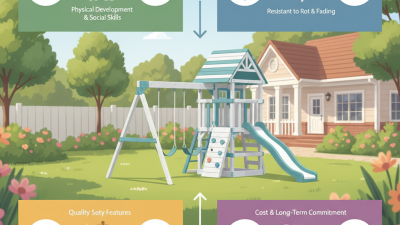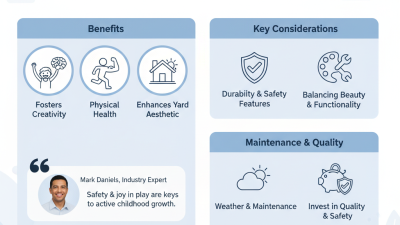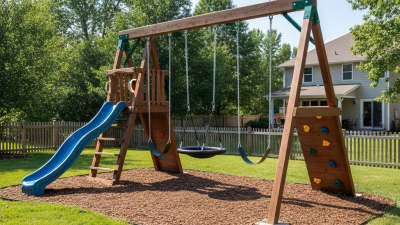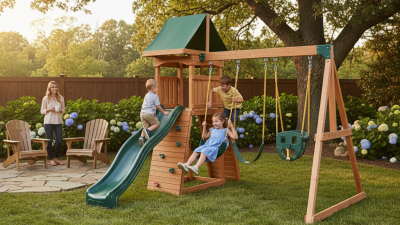
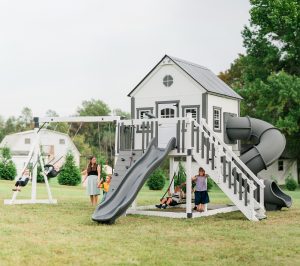
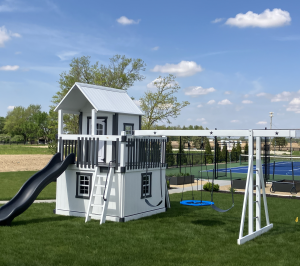
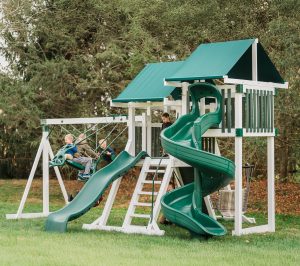
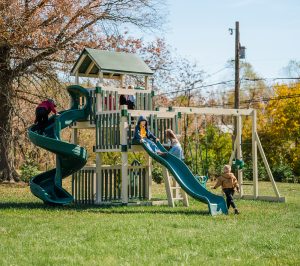
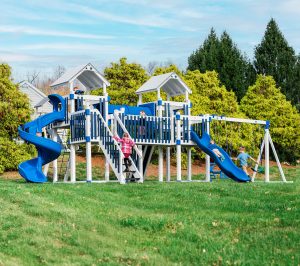
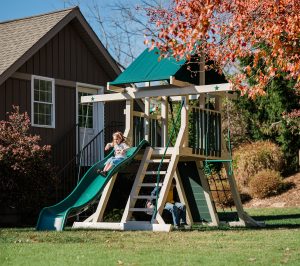
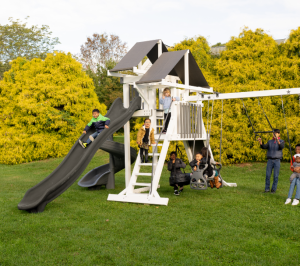
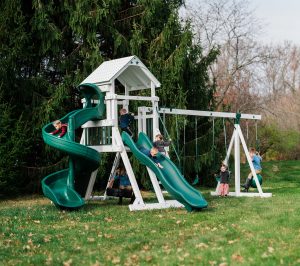
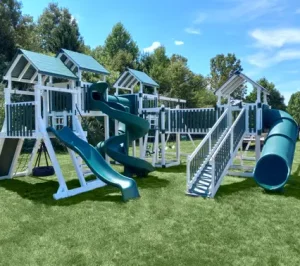
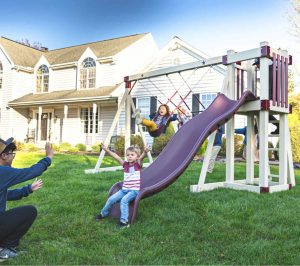
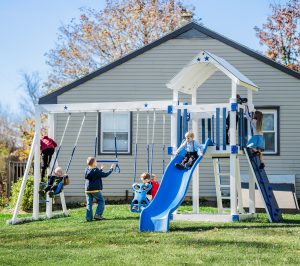
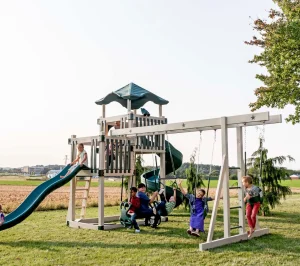



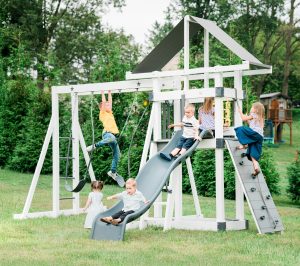
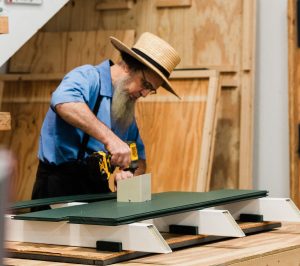
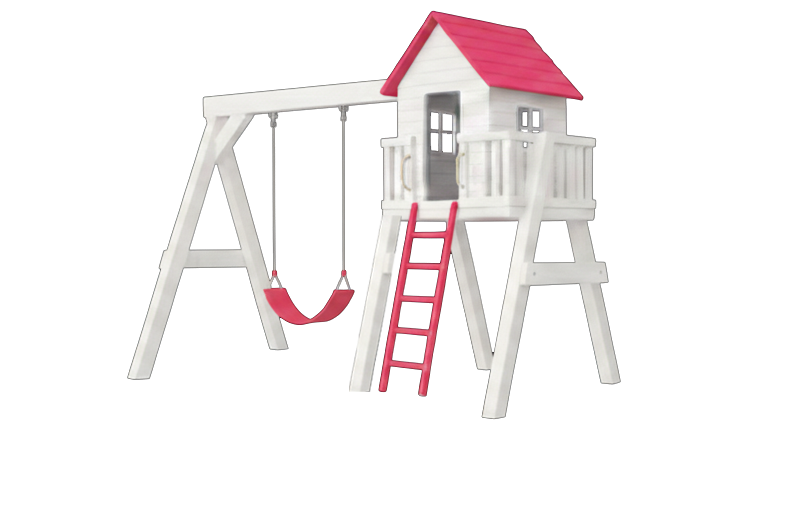
Choosing the right swing set begins with understanding how children actually play. Some prefer classic belt swings. Others climb, slide, spin, or invent games around a small fort. The best option depends on age, available space, materials, and daily supervision.
Dr. Joe Frost, a respected playground researcher, wrote, “Play is the business of childhood.” That idea matters when comparing swing set designs. A traditional wooden set offers warmth, shade, and room for accessories. Metal frames can provide strong, long-term support, but they may become hot under direct sunlight. Plastic models often suit younger children because they feel lighter and softer. Tire swings, rope structures, and modular systems add movement and challenge. Each type creates a different experience.
Safety remains central. Check the frame’s stability, swing-seat condition, spacing, and protective surfacing. Look for level ground and clear zones around every moving part. A thick layer of engineered wood fiber or another tested surface can reduce injury risk during falls. Follow the manufacturer’s instructions and relevant local safety guidance. Supervision still matters.
There is no perfect swing set. A beautiful wooden tower may fail in a cramped yard. A compact plastic model may feel limiting as children grow. Even careful buyers can overlook drainage, afternoon heat, or difficult maintenance. This guide compares the top types of swing set designs, their practical strengths, and their honest limitations, helping families choose with clearer expectations.
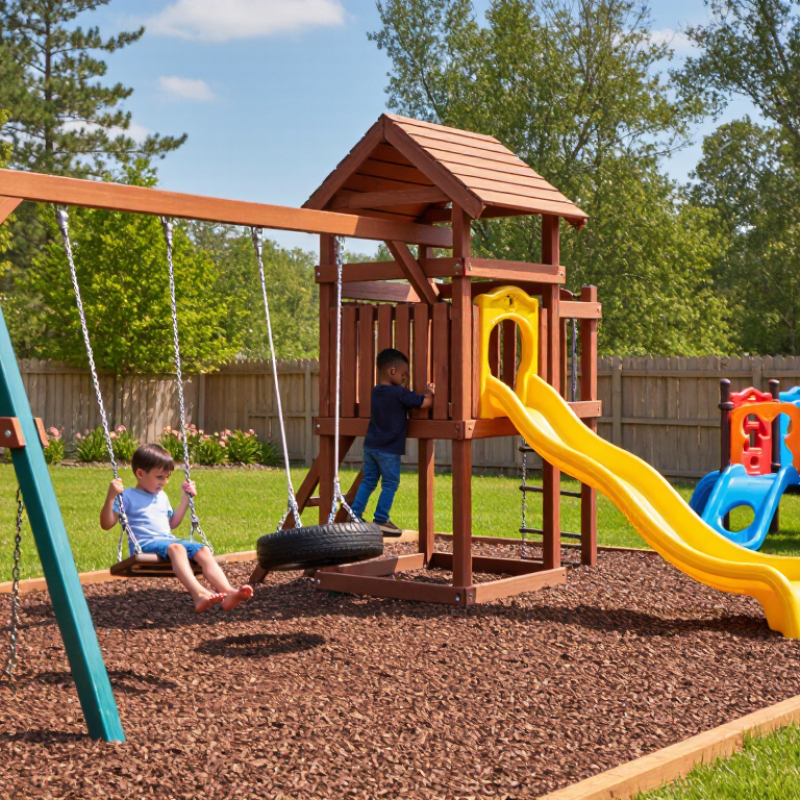
Swing sets differ most clearly by structural design. A-frame models use two angled supports on each side, creating a familiar, balanced shape. They suit open yards and usually allow two swings across one beam. Straight-leg frames look simpler and occupy less visual space, but they may need deeper anchoring. In my installation experience, compact frames can feel surprisingly demanding when the ground slopes. Leveling matters more than appearance.
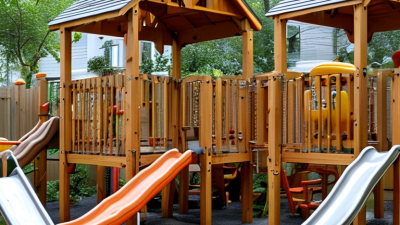
Tower swing sets add height and often combine swings with a platform, ladder, or climbing wall. Their layout creates several play zones within one footprint. This design works well in medium-sized yards, although the tower needs safe clearance around every side. A raised platform also changes supervision. Younger children may need closer attention near ladders and openings. Higher is not always better.
Some sets use a single central frame with swings arranged in a line, while others place swings beside a play tower. A linear layout supports easy viewing from one direction. L-shaped layouts use corners efficiently and can separate active climbing from quieter swinging. Before choosing, measure the full movement area, not just the frame. Leave space behind and ahead of each swing. I once underestimated that distance, and the yard looked generous until the seats moved. Check soil firmness, anchor depth, and the manufacturer’s weight guidance. Small details often decide whether the structure feels steady after months of use.
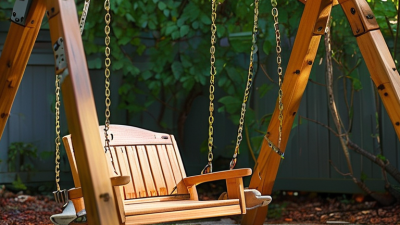
When choosing a swing set, the construction material often matters more than its shape. Wood remains popular because it creates a warm, natural appearance. Cedar and treated timber can resist outdoor moisture when properly maintained. However, wood may develop cracks, splinters, or loose joints over time. Regular inspections are essential, especially around the swing hangers and ladder steps.
Metal swing sets usually provide a sturdy frame with a clean, simple appearance. Powder-coated steel can help protect surfaces from rust and weather exposure. Scratched areas still need attention, because exposed metal may corrode. Aluminum is lighter and naturally resistant to rust, but it may feel less substantial under heavy movement. The frame should stand firmly on level ground.
Plastic and composite materials are often used for seats, slides, and smaller play structures. They are easy to clean and generally resist splinters. High-quality plastic should handle sunlight without becoming brittle too quickly. Still, color fading can occur. A shaded seat may stay cooler than dark metal on a hot afternoon.
Material quality is only part of the decision. Fasteners, surface finishing, drainage, and anchoring also affect long-term safety. I have seen how a small neglected bolt can become a larger maintenance problem. That detail is easy to miss. Families should check weight limits, inspect moving parts, and follow the installation instructions carefully. No material is completely maintenance-free.
Material choice affects durability, maintenance, comfort, and cost. In typical residential outdoor use, steel and composite materials generally offer longer service life, while plastic components are lightweight and usually have a shorter lifespan. Actual performance depends on weather exposure, protective coatings, installation quality, and regular maintenance.
Swing sets vary most clearly by age group. For toddlers, low platforms, full bucket seats, and short slides support early balance skills. Wide steps and enclosed sides help reduce falls. These sets should feel stable, not excitingly high. Very young children still need close adult supervision.
Children ages three to six often enjoy belt swings, small climbing walls, and short slides. They benefit from simple challenges that build coordination without overwhelming them. Older children may prefer higher decks, trapeze bars, rope ladders, and tire-style swings. These features encourage strength, planning, and imaginative games. However, climbing height should match each child’s ability, not only their age.
I have seen children ignore a complicated feature and return to one ordinary swing. That small detail matters. A thoughtful set offers variety, but too many attachments can create crowding and conflict. Choose soft-impact ground cover, rounded edges, secure handholds, and enough space between moving parts. Check bolts and ropes regularly, especially after wet weather. Age labels help, but they are never perfect. A cautious adult should inspect the structure and watch how children actually use it. Safety instructions should follow current local standards and the equipment maker’s guidance.
| Swing Set Type | Recommended Age Group | Typical Swing Configuration | Main Play Features | Typical Size Range | Key Benefits | Important Safety Considerations |
|---|---|---|---|---|---|---|
| Toddler Swing Set | Approximately 6 months–3 years, when the child can sit independently and meets the seat manufacturer’s requirements | One bucket seat with a high back and front safety restraint | Low platform, small slide, crawl-through area, compact activity panel | About 1.2–2.0 m wide × 1.2–2.0 m deep × 1.2–1.8 m high | Supports early balance, gentle movement, coordination, and parent-child play | Constant adult supervision; use only a fully enclosed bucket seat for children who need support; install over an appropriate protective surfacing material |
| Preschool Swing Set | Approximately 2–5 years | Two to three seats, commonly including one belt or bucket seat | Short slide, low climbing steps, steering wheel, playhouse, sandbox area | About 1.8–3.0 m wide × 1.8–3.5 m deep × 1.5–2.1 m high | Encourages imaginative play, basic climbing, spatial awareness, and gross-motor development | Use age-appropriate seats and platforms; check guardrails, handgrips, slide height, and pinch points regularly |
| Traditional Belt-Swing Set | Approximately 4–12 years | Two to four belt seats suspended from a horizontal beam | Standard swings, trapeze bar, small slide, optional glider seat | About 2.4–4.5 m wide × 2.4–4.0 m deep × 2.0–2.7 m high | Provides active outdoor exercise and accommodates more than one child | Maintain a clear fall zone around the structure; secure the frame against tipping; keep children separated from moving swings |
| Climbing and Adventure Set | Approximately 5–12 years | Usually two or three swings combined with climbing elements | Rock wall, climbing net, monkey bars, cargo net, ladder, overhead rings | About 3.0–5.5 m wide × 3.0–5.0 m deep × 2.4–3.2 m high | Builds upper-body strength, grip, agility, balance, and problem-solving skills | Use impact-absorbing surfacing; inspect ropes, bolts, platforms, and openings; avoid equipment that exceeds the child’s ability |
| Slide-Focused Play Set | Approximately 3–10 years | One or two swings paired with a raised platform and slide | Straight slide, wave slide, climbing ladder, platform, steering wheel, telescope-style accessory | About 2.4–4.0 m wide × 2.4–4.5 m deep × 1.8–2.8 m high | Combines swinging, climbing, descending, and imaginative role-play in one layout | Provide a safe landing area at the slide exit; prohibit climbing up the slide; supervise access to elevated platforms |
| Compact or Modular Swing Set | Approximately 2–8 years, depending on the installed modules | One or two swing positions with interchangeable attachments | Small slide, climbing panel, play table, sandbox, or activity board | About 1.5–3.0 m wide × 1.5–3.0 m deep × 1.5–2.4 m high | Fits smaller yards and allows families to adapt play features over time | Recheck all connections after changing modules; preserve the required clearance for every configuration |
| Inclusive or Adaptive Swing Set | Age range varies by seat, support system, and the child’s abilities | Supported seat, high-back seat, platform swing, or accessible transfer option | Transfer platform, wide access path, supportive harness, sensory panels, accessible ramp | About 2.5–5.0 m wide × 2.5–5.0 m deep × 1.8–3.0 m high | Promotes participation, sensory exploration, social play, and access for children with varied mobility needs | Select equipment with guidance from caregivers or therapists when necessary; verify transfer spaces, restraint fit, and accessible surfacing |
| Multi-Activity Playset | Approximately 3–12 years, subject to individual component ratings | Two to four swings integrated with a larger play structure | Slides, climbing wall, monkey bars, play deck, fort area, fire pole, sandbox, and activity panels | About 3.5–6.5 m wide × 3.5–6.0 m deep × 2.4–3.5 m high | Offers varied physical challenges and supports extended, multi-child play | Follow the age rating for each feature; maintain clear separation between swing paths and climbing or walking routes; perform routine structural inspections |
General note: Age ranges, dimensions, and feature combinations are typical planning guidelines rather than universal specifications. Always follow the equipment manufacturer’s instructions, install the structure on a suitable protective surface, and provide active supervision appropriate to the child’s age and abilities.
Space-saving swing sets are becoming more practical for smaller gardens, patios, and shared residential yards.
Grand View Research has projected annual growth above 5% for the outdoor playground equipment market through 2030. That growth reflects a clear preference for compact equipment with more than one activity.
A narrow swing set can combine two swings, a short climbing wall, and a small slide. Some designs add a rope ladder or monkey bars without greatly increasing the footprint.
In my experience, this layout works best when children can move between activities without crossing the swing path. Measure the full motion area, not only the frame. A compact structure still needs generous clearance.
The U.S. Consumer Product Safety Commission reports about 200,000 playground-related emergency visits involving children each year. Falls remain the leading injury source. Its Public Playground Safety Handbook recommends impact-absorbing surfacing and proper use zones around equipment.
These details matter more than decorative features. I would avoid squeezing every activity into one frame. It may look efficient, but crowded access points can create supervision problems. The compromise is real.
Choose fewer activities if the yard is very tight, and inspect bolts, anchors, surfacing, and swing seats regularly. Multi-activity equipment saves space, but it does not save maintenance time.
Choosing a swing set starts with risk, not color. CPSC’s 2021 Playground Equipment Injury Report estimated 155,400 emergency-department-treated injuries among children aged 14 and younger. Falls remain the main concern. CPSC’s Home Playground Safety Handbook attributes about 79% of playground injuries to falls. A-frame, single-beam, and tire-swing designs can all work, but each needs stable footings, rounded edges, and enough clearance.
Material affects durability. Powder-coated steel resists insects and usually needs less structural maintenance, while treated timber feels warmer but can crack, rot, or develop splinters. I have found that wood demands closer seasonal inspection, especially around bolts and ground contact. That assumption can fail when drainage is poor. ASTM F1148 guidance supports checking protective surfacing beneath elevated equipment. CPSC recommends suitable loose-fill surfacing depths based on fall height, rather than relying on grass or bare soil.
Maintenance should be practical. Tighten fasteners every few months. Inspect chains for rust or pinched links. Replace worn seats quickly. Check whether protective caps remain secure. Keep swing paths free from stones, toys, and low branches. A simple maintenance log improves consistency, although busy households may still miss small cracks. Choose surfacing that stays deep after rain and heavy play. Professional inspections are sensible for shared or frequently used equipment, while home owners should follow the installation instructions and reassess the set after storms, frost, or soil movement.