Why Choose a Childrens Swing Set for Your Business?
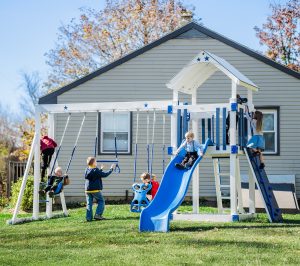
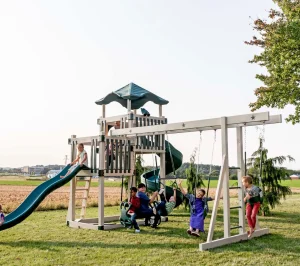
Choosing a childrens swing set can change how families experience your business. A well-designed play area gives children a reason to stay longer while parents browse, dine, or relax nearby. It can make an ordinary visit feel more welcoming and memorable.
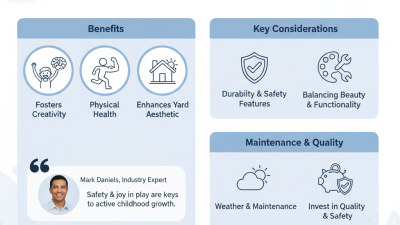
In my experience, the strongest playground investments begin with the customer journey. Consider the entrance, sightlines, seating, shade, and walking surfaces before selecting equipment. Parents want to see their children clearly. Children want movement, challenge, and something exciting to revisit. A durable swing set can support these needs when its size matches the available space.
Safety must guide every decision. Choose equipment made for commercial use, with secure fasteners, stable foundations, and impact-absorbing surfacing. Follow the manufacturer’s installation instructions and arrange regular inspections. Check chains, seats, bolts, and surrounding surfaces. Small defects can become serious problems when ignored.
Maintenance matters.
A swing set is not a set-and-forget purchase. Weather, heavy use, and poor cleaning can shorten its service life. Staff should record inspections and respond quickly to damaged parts. Professional installation may also reduce risks and provide clearer documentation for insurers or local authorities.
Still, a childrens swing set will not solve every business challenge. It needs suitable supervision, space, budget, and a clear maintenance plan. Some businesses may discover that seating or shade creates greater value first. The best choice comes from observing customer behavior, comparing trusted suppliers, and measuring results over time. Done carefully, this investment can strengthen family appeal without compromising reliability or responsible operations.
Define the Business Fit: Revenue, Dwell Time, and Available Space
Why Choose a Children’s Swing Set for Your Business?
Define the Business Fit: Revenue, Dwell Time, and Available Space
A children’s swing set can support revenue, but it is not a magic sales button. The right fit depends on customer behavior, operating hours, and available land. NRPA’s 2024 Engagement with Parks Report found that 95% of U.S. adults consider parks important to their quality of life. This signals strong demand for welcoming family spaces. However, demand alone does not guarantee profitable visits.
Measure the business case before installation. Track family visits, average spending, and dwell time during busy periods. A café may benefit from parents staying longer near outdoor seating. A retail center may gain repeat visits from families seeking a short activity. The CPSC Public Playground Safety Handbook advises generous use zones around swings, including clearance in front and behind the equipment. A compact site can become crowded quickly. That part is easy to underestimate.
Tips: Sketch the swing’s full safety area first. Count usable seats, shade, and staff sightlines. Test a four-week pilot if possible. Compare sales before and after installation. Ask whether longer visits actually create revenue. I would also review accessibility, surfacing, inspections, and local requirements with a qualified professional. A beautiful play area can still fail if maintenance feels careless.
Why Choose a Childrens Swing Set for Your Business? - Define the Business Fit: Revenue, Dwell Time, and Available Space
| Business Setting |
Recommended Available Space |
Typical User Capacity |
Potential Dwell-Time Increase |
Illustrative Paid-Use Assumption |
Estimated Monthly Gross Revenue |
Business Fit |
| Family Restaurant or Café |
300–500 sq. ft.
27.9–46.5 m² |
6–10 children per rotation |
20–40 minutes per family visit |
3–5 rotations/day
US$6–US$10 per child |
US$2,808–US$13,000
Based on 26 operating days/month |
Strong fit when parents already spend 45+ minutes on-site. |
| Indoor Family Entertainment Venue |
600–1,200 sq. ft.
55.7–111.5 m² |
10–20 children per rotation |
30–60 minutes per visit |
5–8 rotations/day
US$8–US$15 per child |
US$10,400–US$62,400
Based on 26 operating days/month |
Best fit for direct admission, timed sessions, or add-on passes. |
| Hotel, Resort, or Holiday Property |
400–800 sq. ft.
37.2–74.3 m² |
8–15 children per rotation |
30–90 minutes per family stay |
3–6 rotations/day
US$10–US$20 per child |
US$6,240–US$46,800
Based on 26 operating days/month |
Useful as a paid activity or a value-added amenity supporting longer stays. |
| Shopping Center or Retail Complex |
800–1,500 sq. ft.
74.3–139.4 m² |
15–30 children per rotation |
45–90 minutes per family visit |
6–10 rotations/day
US$5–US$12 per child |
US$15,600–US$93,600
Based on 26 operating days/month |
Strong fit where longer visits can increase food, retail, and repeat-visit spending. |
| Fitness Club or Community Facility |
300–700 sq. ft.
27.9–65.0 m² |
6–12 children per rotation |
30–60 minutes per visit |
3–6 rotations/day
US$5–US$10 per child |
US$2,340–US$18,720
Based on 26 operating days/month |
Good fit for childcare add-ons, member benefits, and scheduled supervised play. |
Planning notes: Revenue figures are illustrative gross-revenue scenarios calculated as
children per rotation × rotations per day × price per child × 26 operating days.
They exclude staffing, installation, maintenance, insurance, rent, taxes, and payment-processing costs.
Space estimates should include the complete swing footprint, required circulation, supervision visibility,
impact-attenuating surfacing, accessibility clearances, and the manufacturer’s required use zone.
Quantify Demand: WHO Recommends 60 Minutes of Daily Child Activity
Why Choose a Children’s Swing Set for Your Business?
The World Health Organization recommends at least 60 minutes of daily physical activity for children aged 5–17. This activity should reach moderate to vigorous intensity. A swing set can help businesses support that target through accessible, enjoyable movement. Children push with their legs, balance their bodies, and repeat the motion. These small actions can encourage longer outdoor play. They also create a reason for families to stay longer. Younger children follow different activity guidance, so businesses should avoid treating one figure as universal.
Demand can be measured in child-minutes, not guesses. If 20 children each use a swing for 15 minutes, the site delivers 300 activity minutes. Track visits, peak hours, average play time, and repeat customers. Separate observation from assumption. A quiet weekday may reveal unmet demand, not weak interest.
Safety inspections, suitable surfacing, clear spacing, and visible supervision also matter. In practice, a swing set will not provide every child’s full 60 minutes. It is one useful part of a broader play environment. Our planning can still be wrong. Weather, age groups, and differing abilities change usage quickly. Review the numbers monthly, then adjust capacity, layout, or programming with care.
Benchmark Risk: CPSC Estimates 200,000 Annual Playground Injuries
Why Choose a Children’s Swing Set for Your Business?
The decision is not only about colorful equipment or customer appeal. It is about managing predictable playground risks.
The U.S. Consumer Product Safety Commission has estimated roughly 200,000 playground injuries annually in the United States.
This figure is a benchmark, not a guarantee for every location. Its scope and yearly data may vary.
For a business, a children’s swing set should support careful supervision and routine maintenance. Check seat connections, chains, fasteners, protective surfacing, and surrounding clearance before opening each day. Look for loose hardware, exposed edges, standing water, and worn impact material. Small defects can become serious problems when many children use the equipment repeatedly.
Safety standards and inspection guidance can inform your purchasing process. However, paperwork alone does not protect a child. Staff need clear inspection duties and simple reporting procedures. Parents also need visible rules about age, capacity, and appropriate use. A practical layout should keep swings away from walkways and busy entrances.
The 200,000-injury estimate should encourage honest planning, not fear-based marketing. Some operators may focus too heavily on appearance. That is an easy mistake. A quieter, well-maintained swing area may serve families better than a larger, crowded installation. Even experienced teams can miss gradual surface damage. Regular records, staff training, and independent professional reviews can reveal those blind spots.
Specify Safe Equipment: Apply ASTM F1487 Commercial Playground Standards
Why Choose a Children’s Swing Set for Your Business?
Specify Safe Equipment: Apply ASTM F1487 Commercial Playground Standards
A commercial swing set is more than an attractive feature. It is daily-use equipment serving children with different ages, abilities, and behaviors. ASTM F1487-21 establishes safety requirements for public-use playground equipment. It addresses structural integrity, entrapment risks, sharp projections, swing clearances, and moving components. That distinction is important. ASTM compliance does not replace professional installation, inspection, or maintenance.
The U.S. Consumer Product Safety Commission’s Public Playground Safety Handbook reports roughly 200,000 children receive emergency treatment annually for playground equipment injuries. CPSC data also identifies falls as approximately 75 percent of reported playground injuries. The number feels abstract until a child lands beside an exposed edge. Businesses should specify impact-attenuating surfacing, correct use zones, and secure anchoring. Surfacing depth matters. So does drainage. Wet or displaced material can reduce protection, even when the original design was sound.
During procurement, request engineering documentation, installation instructions, and maintenance schedules. Compare the equipment layout with ASTM requirements before approving the site. Ask how swing spacing, seat height, hardware, and accessible circulation will be checked. A swing can appear secure while loose fasteners or worn connections develop underneath. Keep inspection records with dates, findings, and corrective actions. Paperwork can look perfect while the playground is not. That uncomfortable gap deserves regular attention. Sources: U.S. Consumer Product Safety Commission, Public Playground Safety Handbook and National Electronic Injury Surveillance System data; ASTM International, ASTM F1487-21.
Why Choose a Children's Swing Set for Your Business?
Specify safe commercial playground equipment by planning clear use zones in line with ASTM F1487 guidance.
The chart shows practical clearance benchmarks: a 6-foot use zone around many play structures, a 6-foot side clearance for swings, and a front-and-back swing clearance equal to twice the pivot-point height. The 14-foot value illustrates this calculation for a swing with a 7-foot pivot height. Actual layouts should be measured on site and verified against the current ASTM F1487 edition, applicable surfacing requirements, and local regulations.
Estimate Returns: Compare Capacity, Pricing, Utilization, and Payback
Why Choose a Children’s Swing Set for Your Business?
A children’s swing set can turn unused floor space into a measurable revenue stream. Estimate returns before purchasing. Start with safe capacity, not the maximum advertised capacity. For example, a 20-child setup may average only seven children during a session. At six sessions daily and $8 per child, monthly gross revenue could reach about $8,700 across 26 operating days. That figure changes quickly with weather, staffing, school schedules, and local demand.
Compare pricing models carefully. A timed entry, membership, or party package produces different utilization patterns. A $28,000 investment, including installation and protective surfacing, may seem expensive. If monthly operating costs reach $4,000, a $8,700 revenue estimate leaves roughly $4,700 before taxes and unexpected repairs. The simple payback period would be about six months. That looks attractive, but it may be too optimistic. One weak season can extend payback considerably. Use conservative occupancy estimates and track actual visits weekly after opening.
Tips:
Measure capacity during busy and quiet hours. Test two price points. Keep a repair reserve. Ask staff whether children wait too long for turns. A shorter queue may improve repeat visits more than a higher entry fee. Safety inspections, age limits, and clear supervision procedures also protect customer trust and support reliable long-term returns.