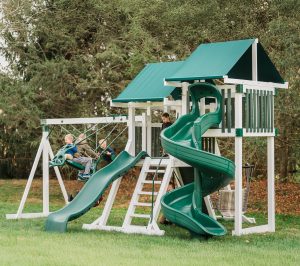
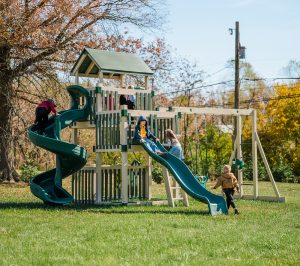
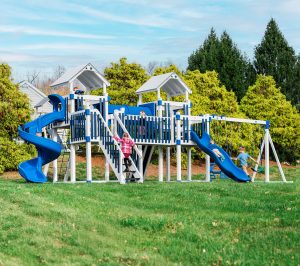
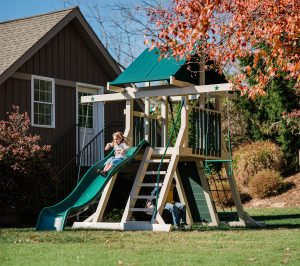
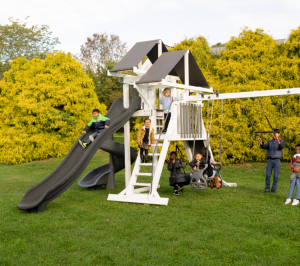
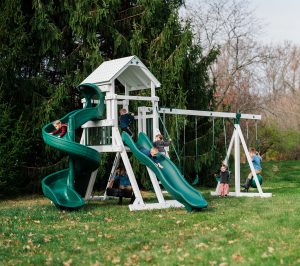
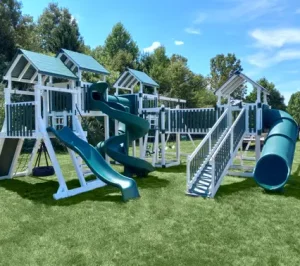
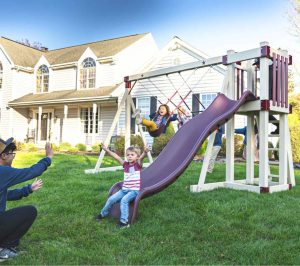
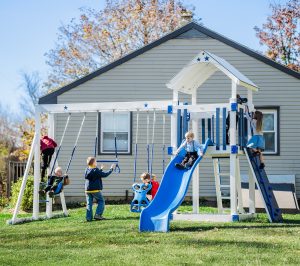
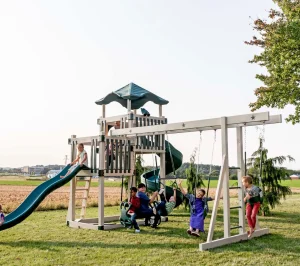
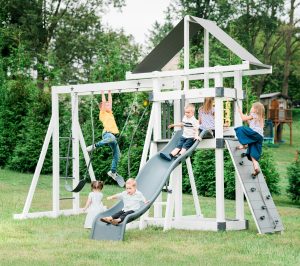
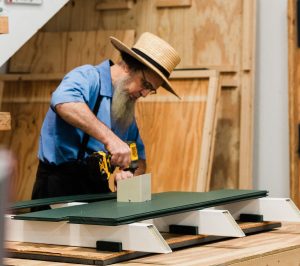
Choosing a wooden swing set is not simply a matter of selecting attractive colors or the lowest quoted price. Global buyers must examine timber quality, construction details, safety features, packaging, and after-sales support. A sturdy frame should feel stable, with smooth surfaces, rounded edges, secure fasteners, and clear assembly instructions.
Every location creates different challenges. Humid coastal air may accelerate corrosion, while strong sunlight can dry or crack untreated wood. Buyers should ask about timber species, moisture treatment, protective coatings, and expected maintenance. Local safety requirements may also differ, so independent verification remains important. Supplier claims deserve evidence, such as test reports, material records, installation guidance, and references from established customers.
Small details matter.
A reliable supplier should explain weight limits, anchor systems, replacement parts, delivery conditions, and realistic lead times. Inspect the crate design, too. Broken panels or missing hardware can turn a good purchase into an expensive delay. Photographs before shipment may help, although photographs cannot replace physical inspection.
These ten buying tips are designed to support practical, informed decisions across international markets. They cannot remove every risk. A checklist may overlook children’s changing abilities, uneven ground, or limited backyard space. That is why buyers should combine documented product information with professional advice and careful site planning. The safest choice is rarely the most impressive model; it is the one that fits the users, climate, space, budget, and maintenance capacity. Think beyond the first year.
Measure the usable play zone, not merely the wooden frame. Mark slopes, trees, fences, doors, and low branches before comparing swing sets. A swing needs forward and backward clearance, plus side space for children entering or leaving. The exact distance depends on the equipment design and local safety requirements. Confirm it with a qualified installer.
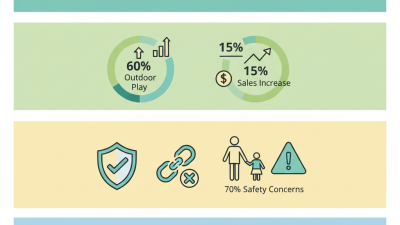
Define the users clearly. Toddlers need lower platforms, smaller grips, and controlled movement. Older children may prefer climbing walls, slides, or longer swing paths. The World Health Organization’s 2020 guidelines recommend an average of 60 minutes of moderate-to-vigorous activity daily for children and adolescents. A well-planned set can support active play, but it cannot replace supervision or varied outdoor activities. Keep that distinction honest.
Plan the activities before buying accessories. Will children climb, swing, imagine, or gather? Each answer changes the layout, surface, and required space. The U.S. Consumer Product Safety Commission reports that falls cause approximately 79% of playground injuries. Impact-absorbing surfacing therefore deserves serious attention, especially beneath elevated platforms. Consider drainage, intense sunlight, humidity, and seasonal movement in wooden parts. My own planning bias would be choosing too many features. More equipment can mean less usable space, harder supervision, and greater maintenance. A simpler set may serve the family better.
When buying a wooden swing set, inspect the timber before admiring its design. Choose dense, straight-grained wood with few knots, splits, or soft patches. Press a fingernail into suspicious areas. Excessive softness may indicate decay. The surface should feel smooth, without sharp splinters or exposed fasteners. Ask for information about moisture resistance and treatment methods. Outdoor timber needs protection from rain, insects, and repeated temperature changes.
Construction quality often matters more than appearance. Check whether beams use reinforced joints, corrosion-resistant hardware, and secure ground anchors. Shake the frame gently. Noticeable movement suggests weak connections or insufficient bracing. Swing hangers should move smoothly and remain firmly attached under repeated loading. A professional supplier should provide load limits, assembly instructions, maintenance guidance, and relevant safety test documentation. Missing details deserve careful questioning.
Durability is not permanent. I have seen attractive wooden frames age quickly because owners ignored small cracks. Inspect the set regularly, especially after storms or winter. Re-seal exposed surfaces when the finish begins to fade. Replace damaged ropes, bolts, or boards promptly. Do not assume thick timber guarantees strength; poor drainage can still cause hidden rot. No inspection is perfect. A careful buyer should leave room for doubt and request clearer evidence before placing a global order. Local climate, shipping moisture, and installation quality can change performance significantly.
A wooden swing set should be judged by safety evidence, not appearance alone. The U.S. Consumer Product Safety Commission reported about 205,000 annual emergency-department playground injuries among children from 2001 to 2008. Falls caused most reported injuries. That history makes fall height, protective surfacing, and frame stability essential buying checks.
Ask whether the design follows ASTM F1148, EN 71-8, or ISO 8124-4, depending on the destination market. These standards address home playground construction, entrapment risks, swing clearances, and structural strength. Certification documents should identify the tested model, materials, and date. A vague “safety tested” claim is not enough. Inspect the timber, too. Smooth edges, sealed end grain, rounded corners, and rust-resistant fasteners reduce daily hazards. Wood can still crack, swell, or decay.
Age-appropriate design matters more than extra accessories. Toddlers need enclosed seats, shorter platforms, and limited climbing height. Older children can use belt swings, rope features, and taller decks, but only with suitable spacing and supervision. The U.S. CPSC recommends protective surfacing extending beyond play equipment, with depth matched to fall height. Check local guidance before choosing sand, engineered wood fiber, rubber, or another surface. I would not rely on a single laboratory report. Installation quality changes real-world safety. Recheck bolts after use, especially after rain or seasonal movement. Some instructions are confusing. That deserves honest improvement.
A wooden swing set should fit the site, not merely the product photo. Measure the usable area, including swing movement and a soft-fall zone. A 3-by-4-meter set may need nearly 6 meters of clear length. Check ground slope, nearby walls, tree roots, and drainage. Leave enough space for children and maintenance access. I once underestimated the swing arc, and the layout had to be changed.
Tip: Request exact package dimensions and total weight before ordering. Confirm whether the set arrives assembled or flat-packed. Installation can require two adults, a level surface, concrete anchors, and several hours of work. Ask for clear instructions, hardware lists, and replacement-part support. Local installers may charge more than expected, especially outside major cities.
Shipping costs involve more than the freight quote. Compare packed volume, port handling, inland delivery, insurance, and unloading equipment. Import duties, taxes, customs inspections, and documentation may also apply in the destination country. Ask the seller for the correct product classification and a commercial invoice. Verify local safety requirements independently, because rules differ between markets. Wooden products may need treatment certificates or pest-control documentation. These details are easy to miss. A small paperwork error can delay delivery and create storage fees. Use a landed-cost estimate, but treat it as provisional until the carrier and customs authority confirm the charges.
When buying a wooden swing set internationally, supplier evaluation should go beyond attractive photos. Ask for evidence. Request timber species, moisture treatment details, load-testing records, assembly drawings, and recent production images. A reliable supplier should explain packaging, delivery protection, and quality checks clearly. Check whether replacement components have unique part numbers and fixed dimensions. Vague answers may create expensive problems later.
Read the warranty before placing a deposit. Confirm its length and whether it covers timber cracks, hardware failure, finish damage, or structural defects. Some warranties exclude weather exposure, incorrect assembly, or commercial use. Ask who pays shipping and labor during a claim. Keep it simple. A written process, response time, and required photos make international support more dependable. I once underestimated freight costs for a small replacement bracket, so I now ask for shipping estimates in advance.
Maintenance requirements also deserve practical attention. Inspect anchors, swing hangers, bolts, and climbing grips every few months. Look closely around joints where water can remain after rain. Tighten loose hardware, remove splinters, and re-seal exposed wood according to the care instructions. In humid regions, check for soft spots and mold more often. Replacement parts should remain available for several years, not just during the first season. Confirm whether common bolts, seats, ropes, and brackets can be ordered separately. One weakness remains easy to miss: a low purchase price may hide limited after-sales support.
| Tip | What to Review | Supplier and Compliance Check | Warranty Terms to Confirm | Maintenance and Installation Needs | Replacement Parts and Import Details |
|---|---|---|---|---|---|
| 1 Define the intended age range and capacity | Check the recommended user age, maximum number of users, maximum user weight, platform height, and swing-seat capacity. Select equipment according to the youngest intended user rather than the oldest user. | Request a product specification sheet showing design loads, user limits, dimensions, and safety instructions. Confirm that the supplier provides testing information for the destination market. | Confirm whether the warranty applies to residential use only or also to commercial, rental, school, or childcare use. Ask whether exceeding the stated capacity voids coverage. | Ensure the available installation area includes the manufacturer’s recommended use zone. The surface should be level, stable, and suitable for impact-absorbing surfacing where required. | Obtain the model or item reference for seats, ropes, bolts, brackets, caps, and other wear parts. Confirm whether parts can be ordered individually. |
| 2 Evaluate the wood species and treatment | Review the wood species, moisture condition, structural grade, surface finish, knot treatment, and resistance to decay and insects. Look for rounded edges and smooth, splinter-free surfaces. | Ask for documentation identifying the timber source and preservative treatment. For international shipments, request information about applicable phytosanitary or import requirements. | Check whether the warranty covers structural timber, cosmetic defects, rot, insect damage, cracking, or only manufacturing defects. These categories are often treated differently. | Outdoor wood can weather, fade, shrink, swell, or develop small surface checks. Inspect exposed timber regularly and follow the supplier’s approved cleaning and resealing instructions. | Confirm whether individual beams, steps, panels, and replacement hardware are available in matching dimensions and treatment specifications. |
| 3 Check structural stability and anchoring | Review post dimensions, joint design, bracing, connection hardware, anchoring method, and resistance to movement. The frame should remain stable during normal use and foreseeable weather conditions. | Request assembly drawings, anchoring instructions, hardware specifications, and any load or stability test reports. Verify that the proposed anchoring method suits the soil or foundation at the installation site. | Ask whether damage caused by poor anchoring, unsuitable ground, relocation, unauthorized modification, or severe weather is excluded. | Inspect anchors, footings, bolts, and joints at least seasonally and after major storms. Retighten hardware only according to the supplier’s instructions to avoid damaging the wood. | Confirm availability of anchor kits, brackets, bolts, washers, post caps, and connection plates. Check thread sizes and dimensions before placing a replacement order. |
| 4 Verify safety standards for the destination market | Identify the safety requirements that apply in the target country or region. Common references include ASTM F1148 for home playground equipment and the EN 71 series for certain toy safety requirements, but applicability depends on product type and jurisdiction. | Ask for current test reports, certificates, technical files, warnings, and user instructions. Confirm that documents identify the same model, materials, configuration, and production version being purchased. | Determine whether non-compliance, missing warnings, or unauthorized modifications affect warranty eligibility. Request written clarification before purchase. | Maintain the required protective surfacing, use zones, guardrails, barriers, and fall-height clearances specified for the selected configuration. | Replacement components should preserve the original safety design. Avoid substituting seats, ropes, fasteners, or barriers without written approval from the supplier. |
| 5 Compare the complete landed cost | Compare the product price together with packaging, inland delivery, international freight, insurance, duties, taxes, customs clearance, installation, and local surfacing. | Request a quotation that states the trade term, currency, payment schedule, production lead time, packing method, and responsibility for export and import formalities. | Confirm who pays for inspection, return freight, replacement freight, labor, customs charges, and taxes when a warranty claim is approved. | Check whether the product arrives fully assembled, partly assembled, or flat-packed. Assembly time, tools, lifting equipment, and local labor can materially affect total cost. | Ask for the shipping weight, carton dimensions, spare-parts shipping options, and minimum order quantities. Small replacement orders may have disproportionately high freight costs. |
| 6 Read the warranty exclusions carefully | Review the warranty duration by component, claim submission process, required proof of purchase, inspection procedure, remedy offered, and any registration deadline. | Request the complete warranty document before payment. A clear document should identify the warrantor, covered products, geographic scope, and applicable law or dispute process. | Pay particular attention to exclusions for normal weathering, fading, surface cracks, corrosion, misuse, commercial use, poor maintenance, improper assembly, and unauthorized alterations. | Keep assembly records, photographs, maintenance logs, invoices, and inspection notes. These documents can help establish that the equipment was used and maintained correctly. | Confirm whether replacement parts restart, extend, or do not change the original warranty period. Ask whether labor and installation are covered along with the part. |
| 7 Assess routine maintenance requirements | Look for a maintenance schedule covering wood surfaces, fasteners, swing hangers, ropes, seats, slides, steps, handgrips, and protective surfacing. | Ask for cleaning products, coating recommendations, torque guidance, inspection checklists, and instructions translated into the required local language. | Determine whether failure to perform documented inspections or approved maintenance can invalidate the warranty. Clarify which maintenance products are prohibited. | Perform visual checks before use and more detailed inspections at regular intervals. Remove sharp edges, loose hardware, damaged ropes, standing water, and contaminated surfacing promptly. | Identify consumable items such as seat hangers, ropes, swing seats, protective caps, and fasteners. Set a replacement budget for parts subject to wear. |
| 8 Inspect swing and moving components | Review swing-seat material, chain or rope construction, hanger spacing, pinch-point protection, connectors, motion clearance, and resistance to ultraviolet exposure and moisture. | Request component test information and material specifications for seats, ropes, chains, hooks, bearings, and hangers. Confirm that replacement components are compatible with the original design. | Check whether wear items are covered for a limited period or excluded as consumables. Confirm how defects such as fraying, cracking, excessive wear, or deformation are handled. | Inspect moving parts for fraying, rust, cracks, looseness, unusual noise, and deformation. Stop use immediately if a load-bearing component is damaged. | Keep a record of component dimensions, attachment type, chain or rope length, and hardware size. This information reduces errors when ordering parts internationally. |
| 9 Confirm installation instructions and local service | Review the number of installers, estimated assembly time, required tools, foundation method, part identification system, and post-installation inspection procedure. | Ask whether remote technical support, local installers, replacement instructions, and troubleshooting assistance are available in the buyer’s time zone and language. | Verify whether self-installation is permitted and whether professional installation is required for warranty validity. Clarify the process for reporting transit damage before assembly. | Assemble only on a prepared, level surface and follow the supplied sequence. Do not modify structural members or drill additional holes without written approval. | Request an exploded parts diagram and numbered hardware list. These are especially useful when replacing parts after installation or relocation. |
| 10 Plan long-term support and end-of-life handling | Consider expected service life, exposure to climate, availability of replacement components, upgrade options, resale limitations, and disposal or recycling requirements. | Ask how long technical records and spare parts will be retained after the model is discontinued. Obtain a written commitment for support where possible. | Confirm whether the warranty transfers to a subsequent owner, remains valid after relocation, or ends if the equipment is moved from its original installation site. | Replace damaged structural or safety-critical components rather than repairing them with unapproved materials. Retire the set when safe operation can no longer be assured. | Maintain a spare-parts inventory for high-wear items and record the purchase date, model configuration, and component references. Separate wood, metal, plastic, and treated materials when disposal rules require it. |