





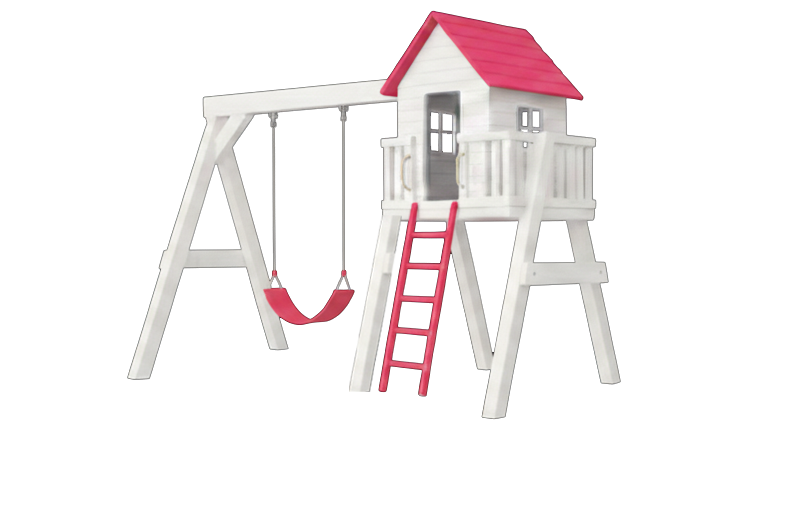
7 Tips for Choosing the Best Polywood Playset?
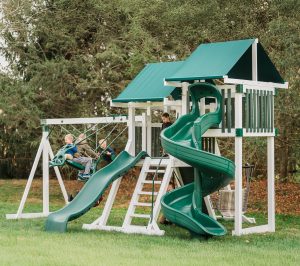
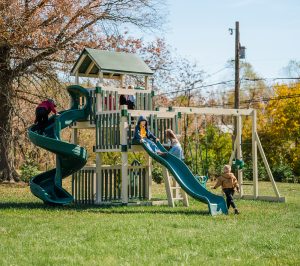
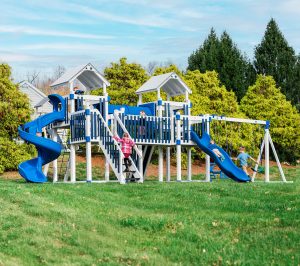
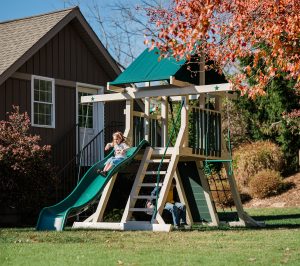
Choosing the best polywood playset is not only about color, size, or backyard appeal. It is about creating a durable play space that fits real family routines. A set may look perfect online, yet feel oversized beside a patio or difficult to monitor from the kitchen window. That small detail matters.
Dr. Donna Thompson, a respected playground-safety researcher, offers a useful reminder: “Safety is more than the equipment; it is the environment around it.” Her point applies directly to every polywood playset decision. Buyers should examine the available ground, fall zones, age recommendations, platform height, handrails, and swing clearance. They should also check whether the material resists moisture, insects, fading, and daily wear. Recycled plastic lumber can reduce maintenance, but it does not eliminate inspections. Hardware can loosen. Surfaces can become slippery. Children grow faster than expected.
This guide explores seven practical tips for choosing a polywood playset with greater confidence. It considers construction quality, safety design, installation, maintenance, warranties, and long-term value. It also looks at features that families often overlook, such as shaded seating and reachable climbing steps. Not every expensive model is better. Not every compact model is safer. A careful comparison is necessary.
There is room for honest doubt. Product descriptions rarely show every backyard challenge. Your soil may shift. Your children may outgrow a small tower sooner than planned. The right choice balances today’s excitement with tomorrow’s needs. That balance makes the purchase more reliable, not merely attractive.
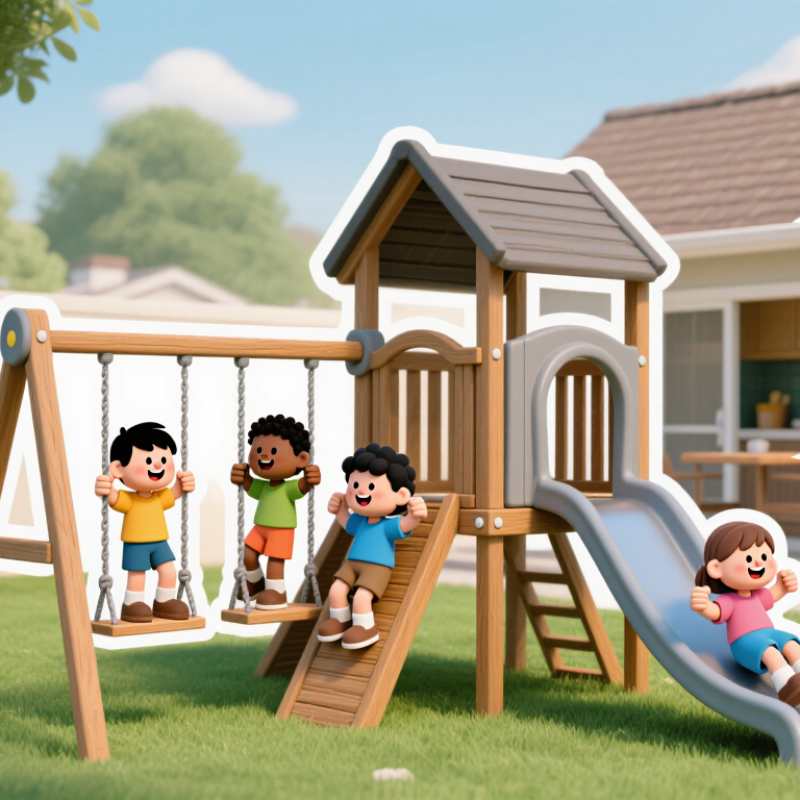
Define Your Family’s Space, Age, and Playset Requirements
7 Tips for Choosing the Best Polywood Playset?
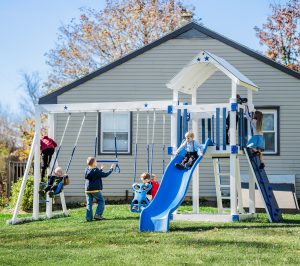
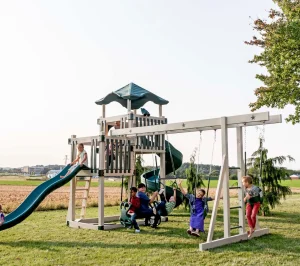
A playset should fit your family, not dominate it. Measure the usable yard, including a safe fall zone around every swing and slide. Leave room for gates, trees, fences, and adult movement. The U.S. Consumer Product Safety Commission reports that playground injuries send more than 200,000 children to emergency departments each year. Falls remain the leading cause. That makes spacing a safety decision, not a design detail.
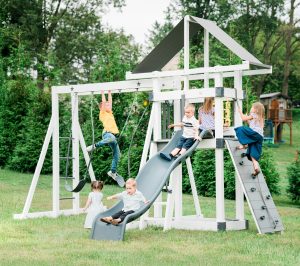
Tip 1: Match equipment to age. Toddlers need low platforms, short slides, and enclosed climbing areas. Older children usually need greater height, varied climbing challenges, and stronger weight capacity. Check the manufacturer’s age and load guidance carefully. Tip 2: Count daily users. Two children may share a small platform peacefully; four may create crowding and unsafe pushing. Consider siblings, visiting friends, and future growth. Children change quickly. I once underestimated how fast a “perfect” playset became too small.
Tip 3: Define your real play goals. Do you want climbing, imaginative play, swinging, or quiet outdoor time? Tip 4: Inspect the surface beneath it. CPSC guidance favors impact-absorbing materials, such as engineered wood fiber or approved rubber surfacing, rather than bare soil or grass. Tip 5: Review maintenance needs. Polywood-style structures resist rot and splintering, but hardware, anchors, drainage, and surface wear still require regular checks. Tip 6: Sketch the yard first. Tip 7: Recheck the plan at your child’s current age, not the age you hope they reach.
7 Tips for Choosing the Best Polywood Playset? - Define Your Family’s Space, Age, and Playset Requirements
| Tip | Selection Factor | What to Measure or Check | Practical Guidance | Why It Matters |
|---|---|---|---|---|
| 1 | Define the available space | Measure the level installation area, including its length, width, slope, nearby trees, fences, retaining walls, and overhead branches. | Compare the playset’s assembled dimensions with the usable yard area. Leave room for access, supervision, drainage, and maintenance. | A playset needs more space than its frame alone. Correct planning reduces crowding and helps preserve safe movement around the equipment. |
| 2 | Match the design to children’s ages | Record each child’s age, height, coordination level, and ability to use ladders, slides, climbing walls, and swings independently. | Many residential playsets are grouped into early-childhood use, commonly ages 2–5, or school-age use, commonly ages 5–12. Always follow the product’s stated age range. | Equipment that is too advanced can increase fall and entrapment risks, while equipment that is too small may be quickly outgrown. |
| 3 | Plan a protective safety zone | Identify the fall area around platforms, climbing components, slides, and swings. Check the required clearance in the installation manual. | The U.S. Consumer Product Safety Commission generally recommends protective surfacing extending at least 6 feet around stationary play equipment. Swing clearance requirements can be greater, so use the manufacturer’s instructions. | Adequate clearance helps reduce collisions with hard objects, fences, landscaping, and other play components. |
| 4 | Choose suitable play features | List the activities your children actually use, such as swinging, sliding, climbing, imaginative play, or multi-child games. | Select features that fit current interests while allowing reasonable growth. Check the number of seats, platform height, slide type, and climbing difficulty. | Prioritizing useful features improves play value and prevents paying for components that occupy space but receive little use. |
| 5 | Evaluate the material and climate fit | Consider sun exposure, rain, humidity, snow, temperature changes, insects, and the amount of maintenance you can provide. | Polywood-style components are typically made from high-density polyethylene, often sourced from recycled plastic, and do not require routine staining or sealing like untreated wood. Inspect all materials for heat, weathering, and structural wear. | Material performance affects cleaning needs, appearance, service life, and suitability for the local environment. |
| 6 | Check safety, stability, and installation needs | Review platform heights, guardrails, handgrips, openings, swing hardware, anchoring requirements, weight limits, and included assembly instructions. | Choose a unit appropriate for the number of children using it at once. Install it on stable ground, anchor it as directed, and verify that openings do not create head or neck entrapment hazards. | Proper design and installation are essential because many playset injuries result from falls, unstable equipment, or improper use. |
| 7 | Compare long-term value and upkeep | Compare the purchase price with delivery, site preparation, assembly, surfacing, replacement parts, cleaning, and future expansion costs. | Confirm the warranty coverage, hardware availability, replacement component process, cleaning instructions, and expected maintenance schedule before purchasing. | A lower initial price may become more expensive if installation, safety surfacing, repairs, or replacement parts are difficult to obtain. |
Note: Age ranges, dimensions, weight limits, clearance distances, anchoring methods, and maintenance requirements vary by playset design. Follow the specific installation and safety instructions supplied with the equipment.
Related Posts
-
China Best Polywood Playset Manufacturer for Global Buyers
-
What Is a Composite Swing Set and Is It Worth It?
-
2026 Top Vinyl Swing Sets for Backyard Fun and Family Enjoyment?
-
How to Choose the Best Backyard Swing Sets for Your Family?
-
Why Choose a Wooden Swing Set with Slide?
-
10 Best Outside Play Sets for Endless Fun in Your Backyard