





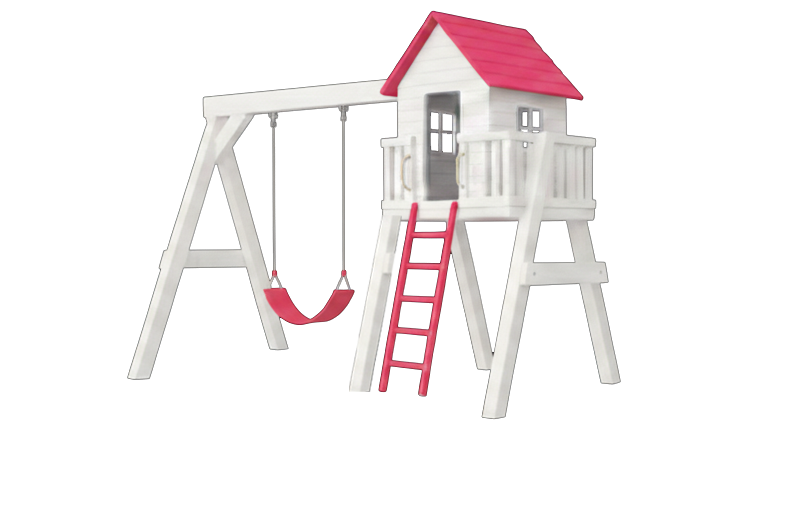
Why Choose a Wooden Swing Set with Slide?
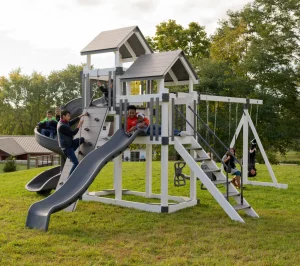
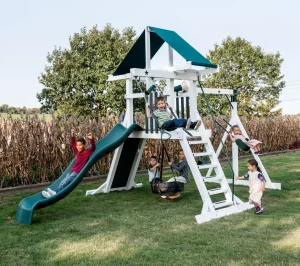
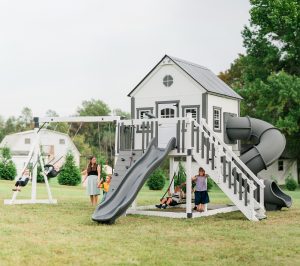
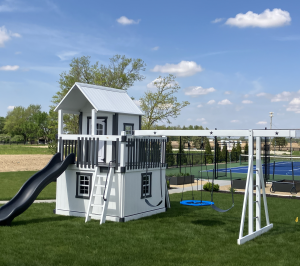
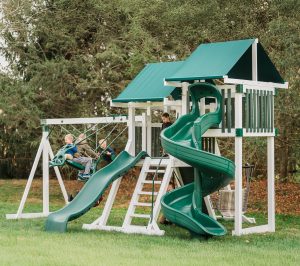
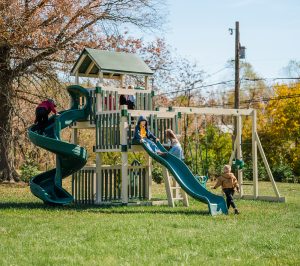
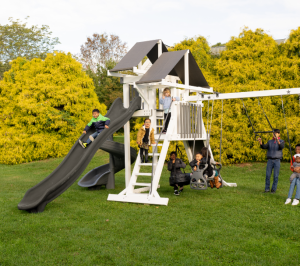
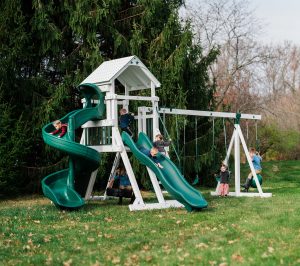
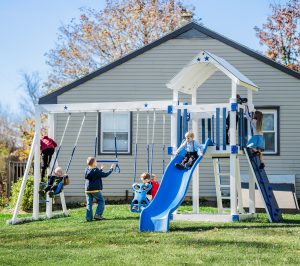
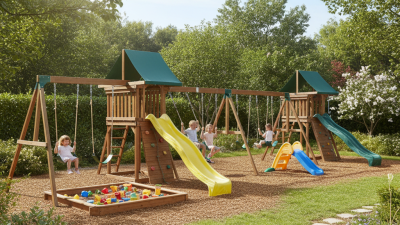
A wooden swing set with slide can turn a quiet backyard into an active place for climbing, swinging, and imaginative play. Its natural appearance blends with gardens, patios, and family spaces better than many brightly colored plastic structures. The slide adds movement, while swings encourage balance, rhythm, and confidence.
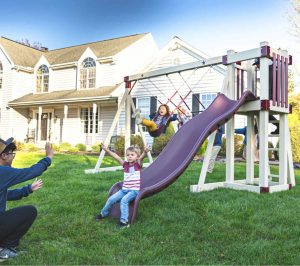
Play matters deeply. Dr. Joe Frost, a respected playground scholar, wrote, “Play is the work of childhood.” A well-designed wooden swing set with slide gives children room to test small challenges safely. They can grip the swing chains, climb the ladder, and feel the wind during a short slide. These simple moments build coordination and independence.
Yet wood is not maintenance-free. It can crack, fade, soften, or develop rough areas after repeated exposure to rain and sunlight. Careful buyers should inspect joints, bolts, steps, platforms, and the slide attachment regularly. The structure also needs level ground, a suitable fall zone, and impact-absorbing surfacing. Adult supervision remains important, especially for younger children.
The best choice is not always the largest set. A smaller, sturdy model may suit a compact yard and be easier to inspect. Some families may also underestimate installation time. That is worth reconsidering. Quality materials, clear instructions, secure anchoring, and routine checks matter more than decorative features. When these details receive attention, a wooden swing set with slide can offer durable outdoor fun and a warmer connection to nature.

What Is a Wooden Swing Set with Slide?
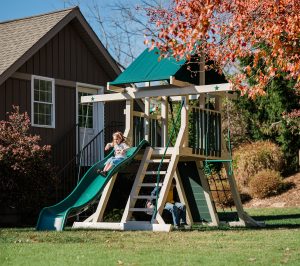
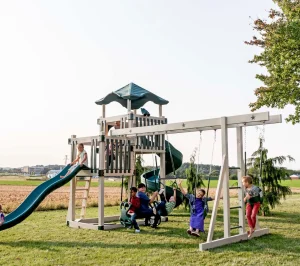
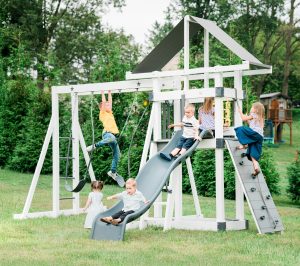
A wooden swing set with slide is a backyard play structure built mainly from treated or naturally durable timber. It usually combines a raised platform, swings, a climbing ladder, handrails, and a slide. The platform creates a small “second floor” for children, while the slide provides a fast route back to the ground. Unlike loose outdoor toys, this equipment needs permanent anchoring and regular inspection.
The U.S. Consumer Product Safety Commission reports about 200,000 playground-related injuries receive emergency treatment each year. Its safety materials identify falls as the leading injury mechanism, representing roughly 79% of reported cases. That figure does not make wooden equipment unsafe. It shows why platform height, guardrails, shock-absorbing surfacing, and secure swing hangers matter. ASTM F1148 also provides a recognized safety framework for home playground equipment.
In practice, wood feels solid under small footsteps and blends naturally with grass, fences, and patios. I once assumed thicker beams automatically meant better safety. That assumption was incomplete. Poor drainage can soften posts, and loose bolts can change the movement of a swing set. Look closely at splinters, cracked boards, exposed fasteners, and worn slide edges. A two-minute check matters. The best structure is not merely attractive; it fits the child’s age, available space, fall zone, and the family’s willingness to maintain it.
Why Choose a Wooden Swing Set with Slide? - What Is a Wooden Swing Set with Slide?
| Data Dimension | Typical Data | What It Means |
|---|---|---|
| Product Definition | Outdoor play structure with swings, an elevated platform, and a slide | It combines several play activities in one backyard unit and is commonly designed for residential outdoor use. |
| Primary Construction Material | Solid wood, commonly treated pine, cedar, or another outdoor-rated timber | Wood provides a natural appearance and can be repaired or refinished, but it requires regular inspection and weather protection. |
| Typical Overall Footprint | Approximately 3.5–6 m long × 3–5 m wide | The required area depends on the frame, swing arc, slide exit, and the recommended safety zone around the equipment. |
| Platform Height | Approximately 1.2–1.5 m above ground | Platform height affects the slide length, climbing difficulty, fall risk, and the age suitability of the playset. |
| Common Swing Capacity | Usually 2 swing seats; some layouts include 3 or more | Multiple seats allow more than one child to play, but the frame’s stated load limits must always be followed. |
| Typical Recommended Age | Often 3–10 years, depending on the design | Age guidance varies with platform height, ladder design, swing type, and maximum user weight. Adult supervision is still necessary. |
| Typical User Weight Limit | Approximately 23–50 kg per swing or play component | Limits differ by component and structure. The manufacturer’s product-specific capacity should take priority over general ranges. |
| Safety Surfacing Area | A clear protective zone extending beyond the equipment; commonly about 1.8 m around stationary parts | Loose-fill materials or other impact-absorbing surfacing can help reduce injury severity during falls when installed at an appropriate depth. |
| Installation Surface | Firm, level ground with adequate drainage | Level installation improves stability and helps prevent water from collecting around posts and anchors. |
| Anchoring Requirement | Anchors are generally recommended or required for freestanding structures | Anchoring helps reduce movement, tipping, and instability during swinging, climbing, and sliding. |
| Weather Resistance | Moderate to high when properly treated and maintained | Moisture, sunlight, insects, and repeated freeze–thaw cycles can cause discoloration, cracking, rot, or loosening over time. |
| Routine Maintenance | Inspect regularly; tighten hardware and refinish exposed wood when needed | Checking bolts, ropes, chains, seats, slides, connectors, and timber surfaces helps identify wear before it becomes a safety problem. |
| Key Advantages | Natural appearance, multifunctional play, repairability, and long-term backyard use | A wooden swing set with slide can support active play while blending into garden and residential landscapes. |
| Main Considerations | Space, installation, weather exposure, maintenance, and age suitability | The best choice is one that fits the available area, matches the children’s abilities, and can be maintained safely throughout its service life. |
Related Posts
-

7 Tips for Choosing a Wooden Swing Set with Slide
-
2026 How to Choose the Best Plastic Playground Set for Kids?
-
How to Choose the Best Vinyl Playground Set for Your Kids?
-
Top 10 Metal Swing Sets for Outdoor Fun and Adventure?
-
Top 10 Swing Sets with Slides for Backyard Fun?
-
2026 Top Outdoor Playset Trends for Children and Families?