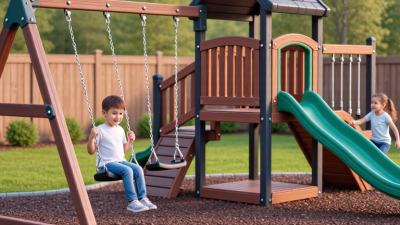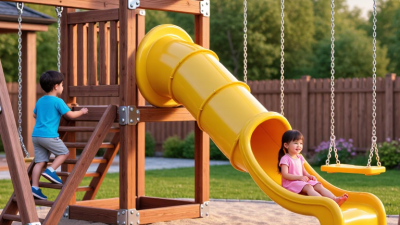
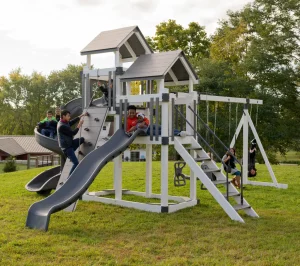
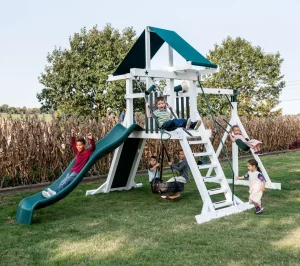
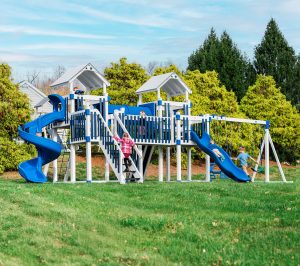
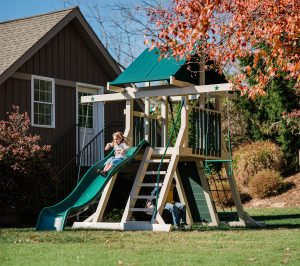
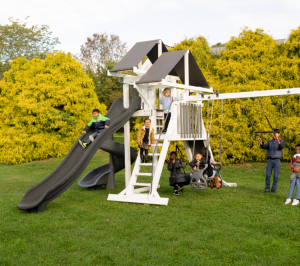
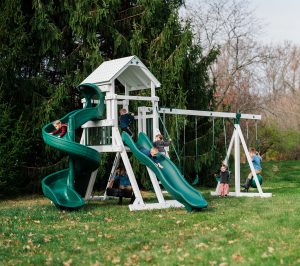



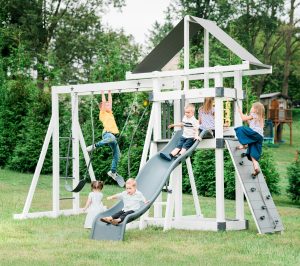
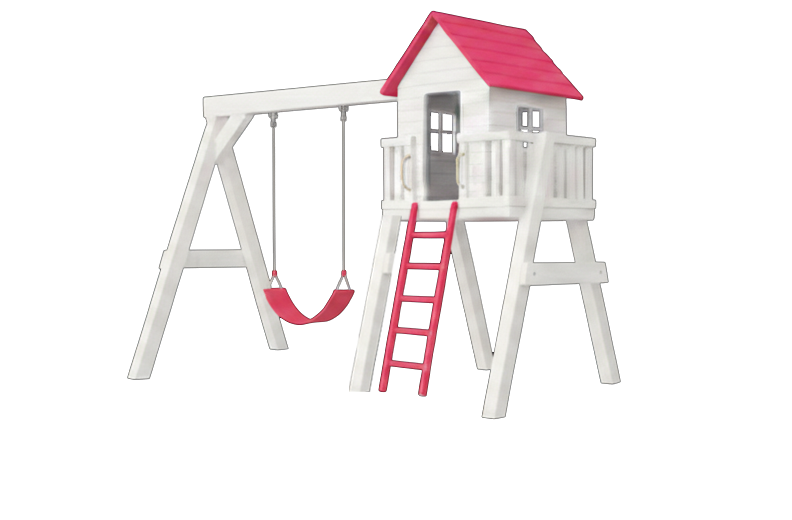
A backyard playground can turn a patch of grass into a place for climbing, swinging, and imaginative play. Choosing one well takes more than checking the price or the bright colors. The U.S. Consumer Product Safety Commission’s Public Playground Safety Handbook reviews injury patterns and highlights falls as a major playground hazard. Its guidance covers public equipment, so it should not be treated as a backyard-specific injury estimate. Still, the lesson applies: plan for safe landings, suitable equipment, and close supervision.
Donna Thompson, former director of the National Program for Playground Safety, has emphasized the importance of designing play spaces around children’s developmental needs. That principle is useful when comparing a compact swing set with a taller climbing structure. Check the manufacturer’s age and weight guidance, measure the usable area, and leave room around moving equipment. ASTM International’s F1148 standard provides safety requirements for home playground equipment; look for clear product information and installation instructions that address it.
Small details matter. A level surface, secure anchors, and impact-absorbing material beneath equipment can change how a space works day to day. Think about who will use it now—and who might use it in a few years. A backyard playground that looks perfect in a catalog may feel crowded beside a fence or difficult to supervise from the kitchen. And honestly, families do not always predict how children will play. Use the evidence as a guide, inspect the setup regularly, and choose a design that fits your yard, your children, and your willingness to maintain it.
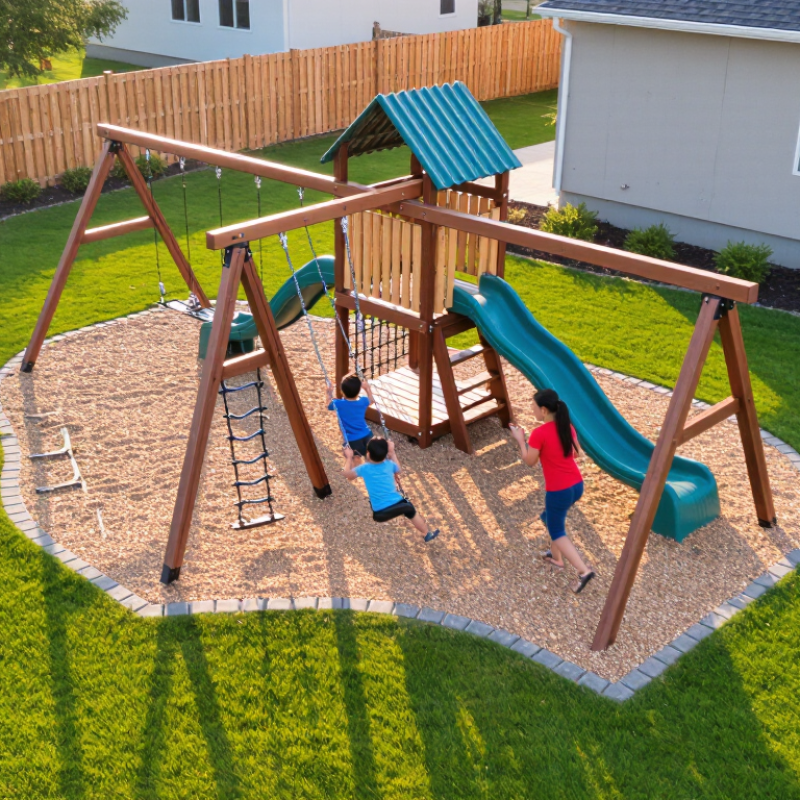
Assess the yard before comparing playsets. Measure the usable level ground, then note slopes, tree roots, fences, and doors. Measure twice. A toddler needs low steps and close supervision; older children may want climbing or swinging challenges. Choose for the youngest regular user, but consider how interests may change. The CDC’s 2018 Physical Activity Guidelines recommend at least 60 minutes of daily activity for children ages 6–17. A backyard setup can invite movement, but it should fit your family’s actual routines. Watch them play. Which activities hold their attention, and which do they abandon after five minutes?
Check the ground beneath and around equipment, along with drainage and sightlines from the house. The U.S. Consumer Product Safety Commission’s Public Playground Safety Handbook reports more than 200,000 annual emergency-room visits for playground-equipment injuries. That figure covers playground equipment broadly, not backyard sets alone, but it is a useful reminder to treat fall space and surfacing as design needs. Keep the play area visible. Leave room for children to move without colliding with walls, garden beds, or one another. Shade matters on hot afternoons, too. A neat yard sketch helps, though it may miss how muddy ground behaves after rain. Recheck the space in different seasons before deciding.
Choosing a backyard playground starts with the children who will use it. A climbing frame offers active play, while swings need clear space around their moving seats. Slides are simple favorites, but their height should match children’s ages and abilities. Small details matter. The CPSC’s Public Playground Safety Handbook (2010) reports more than 200,000 emergency-room visits annually for playground-related injuries. That figure covers playgrounds broadly, not backyard equipment alone. Still, it makes fall height and surfacing central choices. Ask sellers for surfacing test documentation under ASTM F1292, which evaluates how well materials reduce impact.
Wood blends naturally into a garden, but it needs checks for splinters, rot, and loose hardware. Powder-coated metal is sturdy, though it can heat up in direct sun. Plastic components resist rust and often feel smooth, but UV exposure may fade or weaken them over time. Composite lumber can reduce routine upkeep, yet costs more upfront. There is no perfect material. For surfacing, poured-in-place rubber feels even underfoot, while engineered wood fiber is often less expensive but needs regular raking and replenishment. I would compare installation needs, drainage, and replacement costs—not just the purchase price. A beautiful setup can disappoint if the yard is too small or the ground stays soggy.
How to Choose the Best Backyard Playground?
Checking Age Suitability and Safety Requirements
Age labels are a practical starting point, not a guarantee that every feature suits your child. The U.S. Consumer Product Safety Commission’s Public Playground Safety Handbook separates equipment guidance into age groups: 6–23 months, 2–5 years, and 5–12 years. For a toddler, check step height, handholds, and whether openings could trap a head or limb. A taller climbing wall may look exciting, but it can be a poor match for a child who cannot climb down independently. Check the equipment’s stated age range and follow its installation and supervision instructions.
Surface and spacing matter, too. The CPSC handbook recommends protective surfacing beneath and around play equipment; grass and packed soil may not cushion falls reliably. The CDC reported about 214,000 emergency department visits per year for playground-equipment injuries among U.S. children aged 14 and younger, based on 2001–2013 data. Those figures cover playground equipment broadly, not backyard sets alone, but they underline why fall height and landing areas deserve attention. Check ASTM F1148, a standard for home playground equipment, alongside current product instructions. Measure the available yard before buying. A tape measure beats guesswork.
Recheck the setup as children grow. Loose bolts, worn ropes, and shifting surfacing can change the risk. I might be tempted to choose a set that “lasts for years,” but an oversized structure can be unsuitable now. That is easy to overlook. Keep active play within sight, and reassess whether each feature fits the child’s current abilities.
| Playground feature | Typical age suitability* | Key safety checks | Fall-zone and surfacing checks | Supervision and upkeep |
|---|---|---|---|---|
| Low platform with steps | Preschoolers, commonly ages 2–5, when the equipment is labeled for this group | Check that steps are stable, handholds are easy to grasp, and openings do not create head or neck entrapment hazards. | Measure the highest accessible play surface and provide impact-attenuating surfacing throughout the required use zone. | Stay close enough to assist young children; check fasteners and steps regularly. |
| Slides | Choose a slide height and design suited to the child’s age and abilities; follow the product’s age label. | Confirm the ladder and platform are secure, the slide exit is unobstructed, and there are no sharp edges or protruding fasteners. | Keep the slide exit and surrounding fall zone clear; use suitable impact-attenuating surfacing beneath and around the equipment. | Teach children to slide feet first, one at a time, and to move away from the exit promptly. |
| Swings | Use an age-appropriate seat; bucket-style seats are intended for younger children only when specified by the manufacturer. | Inspect the seat, hangers, chains or ropes, and frame. Ensure the swing is securely anchored and has adequate clearance from fences, walls, and other play equipment. | Provide a generous, unobstructed swing-use zone and protective surfacing beneath it; follow the equipment instructions for layout. | Keep children from walking in front of or behind a moving swing. Check moving parts for wear and corrosion. |
| Climbing wall or net | Usually better suited to children who can climb confidently; use only within the stated age and ability range. | Check that holds and net connections are firmly attached, openings are appropriately sized, and the structure does not wobble. | Match surfacing to the equipment’s maximum fall height and keep the fall zone free of hard objects and trip hazards. | Supervise children who are still developing balance and coordination; inspect holds and ropes for loosening or damage. |
| Balance beam or stepping pods | Can suit a range of ages when the height and spacing match the child’s coordination and the product’s age guidance. | Make sure components are stable, have no exposed sharp edges, and are positioned on a level surface. | Use a clear, level landing area with appropriate impact-attenuating surfacing where a fall could occur. | Begin with low-height challenges and check that the route is not slippery or obstructed. |
| Protective surfacing and layout | Required wherever the playground design creates a fall risk, regardless of the child’s age. | Choose a surface intended for playground use. Check that it remains in place, drains appropriately, and is free of debris, exposed roots, and hard edges. | Select surfacing tested for the equipment’s fall height; ASTM F1292 addresses impact attenuation of playground surfacing. Follow the surfacing supplier’s installation and maintenance instructions. | Inspect after heavy use or weather, and restore displaced loose-fill material or repair worn areas as needed. |
*Age ranges are general guidance, not a substitute for the playground’s manufacturer age label, installation instructions, or local requirements. Choose equipment for the youngest regular user, and maintain clear use zones around every play component.
A backyard playground should fit the ground as well as the children using it. Check the slope, drainage, and clearance around swings before choosing a layout. A level-looking lawn can hide a dip that collects rainwater. Small gaps matter. Read the installation instructions carefully, and confirm whether the structure needs concrete footings or ground anchors. If assembly requires specialized tools or several adults, include that time and help in your plan.
Maintenance is easier when parts are accessible. Look for smooth surfaces, replaceable hardware, and clear guidance for routine checks. After wet or windy weather, inspect for loose bolts, splinters, standing water, and shifting supports. Keep a simple log of repairs and inspection dates. It sounds fussy. But a note about a wobbling ladder can prevent the same concern from being forgotten next month. Follow the maker’s care instructions rather than applying paint, oil, or cleaners that may affect the materials.
Durability depends on climate, use, and upkeep, not just a sturdy appearance. Sun can fade or weaken some plastics, while damp soil may accelerate deterioration in wood or metal components. Ask how materials are treated and what signs of wear require replacement. I would not assume a heavier frame is automatically safer; stable installation and regular checks matter too. Leave enough room to inspect joints and anchors without moving the whole structure.
Installation, maintenance, and durability ratings by common material
Planning ratings are illustrative, on a 1–5 scale where higher means easier installation, easier maintenance, or greater durability. Actual performance depends on design, climate, use, and upkeep. Check the manufacturer’s instructions and inspect the equipment regularly.
Choosing a backyard playground starts with the space you can safely spare, not the biggest structure your budget allows. The U.S. Consumer Product Safety Commission’s Public Playground Safety Handbook recommends at least six feet of protective surfacing around most stationary equipment; swings need additional clearance in front and behind. Measure the full fall zone, including the patch beside the fence and the route children use to reach the slide. A compact climbing frame may leave more usable lawn than a large set with features your family rarely uses. Check the handbook’s guidance against the equipment’s own instructions, since layouts differ.
Budget for the ground beneath the playset, delivery, assembly, and replacement parts—not only the frame. The CPSC identifies falls as a major source of playground injuries, making suitable, well-maintained surfacing a practical expense rather than a decorative upgrade. Think about who will use the set in three years, too. A toddler’s favorite low platform may soon feel limiting, while adjustable features can extend useful life. Still, “future-proof” is easy to overpay for; children’s interests change, and no design guarantees years of use. Compare materials, weather exposure, warranty terms, and the cost of replacing worn components. Then leave room in the budget for upkeep. A little less equipment can be the wiser choice.